Climate & Environment
Mumbai’s Air Quality Can Be Cut in Half Within Five Years, but Efforts Must Cover the Entire Metropolitan Region
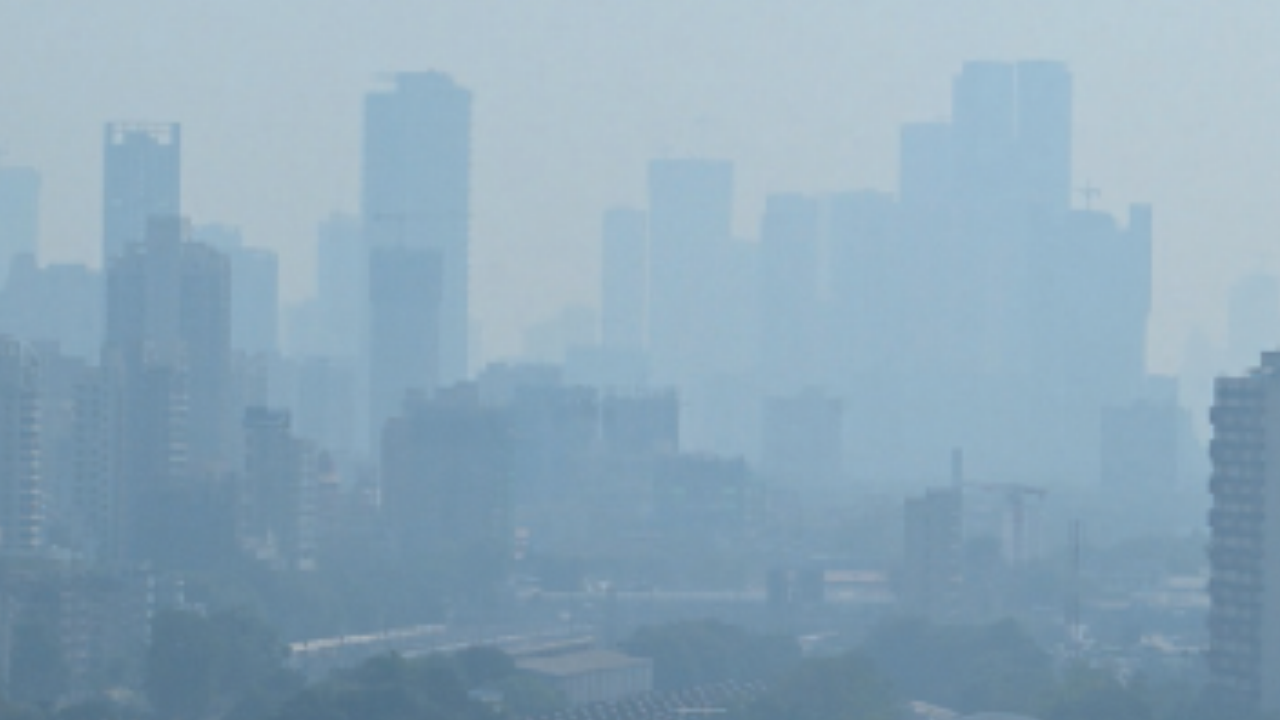
Mumbai’s residents routinely experience a grey haze that was uncommon two decades ago. Ground monitors and satellite data confirm that the city’s annual average PM10 levels were 60‑80 µg/m³ until 2006, rose to 166 µg/m³ in 2018, and have since fallen to 88 µg/m³ in 2025—1.5 times the national standard. Seasonal variation is stark: from June to September the monsoon reduces pollution, while October to March sees PM10 levels 3‑4 times the national standard, and in winter the air can be 10‑15 times higher than the WHO safe limit.
Mumbai’s airshed extends beyond the city limits to the Mumbai Metropolitan Region (MMR) and surrounding industrial belts, covering about 7,000 sq km. The Brihanmumbai Municipal Corporation (BMC) controls only 6 % of this area. Since 2011, MMR’s population has grown by at least 3.9 million, with 3.2 million people living outside BMC. Built‑up area has increased by 10.5 sq km within BMC and 270 sq km outside it. Registered vehicles in MMR have nearly tripled from 4.36 million to 12.31 million, with six in ten now outside BMC. Of the 33,700 industrial units monitored by the Maharashtra Pollution Control Board (MPCB), only 25 % are in Mumbai; the remaining 75 % lie outside.
A BMC inventory, which can be extrapolated to the wider MMR, attributes 96 % of the PM10 load to dust from roads and construction (26 %), industry (23 %), transport (20 %), waste burning (14 %) and cooking fuels in homes and eateries (14 %).
To reduce pollution, the MMR needs a regional clean‑air plan and an air‑quality authority to coordinate municipalities, agencies and authorities. Current plans for Mumbai, Navi Mumbai, Thane, Vasai‑Virar, Ulhasnagar and Badlapur lack clear actions, responsibilities, targets, budgets and realistic timelines. The region should avoid reactive measures such as odd‑even schemes or cloud seeding that harm the poor without improving air quality.
Industrial pollution must be addressed by shifting 19,000 polluting units to gas or electricity and strengthening online monitoring. Many small boilers burn two million tonnes of coal annually; cleaner energy and shared facilities can reduce emissions. Continuous emissions monitoring systems (CEMS) exist but are poorly operated; MPCB should verify data quality, enforce compliance and impose strict penalties.
Construction dust control requires formal dust‑management plans approved by authorities, online monitoring and independent audits. Public transport already accounts for 65 % of trips in MMR, the highest in India; the region can further increase public‑transport use and electrify all other vehicles, potentially banning new petrol or diesel registrations from 2031.
Waste burning remains common in Deonar, Dharavi and other slum areas; zero tolerance for municipal waste and plastic burning is needed. Forest and farm fires have risen, with satellite detections increasing from 5,716 in 2022 to 7,810 in 2025; a fire‑control plan is required.
Nearly 45 % of MMR’s population lives in slums or rural settlements where solid fuels are still used; government support schemes can promote LPG and electric cooking.
Road‑sweeping alone will not curb dust. A greening scheme to plant grass along road edges, green open land and expand tree cover—similar to Beijing’s “One Million Acres” project—can help.
Monitoring is uneven: 70 % of continuous stations are in Mumbai and Navi Mumbai, leaving vast areas unmonitored. A system of evenly distributed continuous monitors, low‑cost sensors and satellite data can pinpoint hotspots, identify sources and guide real‑time interventions.
Implementing these measures could reduce Mumbai’s pollution by more than half within five years.
Frequently asked questions
What is the current PM10 level in Mumbai?
The annual average PM10 level in 2025 is 88 µg/m³, 1.5 times the national standard.
How many industrial units are outside Mumbai?
Out of 33,700 units monitored by the Maharashtra Pollution Control Board, 75% lie outside Mumbai.
What proportion of the PM10 load comes from dust?
Dust from roads and construction accounts for 26% of the PM10 load, which is part of the 96% attributed to dust, industry, transport, waste burning and cooking fuels.