Climate & Environment
Oxfam Report Links Israel’s Gaza War to Widespread Environmental Contamination
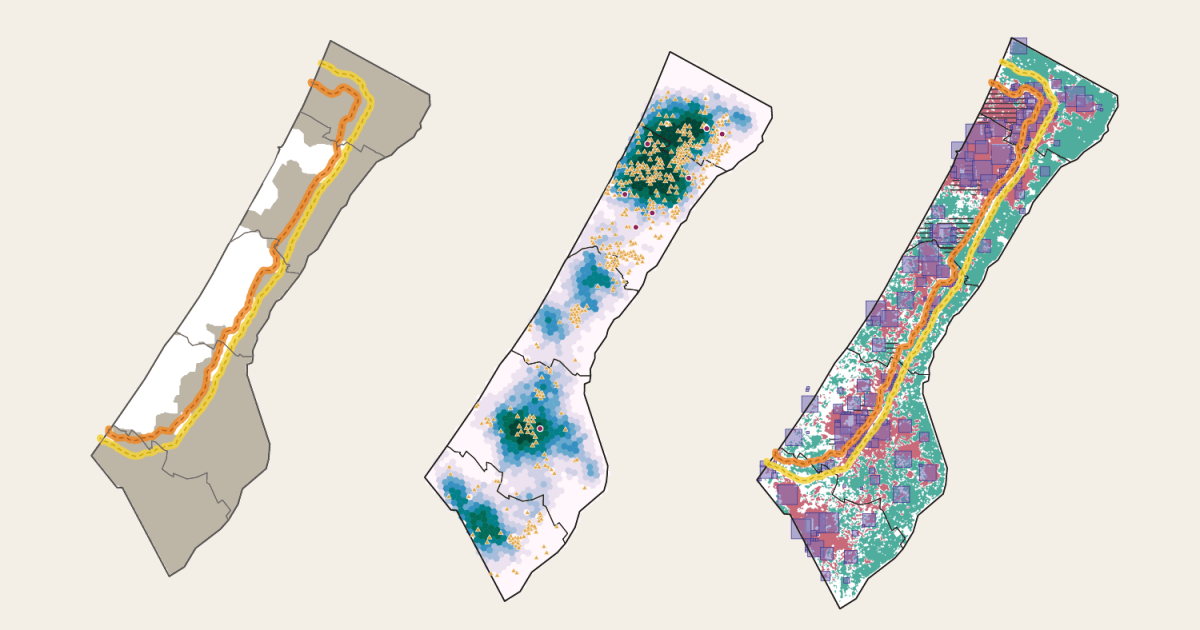
A new report by UK‑based charity Oxfam and the Conflict and Environment Observatory (CEOBS) states that Israel’s war in Gaza has turned the enclave into a “toxic wasteland,” with poisoned water and contaminated soil threatening the survival of its 2.3 million residents. The report, which uses satellite imagery, remote sensing, scientific analysis and open‑source data, finds that Israel’s use of explosives and incendiary weapons has caused environmental contamination across more than 99 percent of Gaza.
Oxfam’s international executive director, Amitabh Behar, said the destruction and contamination of Gaza would breach Israel’s legal obligations under international humanitarian and human rights law. He added that Palestinians are exposed to toxins through air, food, water and direct contact with contaminated soils and debris.
The report details how bombardment, fires, rubble and untreated sewage have released pollutants that reach people via the air they breathe, the water they drink and the food they eat. It also highlights the urgent need for an independent investigation to identify and reduce risks to Palestinian lives.
Key findings include: - Israel’s ground operations directly affected about 283 sq km (78 percent) of Gaza’s 365 sq km by 11 October 2025. - The UN Environment Programme estimates 61 million tonnes of debris have been generated, roughly 29 tonnes per person. - More than 90 percent of Palestinians have been forcibly displaced, many multiple times. - The report identifies at least one potential contamination source across more than 99 percent of Gaza, with Gaza City, Khan Younis, Rafah, Jabalia and the Salah al‑Din Street corridor showing the greatest overlap of hazards. - Unexploded munitions, damaged vehicles, batteries and fuel stores pose risks of leaching contaminants into soil and groundwater. - Gaza’s daily water supply fell from 334,107 cubic metres before October 2023 to 54,747 cubic metres in June 2024, an 84 percent drop. By April 2026, emergency repairs had raised it to 130,315 cubic metres, still 61 percent below pre‑assault levels. - Nine of 61 reservoirs were operational, providing only 18 litres per person for one day. - 97 percent of the coastal aquifer was already chemically polluted before October 2023. - In July 2026, the Ministry of Health detected faecal coliforms in 15 of 79 groundwater wells (19 percent). Oxfam identified North Gaza, Gaza City and Deir el‑Balah as the areas most at risk from contaminated drinking water. - By April 2024, all six of Gaza’s wastewater treatment plants had been destroyed. An estimated 40,000 cubic metres of raw sewage enter the Mediterranean daily. - Gaza’s farms supplied about 95 percent of the fresh vegetables before October 2023; by late 2025, more than 87 percent of cropland was damaged. - The UN reported more than one million olive trees uprooted by October 2024. - In July 2026, an estimated 1.2 million people (59 percent) faced crisis levels of acute food shortages. - Gaza’s gross domestic product fell by 83 percent in 2024 to $362 million. - Direct physical damage was estimated at $35.2 billion and economic losses at $22.7 billion by October 2025. - Health data show more than 1.9 million cases of acute respiratory infection and about 81,000 cases of acute watery diarrhoea in January and February 2026. - Vaccine‑derived poliovirus type 2 was detected in Gaza’s wastewater in 2024, leading to the first paralytic polio case in 25 years.
Oxfam calls for a full independent investigation and, if violations are established, for full reparations. Its five‑stage plan includes securing access, reducing exposure, testing for contamination, screening sites, essential repairs, treating contaminated sites, managing hazardous waste, rebuilding with safeguards and long‑term monitoring.
The report was released a day after world leaders failed to reach a consensus on climate change at the 31st Climate Change Conference (COP31).
Frequently asked questions
How much of Gaza’s area has been affected by Israel’s ground operations?
About 283 sq km, which is 78 percent of Gaza’s 365 sq km, by 11 October 2025.
What is the status of Gaza’s water supply?
Daily supply fell from 334,107 cubic metres before October 2023 to 54,747 cubic metres in June 2024 (84 percent drop). By April 2026 it rose to 130,315 cubic metres, still 61 percent below pre‑assault levels.
How many reservoirs in Gaza are operational?
Nine of 61 reservoirs were operational, providing only 18 litres per person for one day.