Climate & Environment
India’s Climate Finance Demands Unresolved After COP31 Decision Not Adopted
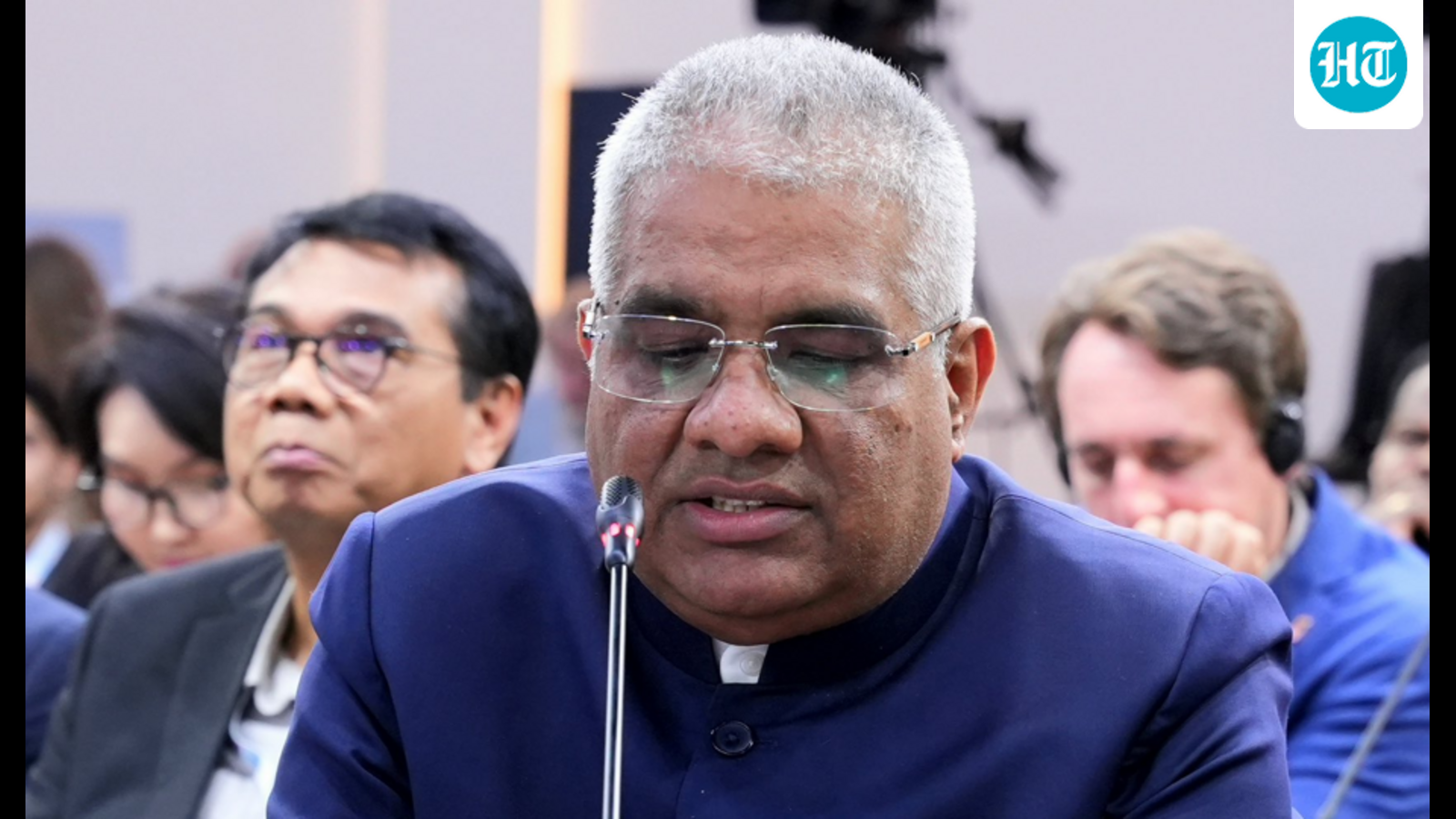
India’s key climate finance, equity and energy transition demands remain unresolved after the COP31 cover decision was not adopted in Antalya. Union Environment Minister Bhupender Yadav said India had worked constructively until the final stages, collaborating with BASIC and Like‑Minded Developing Countries (LMDC) partners to push for outcomes rooted in equity, the principle of common but differentiated responsibilities and respective capabilities (CBDR‑RC), climate finance and adaptation. He added that climate ambition must be accompanied by means of implementation and that energy transitions should be nationally determined, just and equitable, backed by finance, technology and capacity‑building for developing countries.
India’s core demands include predictable and concessional climate finance from developed countries, protection against uniform global mitigation targets, technology transfer and recognition of historical responsibility for emissions. The country has repeatedly called for climate finance to be largely public and concessional, without adding to developing countries’ debt burden, and for mitigation and the Global Stocktake to remain facilitative, non‑punitive and party‑driven.
At the Pre‑COP31 meeting in Fiji in October, Yadav urged equal attention to adaptation, mitigation and means of implementation, stressing that a one‑size‑fits‑all approach to climate action was unacceptable. In a briefing on 3 November, he reiterated India’s priorities: predictable climate finance, party‑driven mitigation and adaptation outcomes, technology transfer and a just transition.
During COP31, Yadav reiterated that developing countries could not be expected to bear the burden of historical emissions in the name of higher climate ambition. In India’s national statement on 18 November, he argued that two centuries of industrialisation and economic growth in some countries, fueled by greenhouse gas emissions, had contributed disproportionately to global warming. He said equitable access to the remaining global carbon budget was non‑negotiable and that developing countries could not be asked to choose between climate action and their legitimate right to development, decent living standards, health and education.
Additional Secretary Amandeep Garg said the group was uncomfortable with parts of the proposed cover decision, particularly the inadequate reflection of equity and CBDR‑RC in paragraphs introducing new global targets. He flagged what India described as a dilution of developed countries’ historical responsibility and obligations and said developing countries were told that climate finance was “dead in the water”, despite their growing needs.
The absence of an overarching decision means there is no new consensus text resolving these differences. India added that its interventions shaped the draft, including recognition of food security, livelihoods and cultural practices in methane‑related action, a reference to developed countries’ obligations under Article 9.1 of the Paris Agreement, and the inclusion of equity and CBDR‑RC in implementation. The Article 9.1 reference is particularly important for developing countries because it establishes the obligation of developed countries to provide financial resources to developing nations. At the same time, the draft did not attach new quantified commitments to that obligation.
The proposed $120 billion annual adaptation‑finance figure was dropped, while the call to triple adaptation finance by 2035 remained without an agreed baseline or delivery pathway. This means there remains uncertainty on the quantum of any finance ahead and, more importantly, when it comes.
Climate policy experts said the restoration of Article 9.1 was important, but would need to be followed by a clearer financing mechanism. Aarti Khosla, director of Climate Trends, said the reference to the obligation of developed countries to provide climate finance was not backed by any concrete process. “Developed countries ensured there is no measurable responsibility for financing the transition, while major fossil fuel producers have blocked stronger mitigation language,” she said, adding that the outcome reinforced an inequitable climate regime for India.
Ajay Mathur, India’s lead negotiator at the Paris climate conference and former director general of the International Solar Alliance, offered a more qualified assessment. He said the reference to Article 9.1 and the proposed adaptation‑finance roadmap were progress, even though the text did not specify an amount. “On finance, developing countries came to Antalya asking who pays, how much, and on what terms. The text gives them an explicit reference to Article 9.1 and a roadmap for adaptation finance, which is real progress. It does not give them a number, and the baseline for tripling adaptation finance stays open until November 2027,” Mathur said.
The proposed cover text addressed the global energy transition, including an aspiration to increase electricity’s share of global energy consumption to 35 % by 2035, alongside stronger grids, energy storage and system flexibility. It did not provide specific financial commitments to support these measures. Though not mandatory, the cover decision not being adopted means the 35x35 electrification pledge is not a mandate as of now. India opposed a uniform international target for electrification, maintaining that countries must be able to determine their own energy pathways based on national circumstances and development needs.
The failure to adopt the cover decision did not mean that all climate negotiations at COP31 ended without outcomes. Separate decisions, including those on the Just Transition Work Programme and the Adaptation Fund, were adopted. Mathur pointed to these decisions as evidence that progress on individual issues remained possible despite the failure to reach consensus on the overarching text.
The Adaptation Fund is a separate financing mechanism that supports concrete adaptation projects in developing countries. Its decision at COP31 dealt with arrangements for its transition to exclusively serving the Paris Agreement and called on developed countries to substantially increase their contributions. It does not amount to a new financial allocation for India, though. This is distinct from the proposed Antalya‑to‑Addis Ababa roadmap on adaptation and resilience finance, which was part of the unadopted cover decision.
The failure to adopt the cover decision leaves several questions for the next round of negotiations at COP32 in Addis Ababa in 2027. These include how the obligation under Article 9.1 will translate into measurable financial commitments, the baseline and quantum for tripling adaptation finance by 2035, and how developing countries will access predictable and concessional support. The proposed adaptation‑finance roadmap also remains unresolved, as does the wider question of stronger commitments on the transition away from fossil fuels.
Mathur said the baseline for tripling adaptation finance would remain open until November 2027, adding that the next task was to turn procedural provisions into actual commitments. “A text that works for many blocs earns its value only when its procedural hooks become commitments. That is the work of 2027,” he said. Yadav said the absence of a cover decision will not pause India’s climate action and has ultimately reiterated the country’s commitment to consensus‑based multilateralism ahead of COP32.
Frequently asked questions
What were India's core climate finance demands at COP31?
India demanded predictable and concessional climate finance from developed countries, protection against uniform global mitigation targets, technology transfer, and recognition of historical responsibility for emissions.
What happened to the proposed $120 billion annual adaptation‑finance figure at COP31?
The proposed $120 billion annual adaptation‑finance figure was dropped.
What decisions were adopted at COP31 despite the cover decision not being adopted?
Separate decisions on the Just Transition Work Programme and the Adaptation Fund were adopted.