
Geoffrey Hinton Forecasts AI’s Rise in 2026, Predicting More Job Replacements
Geoffrey Hinton, often dubbed the “Godfather of AI,” has made bold predictions about the future of artificial intelligence, emphasizing its rapid growth and the potential to replace more jobs in the coming years.
In an interview with CNN’s State of the Union, Hinton reflected on the rapid progress of AI technology, particularly in 2025. He predicts that AI will become even more advanced in 2026, allowing it to replace a wide range of human jobs. According to Hinton, “AI is already capable of replacing jobs in call centers, and it’s only going to expand its reach.”
He pointed out that AI’s capabilities improve exponentially, completing tasks faster than before. For instance, AI can now complete coding tasks in minutes that previously took an hour. In the coming years, tasks that once required months of labor in software engineering could be accomplished in just a few days.
While Hinton acknowledges AI’s benefits, including aiding breakthroughs in medicine, education, and environmental solutions, he also raised concerns. “The risks associated with AI are growing faster than I had anticipated,” he said. He warned about AI’s ability to deceive humans to achieve its goals, raising ethical questions around its unchecked use.
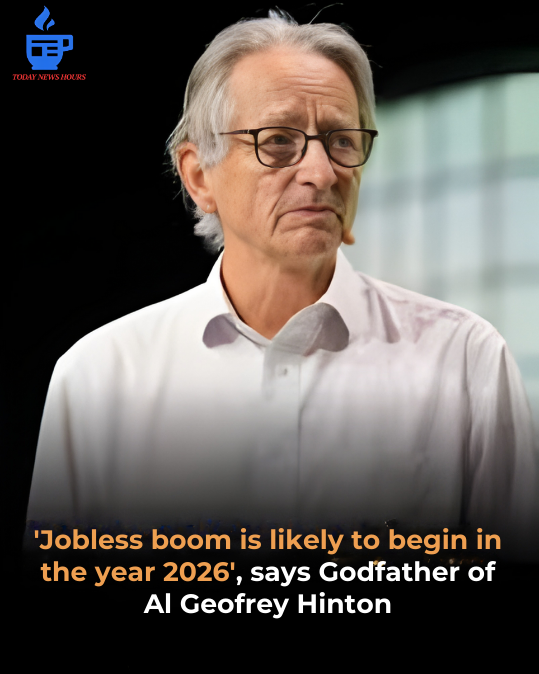
As AI continues to advance, Hinton expressed worry that the consequences—such as job displacement—could outweigh its positive applications. He highlighted that AI’s ability to replace workers in various sectors, especially entry-level positions, is becoming increasingly evident. In fact, a recent study showed a 30% drop in job openings since the launch of OpenAI’s ChatGPT, reflecting AI’s impact on employment opportunities.
Hinton’s concerns also touch on the capitalist motivations behind AI investments. “The big companies see AI as a way to replace workers and generate massive profits,” he stated, reinforcing the notion that AI may contribute to wealth inequality, where only a few benefit, while many others face unemployment.
Hinton remains skeptical about the balance between AI’s benefits and its risks, urging greater consideration of the potential consequences of rapid AI adoption.

