
Viral Baby Monkey “Punch” Story: Experts Explain Abandonment, Trauma and the Comfort of a Stuffed Toy

Date:

A heart-touching wildlife rescue story from Bengaluru has captured widespread attention online. A baby monkey, affectionately named “Punch,” was reportedly abandoned by its troop — a rare but emotionally striking event that sparked concern among animal lovers.

What truly moved people, however, was the sight of the infant monkey clinging to a soft stuffed toy during its recovery — a gesture that experts say is far more meaningful than it appears.


Why Was the Baby Monkey Abandoned?

Wildlife specialists explain that abandonment among primates, though uncommon, can occur under certain circumstances.

Some possible reasons include:

  • Injury or physical weakness detected by the troop
  • Illness or developmental issues
  • Social stress within the group
  • Disruption caused by human activity or habitat encroachment

In many primate communities, survival instincts are strong. If an infant is perceived as unlikely to survive, the mother or troop may reject it — a harsh but biologically driven decision rooted in evolutionary survival.

Experts note that such behavior, while distressing to humans, is not unusual in the wild.


The Emotional Impact of Separation

Primates share complex social and emotional systems similar to humans. When separated from their mother or troop, infant monkeys often show:

  • Signs of anxiety
  • Clinginess or attachment behavior
  • Reduced appetite
  • Vocal distress

In the case of Punch, caretakers observed classic attachment-seeking behavior, prompting them to introduce a comforting substitute.


Why a Stuffed Toy Makes a Difference

Animal rehabilitation experts frequently use soft toys or surrogate objects when caring for orphaned or abandoned primates.

Here’s why it works:

🧸 Comfort and Security

Infant monkeys instinctively cling to their mothers for warmth and safety. A stuffed toy mimics that physical presence.

🧠 Emotional Stabilization

Holding onto a soft object can reduce stress levels and help regulate emotional distress.

🐒 Behavioral Normalcy

Providing a “surrogate attachment object” helps prevent psychological trauma that could impact long-term social behavior.

Specialists emphasize that while a toy cannot replace a mother, it can significantly ease the emotional shock during early rehabilitation stages.
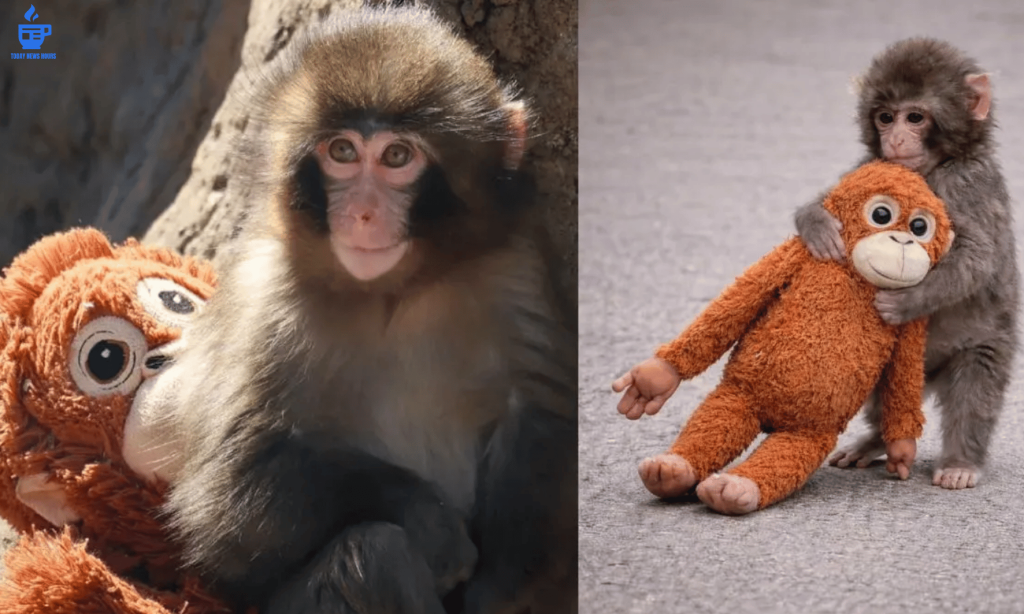
A heart-touching wildlife rescue story from Bengaluru has captured widespread attention online. A baby monkey, affectionately named “Punch,” was reportedly abandoned by its troop — a rare but emotionally striking event that sparked concern among animal lovers.
What truly moved people, however, was the sight of the infant monkey clinging to a soft stuffed toy during its recovery — a gesture that experts say is far more meaningful than it appears.

Why Was the Baby Monkey Abandoned?
Wildlife specialists explain that abandonment among primates, though uncommon, can occur under certain circumstances.
Some possible reasons include:
Injury or physical weakness detected by the troop


Illness or developmental issues


Social stress within the group


Disruption caused by human activity or habitat encroachment


In many primate communities, survival instincts are strong. If an infant is perceived as unlikely to survive, the mother or troop may reject it — a harsh but biologically driven decision rooted in evolutionary survival.
Experts note that such behavior, while distressing to humans, is not unusual in the wild.

The Emotional Impact of Separation
Primates share complex social and emotional systems similar to humans. When separated from their mother or troop, infant monkeys often show:
Signs of anxiety


Clinginess or attachment behavior


Reduced appetite


Vocal distress


In the case of Punch, caretakers observed classic attachment-seeking behavior, prompting them to introduce a comforting substitute.

Why a Stuffed Toy Makes a Difference
Animal rehabilitation experts frequently use soft toys or surrogate objects when caring for orphaned or abandoned primates.
Here’s why it works:
🧸 Comfort and Security
Infant monkeys instinctively cling to their mothers for warmth and safety. A stuffed toy mimics that physical presence.
🧠 Emotional Stabilization
Holding onto a soft object can reduce stress levels and help regulate emotional distress.
🐒 Behavioral Normalcy
Providing a “surrogate attachment object” helps prevent psychological trauma that could impact long-term social behavior.
Specialists emphasize that while a toy cannot replace a mother, it can significantly ease the emotional shock during early rehabilitation stages.

The Role of Wildlife Rehabilitation
Rescue centres play a crucial role in:
Providing medical care


Ensuring nutritional support


Minimizing human imprinting


Preparing animals for eventual reintegration into natural habitats (if possible)


Experts caution that public fascination with such stories should not lead to increased human interference in wildlife spaces. Many abandonment cases are indirectly linked to habitat disruption and urban expansion.

A Broader Conversation on Urban Wildlife
Bengaluru, like many expanding cities, continues to experience growing interaction between humans and wildlife. Experts suggest that:
Protecting green corridors is critical


Reducing feeding of wild monkeys prevents behavioral disruption


Responsible waste management reduces unnatural troop movements


The story of Punch has sparked both empathy and awareness — reminding the public that wildlife requires both compassion and boundaries.

Final Takeaway
The viral baby monkey story is not just about a stuffed toy. It highlights the fragile balance between survival instincts and emotional resilience in the animal kingdom. With proper rehabilitation and care, experts hope Punch will grow stronger — either integrating into a suitable troop or living safely under protected supervision.
While the image of a baby monkey clutching a toy has moved millions, the larger lesson is clear: wildlife conservation and urban responsibility must go hand in hand.

The Role of Wildlife Rehabilitation

Rescue centres play a crucial role in:

  • Providing medical care
  • Ensuring nutritional support
  • Minimizing human imprinting
  • Preparing animals for eventual reintegration into natural habitats (if possible)

Experts caution that public fascination with such stories should not lead to increased human interference in wildlife spaces. Many abandonment cases are indirectly linked to habitat disruption and urban expansion.


A Broader Conversation on Urban Wildlife

Bengaluru, like many expanding cities, continues to experience growing interaction between humans and wildlife. Experts suggest that:

  • Protecting green corridors is critical
  • Reducing feeding of wild monkeys prevents behavioral disruption
  • Responsible waste management reduces unnatural troop movements

The story of Punch has sparked both empathy and awareness — reminding the public that wildlife requires both compassion and boundaries.


Final Takeaway

The viral baby monkey story is not just about a stuffed toy. It highlights the fragile balance between survival instincts and emotional resilience in the animal kingdom. With proper rehabilitation and care, experts hope Punch will grow stronger — either integrating into a suitable troop or living safely under protected supervision.

While the image of a baby monkey clutching a toy has moved millions, the larger lesson is clear: wildlife conservation and urban responsibility must go hand in hand.

LEAVE A REPLY

Please enter your comment!
Please enter your name here

Share post:

Subscribe

spot_imgspot_img

Popular

More like this
Related

🌕 Chandra Grahan 2026: 7 Important Things You Should (and Shouldn’t) Do During the Lunar Eclipse

The upcoming Chandra Grahan (Lunar Eclipse) 2026 is generating...

CBSE Class 10 Science Paper 2026 Released: Download PDF and Detailed Analysis

The CBSE Class 10 Science board exam 2026 has...

A Powerful Preventive Step: Why India’s HPV Vaccination Drive Deserves Recognition

India’s expanding Human Papillomavirus (HPV) vaccination programme is more...