Space
1963 Nike‑Apache Launch Marks Beginning of India’s Space Programme
By Dhruv Yadav
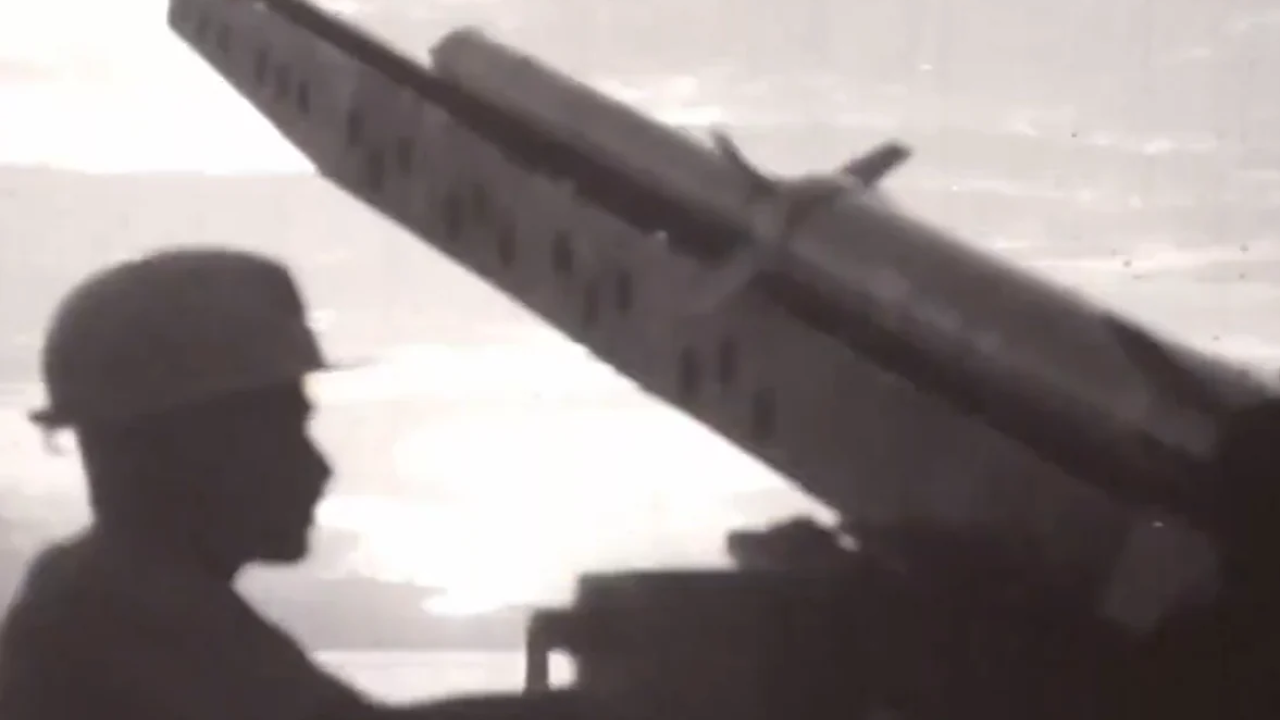
On November 21, 1963, a slim, US‑made Nike‑Apache rocket lifted off from a coastal village near Thiruvananthapuram. The two‑stage, solid‑propellant sounding rocket carried no satellite and did not reach orbit, but it marked the start of India’s space programme. The launch took place at the newly established Thumba Equatorial Rocket Launching Station (TERLS). The Nike‑Apache, also known as Argo B‑13, was developed in the United States by Aerolab and later Atlantic Research for NASA and the US Air Force. Between 1961 and 1978 it was launched 636 times worldwide to study the upper atmosphere, meteorology, plasma physics, solar physics and radio astronomy. It could carry 45 kg of instruments to an apogee of about 160 km.
A sounding rocket, or research rocket, carries instruments to measure physical conditions during a suborbital flight that does not reach orbit. They probe the 50‑150 km band that lies between the limits of weather balloons (≈40 km) and satellites (≈120 km). Some rockets reach higher altitudes, such as the Black Brant X and XII (1 000‑1 500 km) and the Black Brant XII (up to 3 000 km). The Thumba launches measured atmospheric composition, winds, temperature and ionospheric conditions.
The site was chosen for its proximity to the geomagnetic equator, making it especially useful for studying the equatorial ionosphere and upper atmosphere. Dr Vikram Sarabhai, who viewed space science as a tool for national development, advocated for the site, and the Indian National Committee for Space Research (INCOSPAR) was set up in 1962 to organise early research.
The 1963 launch provided India with an institutional and scientific base. The RH‑75, launched on November 20, 1967, was the first truly Indian sounding rocket, and the Indian Space Research Organisation (ISRO) was established in 1969. These early rockets led to the indigenous Rohini series, which ISRO developed for meteorological and atmospheric research. Rohini rockets carry payloads of 2 to 200 kg to altitudes of 100 to 500 km. ISRO still uses the RH‑200, RH‑300 Mk‑II, RH‑560 Mk‑II and RH‑560 Mk‑III, launched from Thumba and from the Satish Dhawan Space Centre at Sriharikota, and they remain the forerunners of its heavier and more complex launch vehicles.
The story illustrates how scientific capacity is built step by step: trained people, launch infrastructure, instruments and international cooperation came first, and satellites and launch vehicles followed. Sixty‑three years later, a rocket that carried a few dozen kilograms of instruments remains the starting point of the story.
Frequently asked questions
What rocket was launched on November 21, 1963, and where did it launch from?
A US‑made Nike‑Apache (Argo B‑13) sounding rocket launched from the Thumba Equatorial Rocket Launching Station near Thiruvananthapuram, India.
Why was the Thumba site chosen for the launch?
It was chosen for its proximity to the geomagnetic equator, making it especially useful for studying the equatorial ionosphere and upper atmosphere.
What was the significance of the 1963 Nike‑Apache launch for India?
It marked the beginning of India’s space programme, providing an institutional and scientific base that led to later Indian sounding rockets and the establishment of ISRO.