World
Iran Urges Regional Energy Stability at ECO Council Meeting
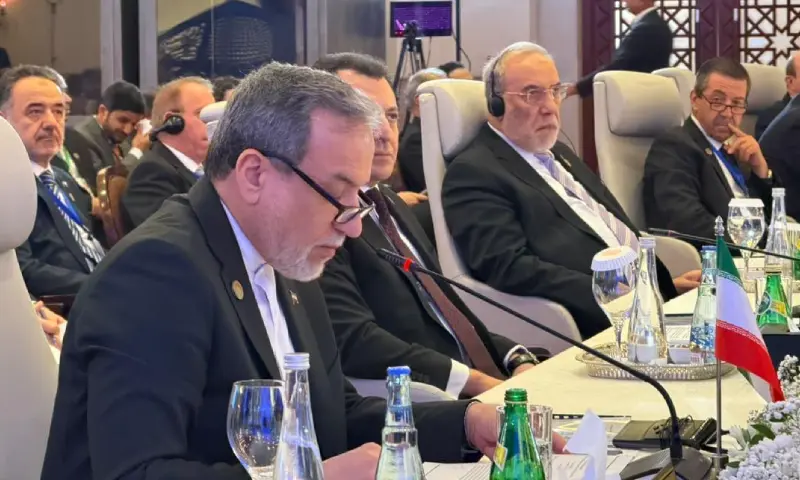
Iranian Foreign Minister Abbas Araghchi called for a reliable and sustainable regional energy mechanism during the 30th meeting of the Economic Cooperation Organisation (ECO) Council of Ministers in Islamabad. Speaking on Monday, Araghchi highlighted the impact of the US‑Israeli war on Iran, noting that the conflict has disrupted key fuel supply routes through the Strait of Hormuz and Bab al‑Mandab. He said the region needs not only an independent security framework but also a mechanism to safeguard energy flows, ensure stable supplies, reduce external vulnerabilities and enhance collective resilience against geopolitical shocks.
Araghchi said ECO is moving beyond its traditional role toward becoming an effective platform for collective action, strengthened cooperation and joint efforts. He urged member states to address emerging challenges and contribute to an inclusive and equitable global economic order, and called for a modern, new‑generation trade agreement that would benefit the region.
He described the US war on Iran as marked by aggression, threats, targeted assassinations, economic coercion and blockades, in violation of international law and the UN Charter. Araghchi emphasized that Iran has no inherent dispute with regional countries and that its defensive measures target only aggressor military bases, not neighbouring peoples or governments.
The minister also condemned the situation in Palestine, calling the genocide the most pressing international crisis and urging concrete action and collective responsibility.
Araghchi concluded that Iran’s stability and prosperity are intrinsically linked to those of other ECO members.
The meeting followed an opening speech by Pakistan’s Deputy Prime Minister and Foreign Minister Ishaq Dar, who chairs the meeting. Dar said Pakistan seeks a peaceful, prosperous and stable Afghanistan, but progress requires Afghan authorities to address the legitimate security concerns of neighbouring countries, particularly terrorism. He outlined five priorities for Pakistan’s ECO chairmanship: expanding trade and investment, strengthening regional connectivity, advancing the ECO Trade Agreement, building regional resilience and promoting human development.
Senior officials of the ECO finalized the agenda and draft Islamabad Communique ahead of the ministerial meeting. Delegates present included Araghchi, Tajikistan’s Minister of Foreign Affairs Sirojiddin Muhriddin, Turkmenistan’s Foreign Minister Rashid Meredov, Azeri Deputy Foreign Minister Elnur Mammadov, Turkish Deputy Minister of Foreign Affairs Musa Kulaklikaya, Kazakhstan’s Deputy Minister of Foreign Affairs Arman Issagaliyev, Kyrgyz Republic’s Deputy Foreign Minister Kairat Tursunkulov, Uzbek Deputy Foreign Minister Babor Usmanov Masudovich, and the Northern Cyprus Minister of Foreign Affairs. ECO Secretary General Dr Asad M. Khan and the secretary general of the Conference on Interaction and Confidence Building Measures in Asia (CICA), Sultan Hajiyev, were also present.
Frequently asked questions
What did Iran's Foreign Minister Abbas Araghchi call for at the ECO Council meeting?
He called for a reliable and sustainable regional energy mechanism to safeguard energy flows, ensure stable supplies, reduce external vulnerabilities, and enhance resilience against geopolitical shocks.
Which ministers from member states were present at the ECO Council meeting?
Delegates included Tajikistan’s Minister of Foreign Affairs Sirojiddin Muhriddin, Turkmenistan’s Foreign Minister Rashid Meredov, Azerbaijan’s Deputy Foreign Minister Elnur Mammadov, Turkey’s Deputy Minister of Foreign Affairs Musa Kulaklikaya, Kazakhstan’s Deputy Minister of Foreign Affairs Arman Issagaliyev, Kyrgyz Republic’s Deputy Foreign Minister Kairat Tursunkulov, Uzbekistan’s Deputy Foreign Minister Babor Usmanov Masudovich, and the Northern Cyprus Minister of Foreign Affairs, among others.