World
Israeli Soldiers in New Film Discuss Trauma While Palestinian Victims Remain Unmentioned
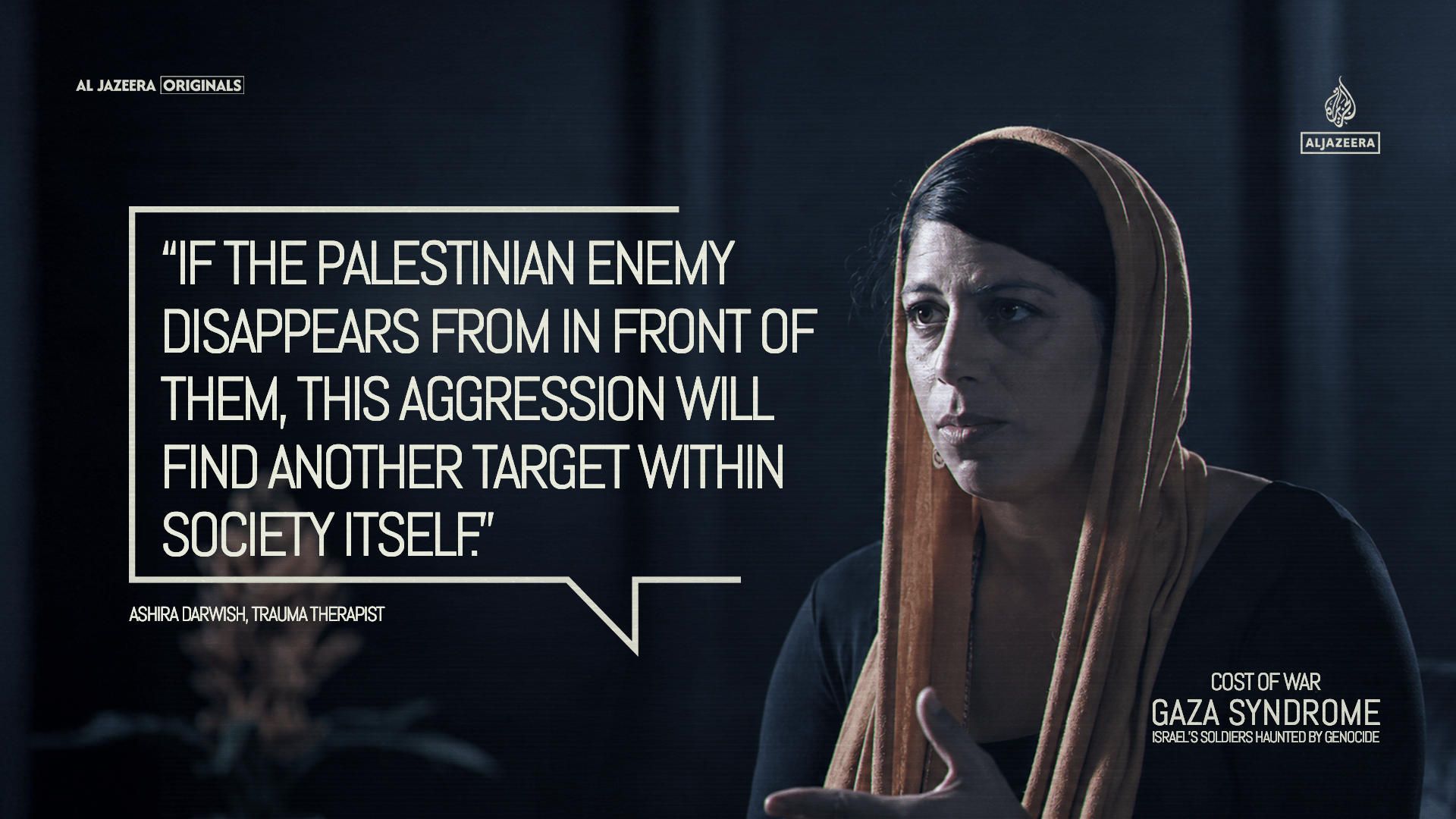
A new Al Jazeera Originals film directed by Awad Joumaa features Israeli soldiers describing the psychological toll of the Gaza conflict, yet many express no remorse. The film includes testimonies from reservist Itay Sagi of the Maglan unit, who says he had to kill Hamas fighters after October 7, 2023, and focuses on his grief for friends rather than Palestinians killed in Gaza. Special forces veteran Boris Shtonda lost a leg in a November 2023 explosion that killed four of his friends. Soldiers in the film speak of nightmares, panic, addiction and suicides, and of wanting to return to fight, while Palestinians of Gaza are largely absent from the narrative.
Israeli forces have killed at least 74,700 Palestinians, including more than 21,000 children, according to Al Jazeera. In September 2025 an independent UN Commission of Inquiry concluded that Israeli authorities and security forces had committed genocide in Gaza. The soldiers in the film are part of those forces.
Guy Zaken, a military bulldozer driver, told an Israeli parliamentary committee that soldiers had to "run over" terrorists, dead and alive, in the hundreds. His co‑driver, Eliran Mizrahi, spent 186 days in Gaza demolishing homes and died by suicide two days before he was due to return. Mizrahi’s mother told CNN that "he got out of Gaza, but Gaza did not get out of him."
An Al Jazeera Investigative Unit examined more than 2,500 Israeli soldiers’ social media accounts and documented destruction, abuse of detainees and the use of Palestinian civilians as human shields. Nearly 30,000 Israeli soldiers and security personnel wounded since October 7 have entered the Defence Ministry’s rehabilitation system, 63 percent of whom have psychological injuries. Thousands have been formally diagnosed with post‑traumatic stress disorder and acute stress reactions.
The Israeli army reported 22 soldiers died by suicide in 2025, one more than in 2024, up from 17 in 2023. An Israeli parliament Research and Information Center report recorded 279 suicide attempts between January 2024 and July 2025, with combat soldiers accounting for 78 percent of the deaths by suicide in 2024.
Mohanad Mustafa, a scholar of Israeli society, told Al Jazeera that Israel faces a psychological crisis among thousands of soldiers but no moral crisis, noting that many soldiers feel no remorse for violations of international law. Oren Ziv, an Israeli journalist, said soldiers he interviewed described an "atmosphere of revenge, that everything is allowed" and that they could shoot if they saw movement or were bored, with no investigation.
Political psychologist Daniel Bar‑Tal said soldiers in Gaza still confront Palestinian suffering to some extent, but that denial creates a quiet internal fracture and a psychological burden that deepens when the trauma cannot be fully acknowledged. Palestinian trauma therapist Ashira Darwish, a survivor of severe trauma and torture, warned that returning reservists can experience anger, substance addiction, domestic conflict and sudden outbursts of violence as untreated combat trauma manifests in everyday interactions.
Israel’s Observatory on Femicide recorded 34 femicides in 2025, a 48 percent rise from 23 in 2024, with firearms the most common weapon for the first time. Women’s groups warned early in the war that combat trauma and expanded access to guns could heighten the risk of domestic violence, though the Observatory found no link between licensed guns and femicide.
In Qusra, a Palestinian village south of Nablus, former head of the village council Abdul Azim al‑Wadi says Israeli settlers killed his brother and nephew, shot two of his sons and burned his son’s and daughter’s homes, describing the occupation army as the continuation of settlers’ attacks. Israeli settlements in the occupied West Bank are illegal under international law.
In the documentary NAZA, anonymous testimony from Israeli soldiers and intelligence personnel describes civilian deaths factored into military decisions and targets watched inside homes. The Israeli army called NAZA a "manipulative depiction of reality".
In March, Israel dropped charges against five soldiers accused of sexually abusing a Palestinian detainee at the Sde Teiman detention facility. Some individuals, such as Itamar Greenberg and Iddo Elam, chose military prison or refused conscription, stating they did not want to hold a weapon toward innocent people. Their refusal shows that violence is not inevitable and that the narrative Israel tells about it is not fixed.
Bar‑Tal offers Israel a choice: "Cut the violence or cut the narrative." The country has chosen neither so far.