World
Viking Hoard from 900 AD Unearthed on Isle of Man, Now on Display
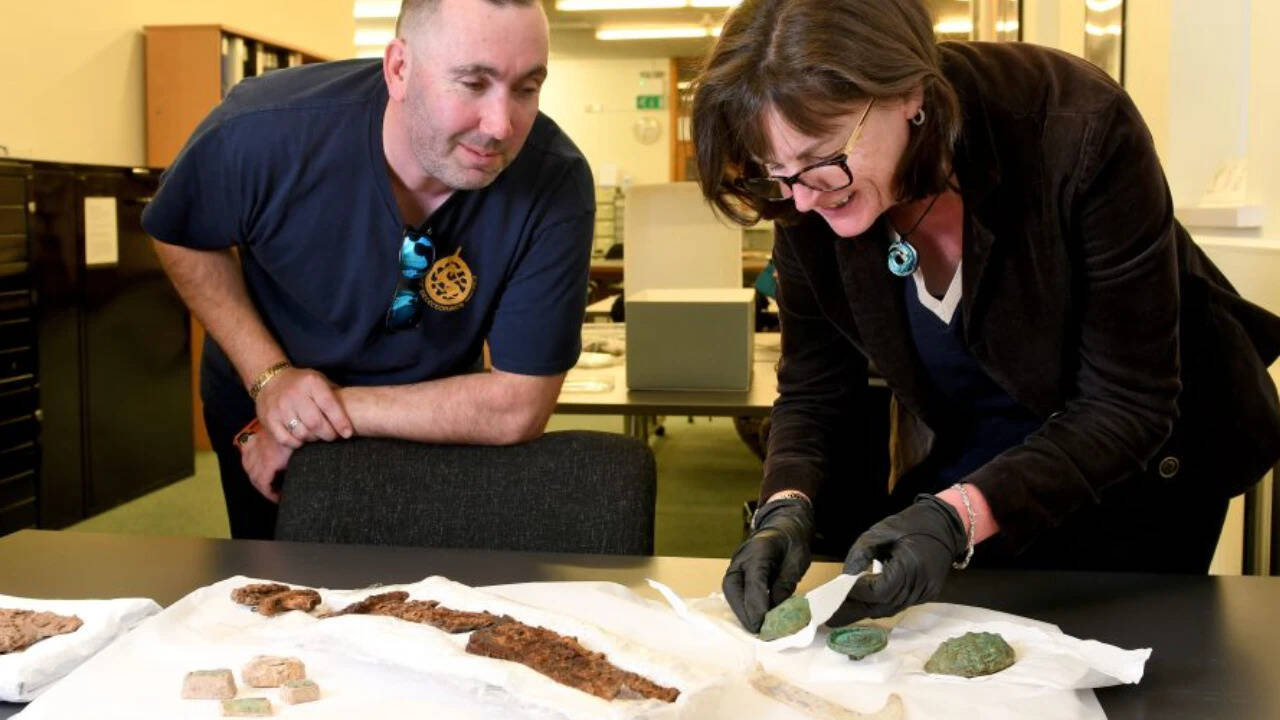
Metal detectorist Daniel Crowe discovered a Viking hoard on the Isle of Man that dates to around AD 900. The collection includes three intricately decorated bronze brooches, a Viking sword, trading weights and scales, a bronze ladle, and an axehead. The Isle of Man Coroner for Inquests has formally declared the find Treasure, recognising its exceptional archaeological and historical significance.
A selection of the objects was displayed at the Viking Gallery of the Manx Museum on 11 November 2026, allowing visitors to view the artefacts. Two of the brooches are oval and feature elaborate interlocking animal motifs, a distinctive element of Viking art. These brooches were worn by women to fasten clothing. Only one other pair of similar oval brooches has previously been found on the island, discovered by Crowe’s father, John Crowe, and fellow detectorist Craig Evans. The new brooches may be about 50 years older than the earlier pair and could represent evidence of the earliest known female Viking‑Age burial on the island.
A third brooch, originally gilded, displays decorative spirals and a glass centre. It is the first of its kind found on the Isle of Man, adding a valuable piece to the island’s archaeological record. The sword, the 13th Viking sword discovered on the island, survives in about two‑thirds condition, including parts of its hilt. X‑ray analysis revealed fine silver inlay and twisted silver wire on the hilt, indicating considerable decorative effort. The sword appears to have been deliberately broken, possibly as part of a burial ritual, with additional damage occurring after burial.
The juxtaposition of the sword with jewellery has led archaeologists to consider a possible double burial, as weapons are traditionally associated with men and jewellery with women. However, the original burial site was disturbed over the past thousand years, making it difficult to determine the exact arrangement or ownership of the objects.
Trading weights and fragments of bronze balance scales were also recovered. These instruments would have been used to weigh precious metals and coins during commercial transactions, indicating connections to trading networks across the Irish Sea. The decorated lead weights are the first examples of their kind found on the Isle of Man and are the most intricately decorated Viking trading weights discovered on the island to date.
Other unusual items include a bronze ladle, possibly used during feasts or ceremonies, and a Viking axehead. The discovery was made by Daniel Crowe and Rhett Britton, who helped locate the axehead, part of the balance scales, and additional iron objects. Crowe chose not to clean the artefacts after finding them, preserving their original condition for professional examination.
Before conservation work began, specialists from Manx Care’s Radiology Team used imaging technology to examine the objects beneath compacted soil. The scans revealed details not visible to the naked eye and guided conservators in how best to uncover and preserve the delicate artefacts.
The Isle of Man has a long history of Viking settlement, with Scandinavian seafarers arriving in the 9th century. Their influence continues to shape Manx identity, including the island’s parliament, Tynwald, which traces its origins to the Viking Age. Archaeological discoveries have also revealed evidence of Viking burial traditions, where weapons, jewellery and personal possessions were placed alongside the dead to reflect identity, occupation, beliefs and social standing.
Visitors can view a selection of these 1,100‑year‑old treasures at the Manx Museum in Douglas, where the hoard helps to broaden the understanding of Viking life beyond the common image of warriors and raiders.