World
CCTV Footage Shows China’s J‑10C Carrying Russian‑Origin Kh‑29T Missile
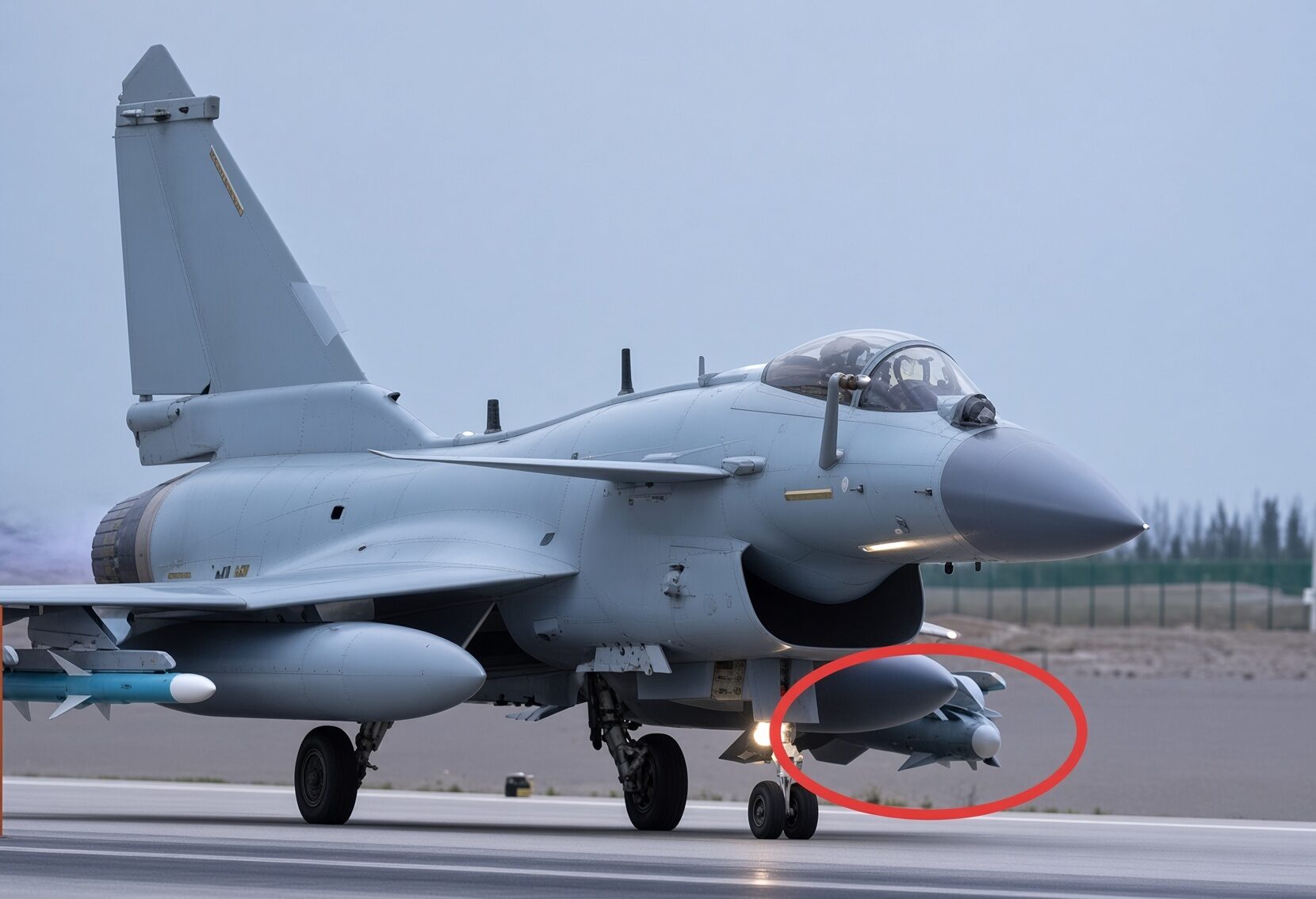
State broadcaster CCTV released new footage that appears to show a Chinese J‑10C fighter jet carrying a Kh‑29T air‑to‑surface missile of Russian origin. The Kh‑29 entered service with the Soviet Air Force in 1980 as a heavy missile for attacking hardened targets. It uses a television‑guided seeker, can lock onto a target before launch, and has a maximum range of about 30 km. The missile weighs roughly 685 kg, with a 320‑kg warhead that combines high‑explosive and armor‑piercing elements.
According to Hong Kong‑based SCMP, China imported around 2,000 Kh‑29T missiles along with Sukhoi Su‑30MKK jets in the early 2000s. The missile later appeared on Chinese JH‑7A fighter‑bombers and more recently on J‑16 fighters. Chinese social media accounts suggest the missile may have been modified to use an imaging‑infrared seeker instead of the original television guidance.
The J‑10C is part of the PLAAF’s “Four Swordsmen” – the J‑20, J‑35A, J‑16 and J‑10C – and is equipped with modern avionics, an AESA radar and the long‑range PL‑15 air‑to‑air missile. Its appearance with a Kh‑29 raises questions about why China would equip a cutting‑edge jet with a missile developed over four decades ago. One possibility is that the Kh‑29 provides a different capability: its heavy warhead is suited for tactical attacks against relatively close, hardened targets, complementing longer‑range stand‑off weapons such as the Chinese KD‑88.
China already has stocks of Kh‑29 missiles. If Beijing can refurbish, upgrade and integrate these weapons with domestic aircraft, it can extract additional value from existing inventory rather than produce new missiles.
The J‑10C’s potential role mirrors the evolution of the American F‑16, which began as a lightweight fighter and later gained extensive ground‑attack capabilities. China’s newer fifth‑generation fighters – the J‑20, J‑35A and J‑16 – are designed for high‑intensity missions, while the J‑10C could serve as a flexible multirole platform capable of both air‑to‑air and air‑to‑ground missions.
The Kh‑29T was originally acquired by China as part of the weapons package for the Su‑30MKK, a long‑range, two‑seat fighter delivered to the PLAAF in 2000. The Su‑30MKK provided China with access to modern Russian precision‑guided weapons, including the Kh‑29T, Kh‑59ME, Kh‑31P and guided bombs, and helped develop experience with sophisticated multirole aircraft.
The appearance of a modified Kh‑29 on the J‑10C suggests China is still finding ways to use weapons acquired during that earlier period.