Space
ISRO to Launch NVS-03 Satellite with Indigenous Atomic Clock on GSLV‑F18
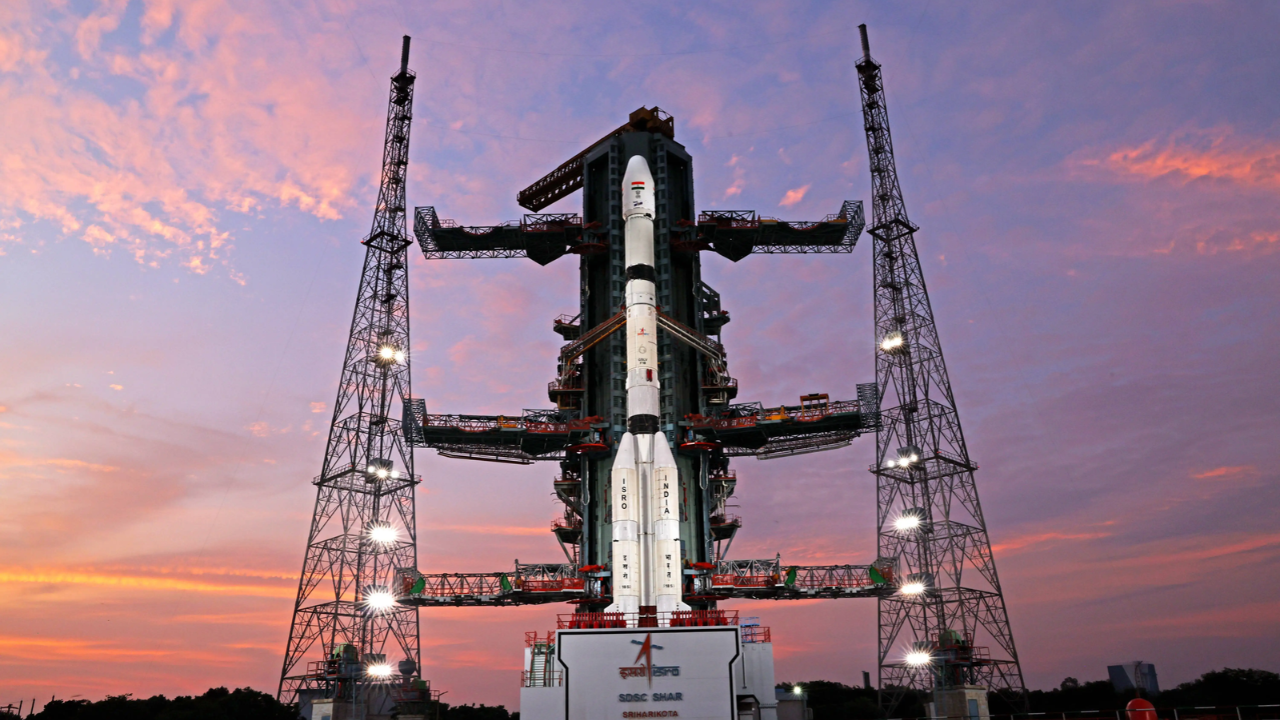
The Indian Space Research Organisation (ISRO) will launch its NVS‑03 satellite on the GSLV‑F18 rocket on Friday night. The launch is scheduled for 11.51 pm from the Second Launch Pad at the Satish Dhawan Space Centre (SDSC SHAR) in Sriharikota. It will be the 20th flight of the GSLV‑F18 and will place the third indigenous atomic clock in space as part of India’s next‑generation navigation satellite programme.
NVS‑03 carries multiple atomic clocks, including an indigenously developed Rubidium atomic clock and a set of procured clocks. The satellite is part of India’s effort to strengthen its satellite navigation services under the Indian Regional Navigation Satellite System (IRNSS), now called NavIC (Navigation with Indian Constellation). NavIC provides accurate position information to users in India and a region extending up to 1,500 km beyond the country’s boundary.
The first seven IRNSS satellites were launched between 2013 and 2016. The NVS series is intended to replace and extend the older IRNSS satellites. NVS‑03 will support these services and further develop India’s ability to maintain its own navigation infrastructure.
ISRO said the satellite’s coverage will include India’s landmass and a 1,500‑km region around the country’s geopolitical boundary. In addition to the existing L5 and S signals, NVS satellites add the civilian L1 signal, which most consumer devices and smartphones use for GPS.
Atomic clocks are the most accurate time‑keeping devices, measuring time by monitoring the natural vibrational frequency of atoms such as cesium‑133. Precise timing is essential for satellite navigation, as even a nanosecond error can translate to a positional error of about 300 m on the ground. NavIC’s first‑generation satellites used imported rubidium atomic clocks, several of which failed around 2016‑17, prompting ISRO to develop its own clocks.
The launch aligns with the government’s ‘One Nation, One Time’ vision, which aims to establish Indian Standard Time (IST) as a common and reliable time reference across the country. On 29 August, the central government notified the Legal Metrology (Indian Standard Time) Rules, 2026, a step toward making IST a legally recognised and traceable time reference. The rules will take effect 180 days after publication in the Official Gazette.
According to the Ministry of Science and Technology, accurate and synchronised time is fundamental to modern digital and critical infrastructure, including telecommunications, financial transactions, power grids, transportation, data centres and government information systems. The development of indigenous atomic clocks for satellite navigation is part of India’s broader effort to strengthen control over critical timing and navigation infrastructure.
Frequently asked questions
When and where is the NVS‑03 launch scheduled?
The launch is scheduled for Friday night at 11.51 pm from the Second Launch Pad at the Satish Dhawan Space Centre (SDSC SHAR) in Sriharikota.
What is the significance of the atomic clocks on NVS‑03?
NVS‑03 carries an indigenously developed Rubidium atomic clock and other clocks, making it the third indigenous atomic clock in space, strengthening NavIC’s navigation services and supporting India’s ‘One Nation, One Time’ vision.