Climate & Environment
Dust‑laden Roads in Gurugram and Across India Pose Year‑Round Health Threat
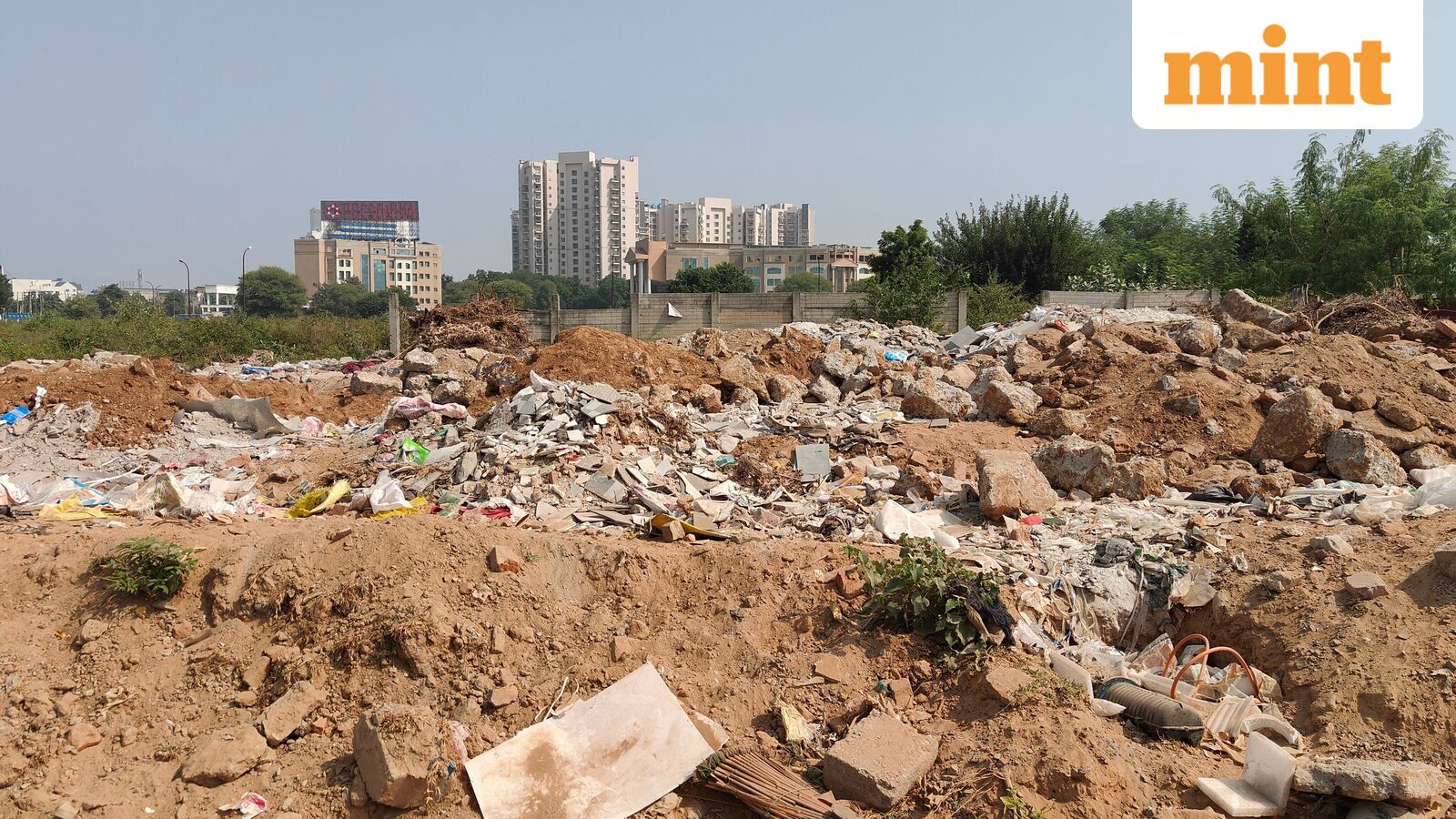
Gurugram – Sumit Tayal, 38, lives in Ballabgarh, Haryana, and commutes daily on a state roadways bus to Sadar Bazar, Gurugram’s old shopping district. The 45‑km journey now takes about two and a half hours each way, a total of five hours of travel, including weekends. Tayal says the roads are heavily dusty, especially trucks carrying construction material and debris without covers. He often coughs and suffers respiratory infections, which worsen in winter when air pollution peaks. Tayal is a public‑transport advocate and a member of Clean Air Bharat, a citizen‑activist group. He reports that his social‑media account has been blocked repeatedly for posting about illegal waste burning and unpaved roads.
In contrast, Nirvana Country, a gated residential society in Gurugram’s Sector 50, offers a quieter environment with planned layout and greenery. Anup Sood, who moved there in 2007, notes a decline in quality of life. His son, born in 2010, was diagnosed with allergic rhinitis at age five after exposure to dust and dirty air. Now 16, the boy cannot play football and often wheezes in winter, requiring nebulization. Sood says the family is seriously considering leaving Gurugram for a place with cleaner air.
Ruchika Sethi, founder of Clean Air Bharat and resident of Nirvana, describes the city’s dust as a grey‑white film that replaces the soot of earlier decades. She attributes the dust to local sources that are controllable: dumping of construction and demolition waste in open areas, lack of dust‑management protocols during construction, and unpaved or dug‑up roads. Sethi compares Gurugram’s “malwa” hills—Hindi for construction debris—to Mumbai’s upscale Malabar Hills.
Gurugram’s rapid urbanisation earned it the nickname “millennium city,” but it now experiences extreme heat, monsoon flooding, and winter smog. Pulmonologist Arunesh Kumar says prolonged exposure to dust leads to COPD, asthma, and lung cancer even among non‑smokers.
A 2024 study by researchers from IIT Delhi and Kanpur examined 259 sites in 32 Indian cities. Road dust levels exceeded WHO guidelines in 55% of cases, and the study estimated that about 10,000 lives are lost annually due to PM2.5 pollution from road dust. The study also found that road dust contributes 30‑60% of PM2.5 and PM10 levels in metropolitan regions.
A 2026 working paper by WRI India measured silt loads on Mumbai, Ahmedabad, and Indore, finding values ranging from 1 to 20 g/m². The highest values were 6.8 g/m² in Mumbai, 4.9 g/m² in Indore, and 19.7 g/m² in Ahmedabad. For comparison, Milan, Italy, recorded 0.006‑0.066 g/m², and the global standard is less than 1‑2 g/m².
The three Indian cities use manual, water‑based, and mechanical cleaning, but dust levels return to pre‑cleaning levels within four to eight days. WRI’s Clean Air Action unit notes that wind‑blown dust resuspends due to vehicular movement and reacts with tire and brake wear dust, forming more toxic compounds. The toxicity of road dust is poorly understood, and WRI has sent samples from Mumbai for chemical analysis.
The National Clean Air Programme (NCAP) has allocated nearly ₹16,500 crore since 2019 to clean air in 130 cities. Between FY18 and FY25, 64 of those cities reduced annual PM10 emissions by 20% or more, but only 22 met the national ambient air quality standard of 60 µg/m³. WRI notes that more than 60% of NCAP funds are spent on dust management, including end‑to‑end paving, mechanised sweepers, green areas, and construction‑waste processing.
Mechanised sweeping is increasingly deployed, but its effectiveness is unclear. Indicators such as road length cleaned or machine frequency do not directly show dust removal or pollution reduction. Vacuum cleaning can release finer particles back into the air, and disposal of collected dust often ends up in landfills rather than being stabilised.
Respirer Living Sciences, a climate‑tech startup, reports that in 2025 road dust and construction were the leading sources of PM10 pollution in Delhi, Mumbai, Kanpur, and Surat, contributing more than 30% of PM10. Founder Ronak Sutaria says that while PM2.5 dominates public debate, PM10 remains a persistent threat that varies significantly from street to street. He calls for real‑time, location‑specific data to guide targeted interventions.
Suggested measures include GPS‑tracked mechanical sweepers on paved arterials, biodegradable dust suppressants on unpaved roads, data‑driven heat maps for enforcement, and vegetation along dust corridors. Mumbai’s 2025 mandate for real‑time monitoring at 3,000+ construction sites reportedly reduced air pollution by 10‑15%.
Sethi believes that no solution will work unless dust is contained at its sources, such as construction sites and unpaved road stretches. After a decade of campaigning for clean air, she moved to Goa for three months during the winter of 2025 and may do so again. She acknowledges that this is a privilege most people, especially those whose livelihoods depend on Gurugram, cannot afford.
Frequently asked questions
What percentage of Indian city sites exceeded WHO PM2.5 guidelines according to the 2024 IIT Delhi and Kanpur study?
55% of cases.
How many lives are estimated to be lost annually due to PM2.5 pollution from road dust?
About 10,000 lives.
Which city had the highest silt load measured by WRI India in 2026?
Ahmedabad with 19.7 g/m².