Climate & Environment
UN Secretary‑General Warns of New Era of Climate Extremes as WMO Reports Record Heat
By AFP
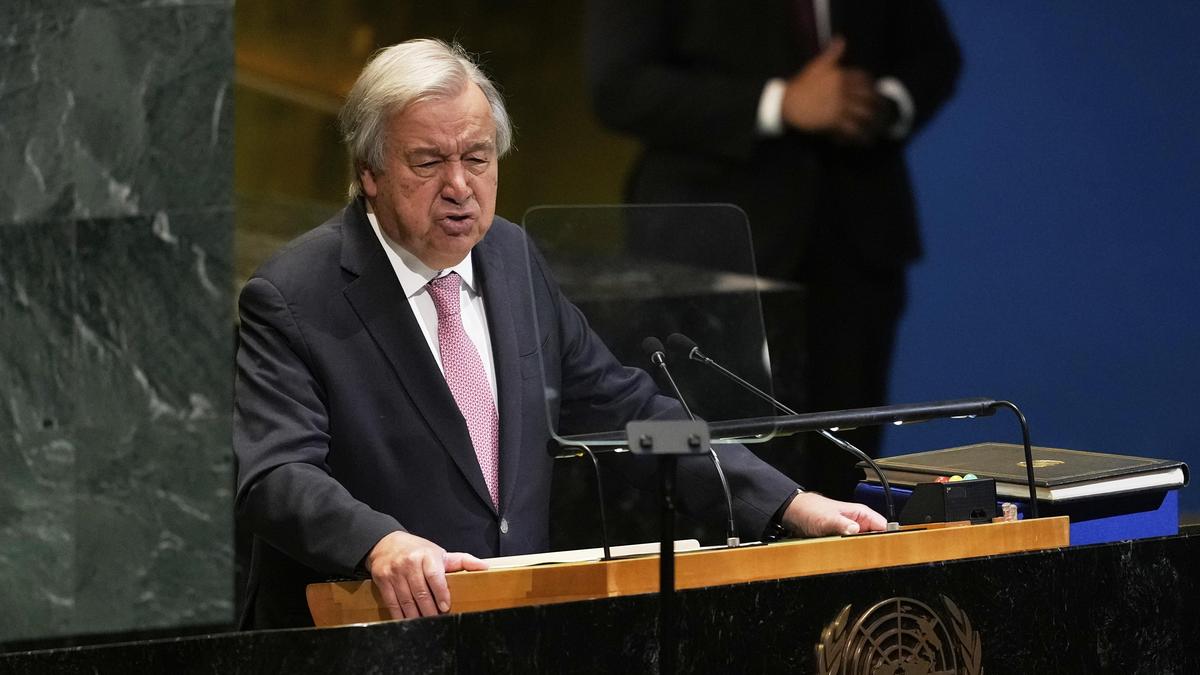
On Monday, November 9 2026, United Nations Secretary‑General Antonio Guterres warned that the world is entering a new reality in which climate extremes are the norm. Speaking at the COP31 climate conference in Turkiye, he urged leaders in Antalya to “get serious” by cutting emissions faster, accelerating a just transition from fossil fuels, and delivering the finance and protection vulnerable countries need. He said, “A supersized El Nino is colliding with a planet already superheated by manmade climate change. We have entered a new age of climate extremes.”
The UN’s World Meteorological Organization (WMO) released a report indicating that 2026 continues a streak of exceptional global temperatures, melting ice and rising sea levels. The agency noted that each of the past 12 years has been among the hottest 12 years on record, and that this year is expected to be among the hottest ever. WMO chief Celeste Saulo told reporters in Geneva that the current exceptionally strong El Nino could unleash more heat and extreme weather well into next year, and that another record‑breaking year is likely in 2027.
The WMO said the global average surface temperature between January and September 2026 was about 1.47 °C above the pre‑industrial average. The El Nino, expected to be the strongest since 1950 at least, could raise that figure higher by year‑end. Preliminary data places 2026 among the four hottest years on record, WMO climate information chief John Kenned told reporters, adding that the final numbers might bring it close to the top.
Saulo explained that El Nino releases heat from the ocean, which this year has been the warmest ever measured. El Nino is declared when the sea surface temperature is half a degree above average in the tropical Pacific; from now through January, the WMO forecasts it may be 3.8 °C above average.
The WMO also reported that the global sea level was the highest on record, freshwater was dwindling and glaciers were continuing a long‑term retreat. In 2025, the annual mass loss of ice was enough to fill five Olympic pools every second. Saulo warned that “we are supercharging our weather and El Nino will be a risk multiplier,” noting that heatwaves, tropical cyclones and rainstorms are intensifying faster than historical baselines.
On a positive note, the WMO highlighted a significant increase in countries with essential multi‑hazard early warning systems, rising from 55 in 2015 to 136 last year. It urged COP31 to ensure more investment in sustained global observations, data‑gathering and forecasting needed for such systems to work, adding, “We cannot afford to fly blind.”