Climate & Environment
Turkish Climate Minister Calls for Greater Climate Spending than Defence, Questions Fossil Fuel Phase‑Out Debate
By Adam Morton
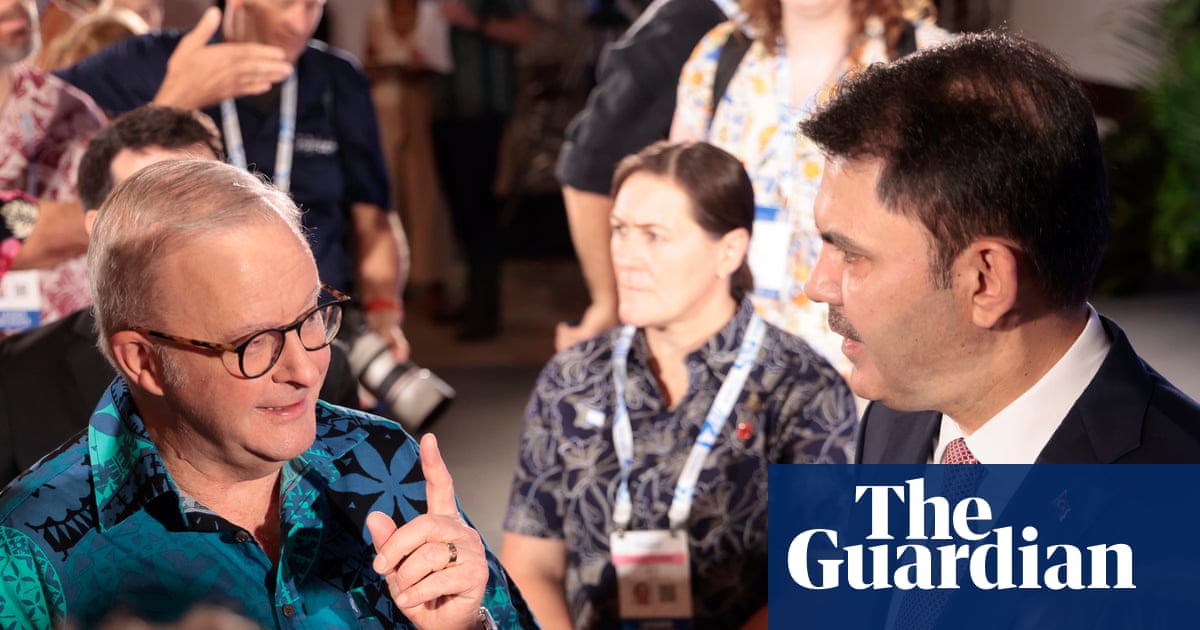
Turkish climate change minister Murat Kurum, who will host the next UN climate summit, said wealthy nations should allocate far more of their budgets to climate action than the 5% of GDP that NATO members plan to spend on defence. He argued that the climate crisis is a security issue and that spending on mitigation is cheaper than post‑disaster recovery.
Kurum, who is the president‑designate of COP31, told the Guardian that the world is already in a transition away from fossil fuels and suggested that indirect measures could address fossil‑fuel use. He warned that NATO countries have pledged to raise defence budgets to 5% of GDP by 2035 but have committed far less to climate finance.
The COP31 summit will be held in Antalya, Turkey, in November. In the lead‑up, a delegation of national leaders, ministers, officials and civil society members visited Fiji to prepare for the event. The pre‑COP meeting in Nadi, Fiji, attracted 13 national leaders, mainly from the Pacific, and about 30 ministers from India, European nations, China, Saudi Arabia and other major emitters, along with heads of global agencies and roughly 4,000 other participants.
Delegates also visited Tuvalu, a low‑lying atoll nation of about 10,000 people. They saw a 20‑hectare land reclamation project and heard from local children about the challenges of living in a country only about two metres above sea level. Fiji’s climate minister Lynda Tabuya gave a moving closing address, urging delegates to remember the people they met and to carry the Pacific’s concerns forward.
A recent UN Environment Programme report warned that, under the most optimistic scenario, global warming could reach at least 1.8 °C, well above the 1.5 °C target of the Paris Agreement. The report called for immediate and sustained emissions cuts, noting that every fraction of a degree avoided would save lives and reduce economic losses.
Throughout the pre‑COP, Pacific leaders repeatedly demanded that countries act to keep the 1.5 °C goal alive, that climate finance be accessible to vulnerable communities, and that ocean health be prioritised. Australia’s climate minister Chris Bowen highlighted that only 0.2 % of global climate finance is spent on helping small island developing states adapt, and that those most in need, such as Tuvalu, receive the least.
Kurum and Bowen said they would focus in Antalya on securing support for a global goal of 35 % of the energy needed for homes, businesses, factories and vehicles coming from electricity by 2035, up from the current 21 %. The question of a direct global agreement to phase out fossil fuels remains contentious.
Both host countries backed a multi‑country statement in Fiji supporting a global transition away from fossil fuels, echoing language adopted at COP28 in Dubai. However, they faced criticism for continuing to support new coal and gas projects and for being largely silent before the pre‑COP on the need to phase out fossil fuels.
Bowen said the way to stop using fossil fuels is not to cut supply but to build enough renewable energy so that fossil‑fuel power plants become unnecessary. Kurum said the world is already in a transition and that focusing on wording about transitioning away from fossil fuels might not be productive, as further progress seemed unlikely.
Delegates from some countries, including Saudi Arabia, Russia and other oil‑producing states, strongly opposed naming fossil fuels at COP30 in Brazil. Dozens of countries frustrated with what they see as a UN stalemate on the issue met separately in Colombia this year to discuss a path away from fossil fuels. They are due to meet again next July in Tuvalu and want the issue to be included in an agreement in Antalya.
Tzeporah Berman, chair of the Fossil Fuel Non‑Proliferation Treaty Initiative, said Pacific leaders had been clear in Nadi that there should be an urgent fossil‑fuel phase‑out, meaning no new projects. She added that one cannot phase something out by building more of it.