
India runs one of the world’s most far-reaching social safety nets — a rural jobs programme that legally guarantees paid work to millions of households. For nearly two decades, it has acted as a financial lifeline for villages across the country. Now, sweeping changes to the scheme have sparked a nationwide debate over its future.
Introduced in 2005, the programme gave every rural household the right to demand up to 100 days of paid manual work each year at minimum wages. The idea was simple but powerful: when farming incomes fall short or jobs dry up, the state steps in to provide employment.
This mattered deeply in a country where nearly two-thirds of the population lives in rural areas, and agriculture supports millions while contributing a relatively small share to the economy. Over time, the scheme became one of the most studied anti-poverty initiatives in the world.
A Backbone of Rural Survival
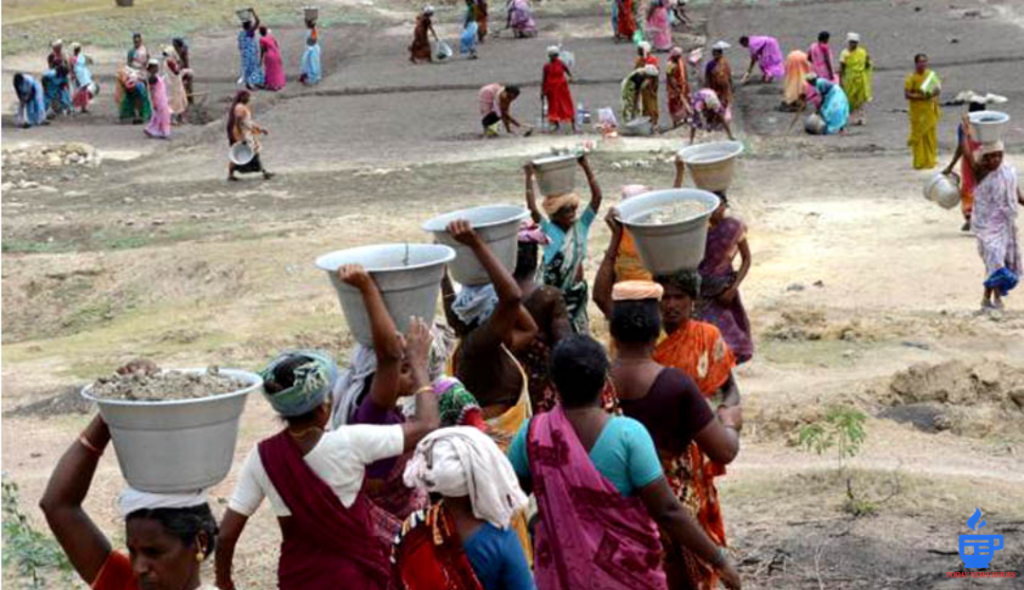
The programme created public assets — roads, ponds, irrigation channels — while stabilising rural incomes. It also stood out for its inclusivity: women make up more than half of its workforce, and a significant portion comes from historically marginalised communities.
During crises, its importance became even clearer. When the Covid-19 pandemic forced millions of migrant workers back to their villages, demand for jobs under the scheme surged. Economists credit it with supporting consumption, reducing poverty, improving school attendance, and even nudging up private-sector wages in some regions.
Although the government led by Narendra Modi was initially critical of the programme, it repeatedly relied on it during economic shocks.
What Has Changed Now?
Last week, the government introduced a new law that repeals and rebrands the scheme, removing even the name of Mahatma Gandhi, which had been added in 2009. While the renaming drew political attention, experts say the real impact lies in the structural changes.
On paper, the reforms appear generous. The annual work guarantee has been increased from 100 to 125 days, and the rule that workers must receive unemployment allowance if work is not provided within 15 days remains.
But funding has shifted dramatically.
Earlier, the central government covered all labour wages and most material costs, with states contributing only a small share. Under the new system, costs will be split 60:40 between the Centre and states, potentially pushing state governments to shoulder a much heavier financial burden.
Despite this, states remain legally responsible for providing work — or paying unemployment allowances — even though the Centre controls overall funding and state-wise allocations.
Supporters vs Critics
The government describes the overhaul as a modern, efficient, and corruption-free redesign that empowers rural workers and ensures employment security.
Critics, however, argue that the changes weaken a rare legal right in India’s welfare system. By capping funds and shifting costs to states, they fear the guarantee could become conditional rather than universal.
Development economists point out that increasing the work limit to 125 days may not deliver real benefits if funding constraints continue. In practice, only a small fraction of households currently receive the full 100 days of work, making the higher ceiling largely symbolic.
Some experts argue that raising wages and ensuring timely payments would have a far greater impact than increasing the work limit on paper.
Global Concern Over a Global Model
The reforms have drawn international attention. A group of global scholars and rights experts recently urged the Indian government to reconsider, warning that altering the funding structure could undermine a programme widely seen as a model for employment-based social protection.
They argue that dismantling or diluting such a scheme would not just affect India’s rural poor, but also weaken a globally admired example of how governments can protect livelihoods during economic stress.
As India redefines one of its most influential welfare initiatives, the question remains: will these changes strengthen rural security — or quietly erode one of the strongest guarantees the poor have ever had?

