Space
PSLV‑N1 Maiden Launch Postponed to Early 2027
By Anonna Dutt
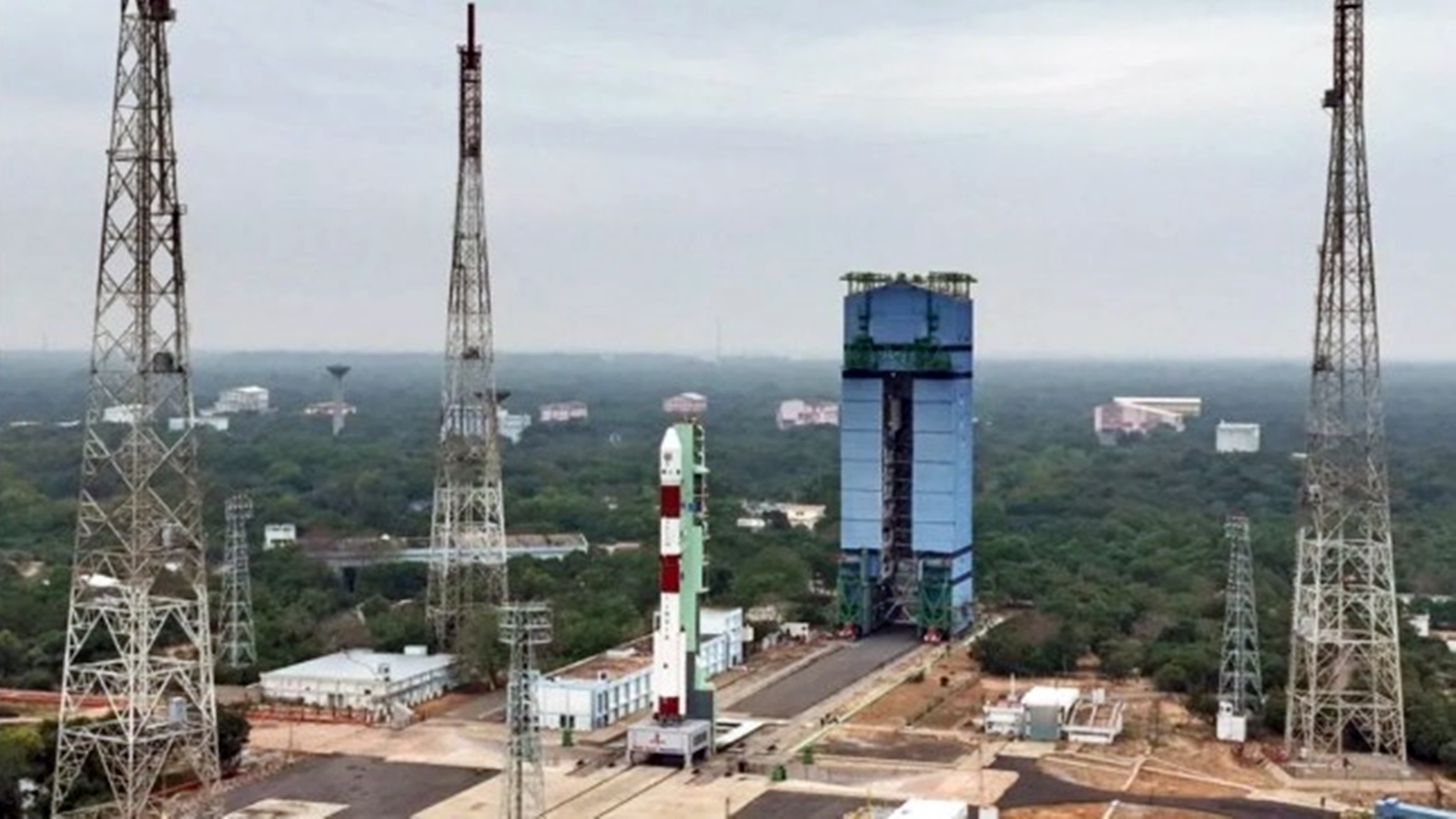
India’s privately built PSLV‑N1 is expected to be delayed until early 2027, extending the programme that originally planned at least two launches this year. The rocket was slated to carry ISRO’s earth‑observation satellite EOS‑10. The PSLV‑N1 was built by a consortium led by Hindustan Aeronautics Limited (HAL) and Larsen & Toubro Limited (L&T). The consortium received a contract in 2022 to manufacture five PSLV rockets, with the first vehicle to be produced within two years and the remaining ones delivered every six months. By that schedule, the first delivery should have occurred in 2024 and all five by 2026.
Delays stem from coordination issues with the payload and launch window, according to A T Ramchandani, Senior Vice‑President and Head of L&T Precision Engineering & Systems, at the India International Space Conclave. Although the launch vehicle is ready, the current postponement is linked to ISRO’s hesitation after two consecutive PSLV failures. ISRO is likely to approve the launch of the privately developed vehicle only after a successful ISRO launch.
A source said, “After the setbacks, the providers of certain components were changed on recommendation of the failure assessment committee. The changes have already been made to the PSLVs.” The PSLV has powered 65 of ISRO’s 107 launches, with only four failures to date. The most recent failures were PSLV‑C61 on 18 May 2025 and PSLV‑C62 on 12 January 2026, both involving anomalies in the third stage. ISRO maintains the failures had different causes, but sources say the problems have now been fixed.
Ramchandani also highlighted the need for a Space Components Mission, arguing that true sovereignty requires domestic design, build, operation and upgrade of space systems rather than merely indigenous content.
On the sidelines of the conclave, Indian astronaut designate Air Commodore Prasanth Balakrishnan Nair called on major Indian industries to form a consortium for complex space missions, including a human spaceflight. He urged companies such as Ambani, Adani, Mahindra and Tata to collaborate on private human space endeavors. Nair said the first uncrewed flight of the Gaganyaan mission would serve as a proof of concept for all systems and procedures, with the uncrewed flight likely later this year and at least two more flights before a crewed mission.
Frequently asked questions
Why was the PSLV‑N1 launch postponed?
The postponement is due to coordination issues with the payload and launch window, and ISRO’s hesitation after two consecutive PSLV failures.
Who built the PSLV‑N1 rocket?
The PSLV‑N1 was built by a consortium led by Hindustan Aeronautics Limited (HAL) and Larsen & Toubro Limited (L&T).
What were the recent PSLV failures?
The most recent failures were PSLV‑C61 on 18 May 2025 and PSLV‑C62 on 12 January 2026, both involving anomalies in the third stage.