Climate & Environment
COP31 Collapse Highlights Deep Divides Over Fossil Fuels and Finance
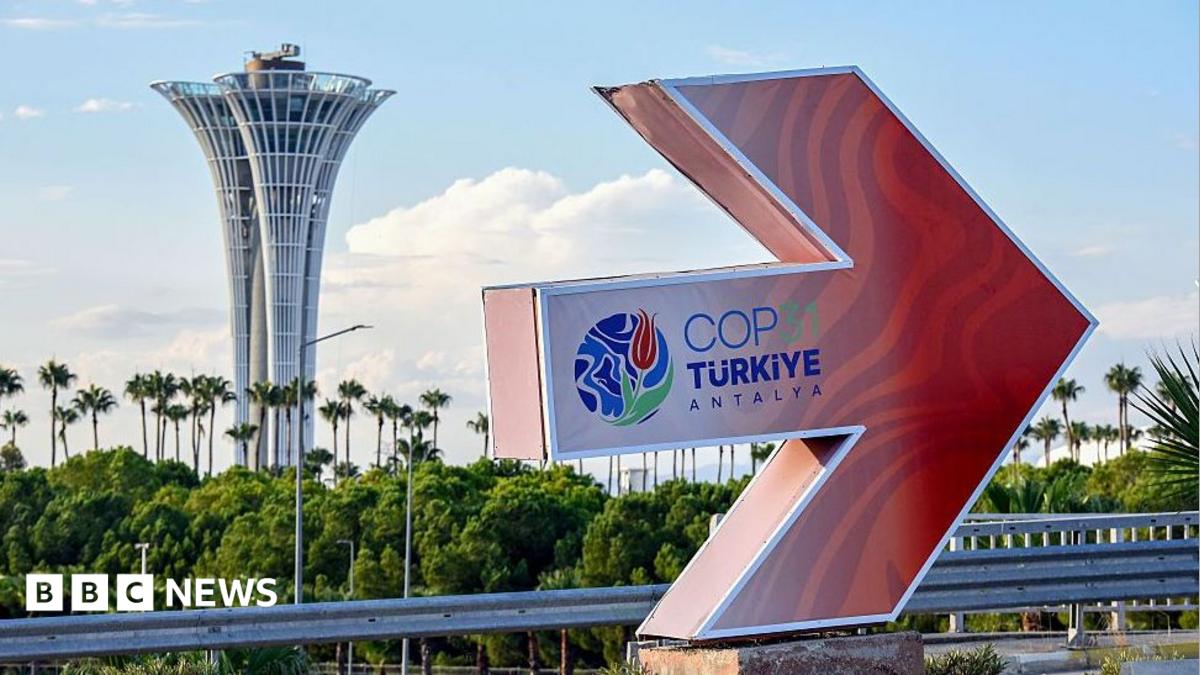
In Antalya, Turkey, the 31st Conference of the Parties (COP31) ended without a declaration after a dispute over the inclusion of fossil fuels. Australian minister Chris Bowen described the backdrop as “the most complicated and fraught geopolitical environment in living memory,” noting that competing demands had become “unbridgeable red lines.” Turkey’s environment minister and summit president, Murat Kurum, warned that governments should not disappoint people desperate for climate action by getting “hung up on one word or phrase.”
At COP28 in Dubai three years earlier, parties had agreed to transition away from fossil fuels. The Antalya draft omitted any reference to fossil fuels, leading several countries to reject it. They argued that a promise to reduce emissions is not the same as a commitment to move away from the fuels responsible for most of them. Without that explicit commitment, they feared the new agreement would weaken the Dubai pact.
Opposition was most visible from oil‑producing nations. Saudi negotiator Mohammad Ayoub, speaking for 22 Arab League countries, said Arab nations had contributed less than 2% of historical greenhouse‑gas emissions and that wealthy industrialised nations bore the overwhelming responsibility. Russia’s delegate Sergei Kononuchenko warned that cutting oil and gas supplies before demand fell would cause shortages, higher prices and energy poverty, and therefore could not agree to any formulation on fossil fuel.
The United States, which had previously helped broker compromises, had no official delegation in Antalya. President Donald Trump had rejected the international climate process. Meanwhile, Trump, China’s President Xi Jinping and Russia’s Vladimir Putin issued a joint declaration in Shenzhen pledging to increase production and supply of refined petroleum products.
Despite the collapse, about 130 governments—roughly two‑thirds of those represented—backed explicit language on moving away from fossil fuels. Christiana Figueres, former UN climate chief, said countries were right to walk away rather than endorse a weaker commitment that might undermine progress. The failure therefore does not indicate a loss of appetite for climate action.
Kononuchenko also criticized climate finance, saying that much of the money wealthy countries provide to poorer nations comes as loans rather than grants, leaving developing countries to repay more than they receive. He described this as “an old colonial distribution of labour under a new banner.” He directed his criticism to the EU, a complaint shared by many developing countries.
UN climate chief Simon Stiell acknowledged the need to “improve, modernise and reform” the process. Some governments have proposed voting when consensus is impossible, while others want countries to move faster to make their own agreements outside formal talks. Consensus remains important because international climate cooperation is largely voluntary, and voting could overrule smaller and poorer nations.
The failure to agree a summit declaration does not mean climate action stops. Solar panels, batteries and electric vehicles are becoming increasingly competitive, and disruptions in global oil and gas supplies are encouraging countries to generate their own electricity rather than depend on imported fossil fuels. The energy transition is moving forward, whatever happens in the UN negotiating rooms, but it is not progressing fast enough to meet climate goals.