World
Xi’s restraint shapes global balance as Trump and Putin grapple with wars
By Wenran Jiang
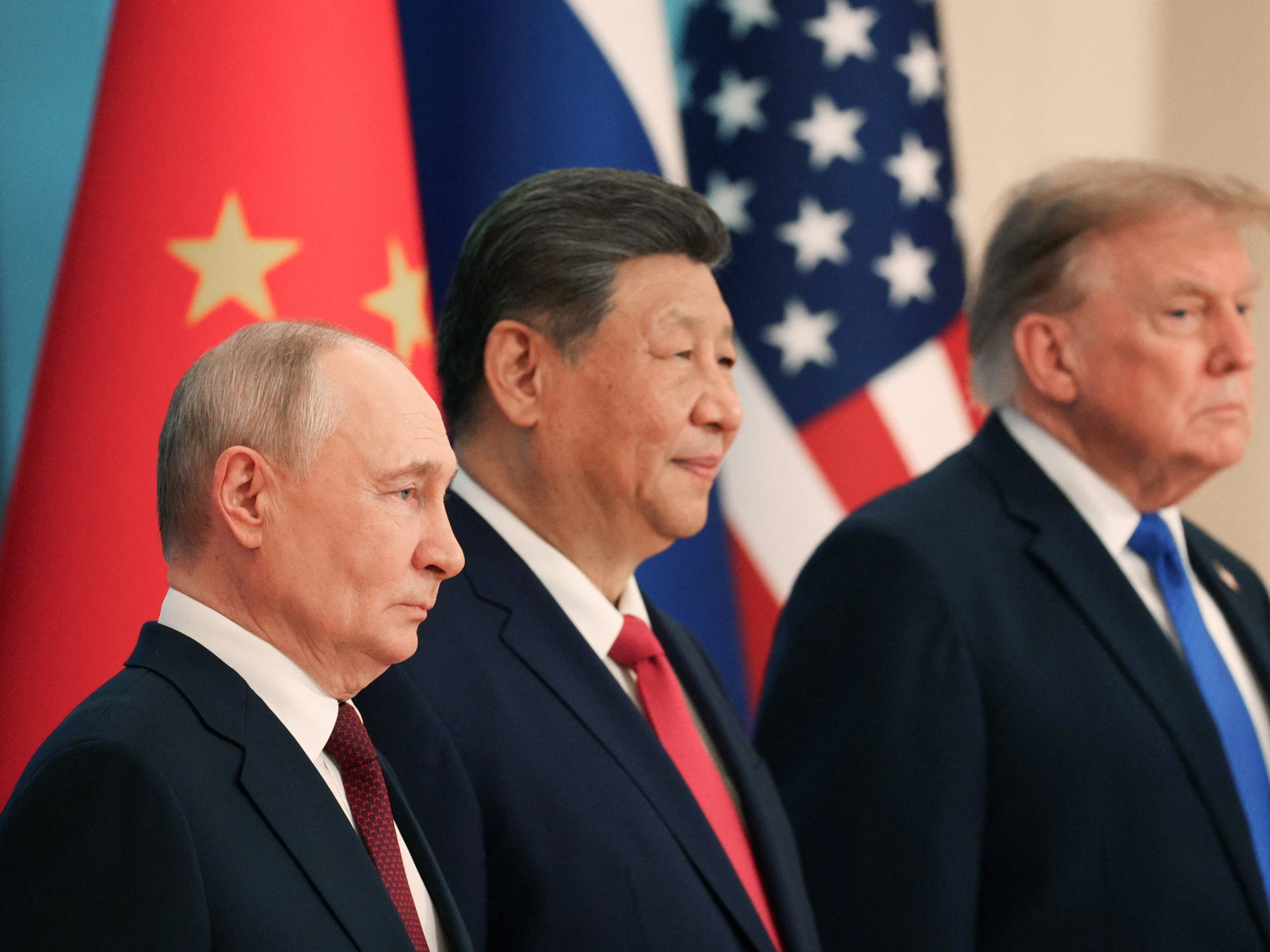
At a trilateral summit in Shenzhen, Chinese President Xi Jinping, U.S. President Donald Trump, and Russian President Vladimir Putin met to discuss global issues. The meeting produced a China‑Russia‑US Declaration toward Peace, emphasizing the importance of harmony among major powers. Xi urged the leaders to abandon “Cold War thinking” and highlighted that when major countries live in harmony, the world enjoys peace; when they clash, turmoil ensues.
The summit revealed a stark contrast among the three leaders. Trump, fresh from a midterm defeat that gave Democrats control of Congress, was engaged in a war against Iran that has destabilized oil supplies, involved the Houthis in Yemen, and disrupted shipping through the Strait of Hormuz. Putin was fighting a fifth‑year war in Ukraine, facing Western isolation and a slowing economy. Ukraine was on the agenda, and the leaders discussed the conflict at the American president’s initiative. U.S. envoys Steve Witkoff and Jared Kushner had travelled to Berlin to brief Ukraine and European leaders, who insisted that decisions about the war be made with Ukraine and Europe.
China’s position on Ukraine was that it had not chosen to arm Russia; its “constructive neutrality” was seen as a way to avoid widening the war and to keep nuclear tensions lower. While the war continued on the ground—Russian drones hit Kharkiv and Ukraine struck oil facilities in Tatarstan and the Kerch Bridge—the Shenzhen talks could not resolve it.
In nuclear discussions, Washington has long sought a trilateral arms‑control framework with Russia and China, but Beijing has declined to join on equal terms. China’s arsenal of about 620 warheads is far smaller than the roughly 5,000 each held by the United States and Russia, a disparity Beijing cites in rejecting equal terms.
The declaration covered UN reform, refined oil supply, opposition to what the leaders described as abuses of jurisdiction by the International Criminal Court, and a pledge that a nuclear war “cannot be won and must never be fought.” Critics called the document the lowest common denominator, noting its limited substance. Nonetheless, Beijing managed to convene the other two powers on its own terms, avoiding a division of the world that some had anticipated.
China’s restraint, more than its force, is setting the terms of the global order. The country’s purchasing‑power advantage, manufacturing base roughly equal to the G7 combined, and growing military capabilities give it the heft to alter the trajectory of ongoing wars. Each war—Ukraine, Iran, and the broader Middle East turbulence—runs through Beijing in some way.
During the summit, Trump was given a prominent role: a welcome on the tarmac, a front‑row seat in a group photograph, and a state banquet. Commentators noted that the host was humbling a supplicant, but the gesture was not a sign of submission. Beijing could afford to grant dignity while conserving its leverage.
China faces vulnerabilities, including a tightening security arc along its periphery, a still‑weakening property market, a youth jobs problem, and corruption within its military. Its “constructive” posture reflects a judgment that exercising influence too freely would expose its limits.
The smaller economies of the region, which the Yalta framework assumed would be carved up, are, if anything, beneficiaries of the stability created by China’s restraint. That is a strange form of domination.
Xi expressed confidence that the seeds planted at the meeting would eventually bear fruit, a bet rather than a result. The “Yalta 2.0” label endures because it is a flattering story, but the world on display in Shenzhen is not governed; it is balanced. China’s greatest power may lie in the wars it has chosen not to enter and its refusal to end them on terms set by others.
Frequently asked questions
What was the main outcome of the Shenzhen summit?
The leaders signed a China‑Russia‑US Declaration toward Peace, urging harmony among major powers and the abandonment of Cold War thinking.
How did the summit address the Ukraine war?
Ukraine was on the agenda; leaders discussed the conflict, China maintained constructive neutrality and did not arm Russia, while U.S. envoys briefed Ukraine and European leaders.
What pledge did the leaders make regarding nuclear war?
They pledged that a nuclear war cannot be won and must never be fought.