Science
Japanese Island Unearths 900‑Year‑Old Octagonal Structure with Chinese Roof Tiles
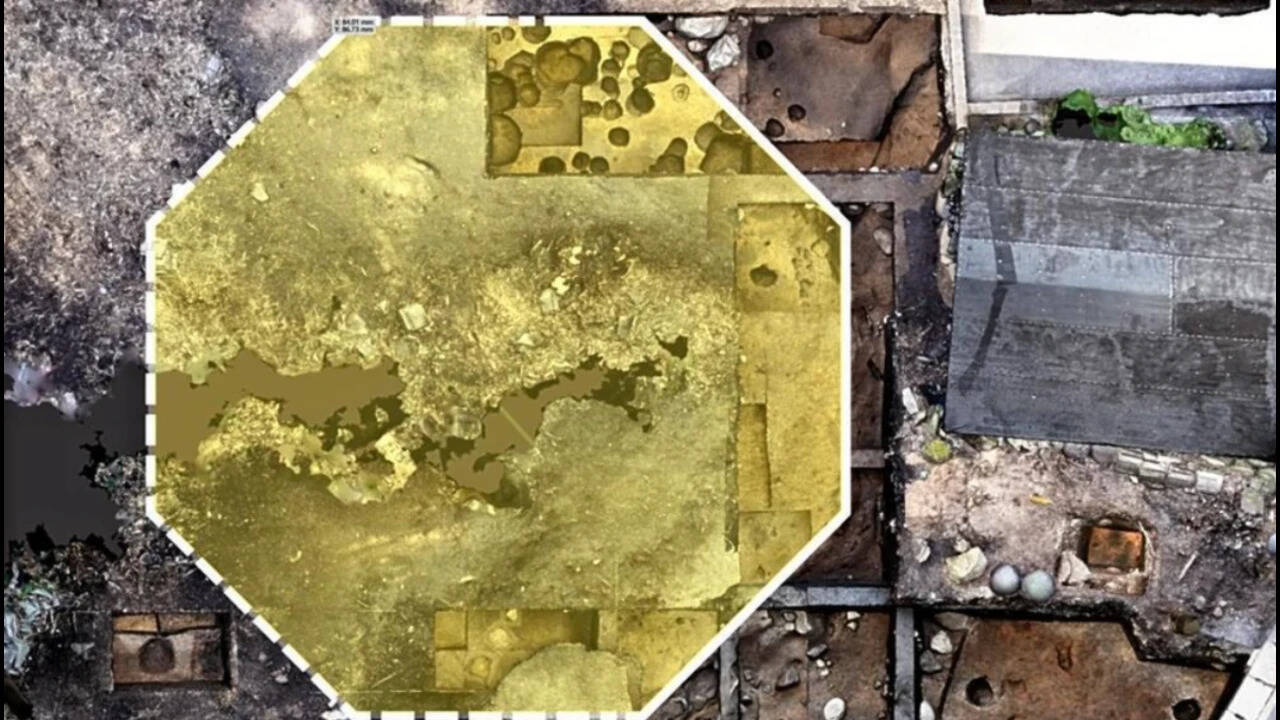
Professor Satoshi Nakazono of Kagoshima International University has been investigating a site on Kuroshima, one of the islands in Mishima Village, Kagoshima Prefecture, since 2014. His team has uncovered ceramics, roof tiles and other objects that originate from China and various parts of Japan. The most significant find is the foundation of an unusual octagonal structure that is believed to be the remains of a Buddhist pagoda or other religious building built about 900 years ago.
The structure measures approximately 8.9 metres from corner to corner on its upper level, with each side about 3.4 metres long. A lower section of the building is wider, ranging between 10 and 11 metres. No upper structure has been found, leaving the exact purpose of the building uncertain.
Imported roof tiles characteristic of China’s Southern Song period were discovered at the site. Kuroshima is the southernmost location in Japan where such tiles have been found. Similar tiles have been uncovered in Hakata and Kyushu, regions closely linked to medieval maritime trade with China. In 2015, researchers identified tiles made from the same moulds at Ningbo in China. Chemical analysis confirmed that the Japanese tiles were produced in China, indicating that the materials travelled roughly 1,000 kilometres by sea before arriving in Japan.
The presence of these Chinese‑style roof tiles, combined with the octagonal layout, suggests that the structure may have served a religious function. Octagonal architecture is associated with Buddhist pagodas and halls in both Japan and China. Nakazono’s team compared the site with other octagonal religious buildings in East Asia, including the nine‑storey pagoda that once stood at Hōshō‑ji Temple in Kyoto and the three‑storey pagoda at Anraku‑ji Temple in Nagano. While these comparisons provide context, the exact nature of the Ōsato structure remains uncertain.
The discovery also highlights Kuroshima’s role in historical maritime trade routes. The ceramics found at Ōsato indicate that its inhabitants were connected to broader trading networks rather than being isolated. Nearby Iōjima, known for its sulphur trade in the medieval period, further underscores the region’s participation in commerce with China.