Opinion & Analysis
Opinion: Islamabad Needs Autonomous City Government, Not Province Status
By Today News Hours Editorial Desk
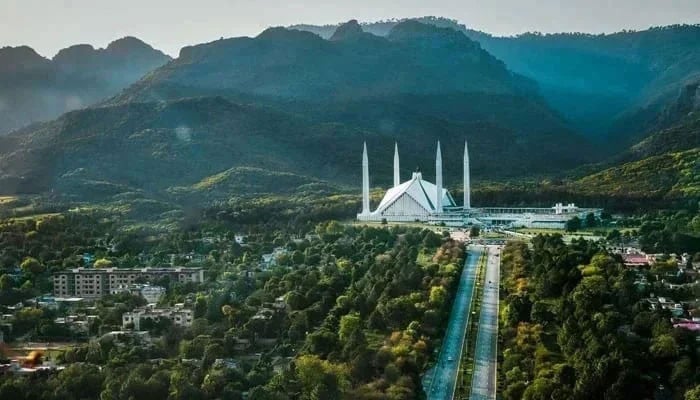
An Islamabad-based columnist has argued against granting Islamabad full provincial status, instead calling for the capital to be given province-like autonomy through an elected metropolitan government.
According to the writer, Islamabad does not require provincial powers accompanied by a new assembly, chief minister, or secretariat. Rather, the city needs a single accountable municipal authority modeled on international examples such as Brasília's federal district, Buenos Aires as an autonomous city, Berlin's city-state structure, Washington D.C., and Canberra's Australian Capital Territory. These examples, the columnist notes, show that a national capital can govern itself effectively without becoming an ordinary province.
Having lived in Islamabad for three decades, the writer describes a persistent governance problem in the city, where authority is fragmented among multiple bodies: the Capital Development Authority (CDA), the Metropolitan Corporation, the interior ministry, and various federal ministries and agencies. This division of responsibility, the columnist argues, means that no single entity is truly accountable.
Islamabad spans 85 square miles and has a population of 1.1 million residents. The writer poses five basic questions facing the city: who is responsible for water, sanitation, transport, land use, and schools.
The columnist proposes that Islamabad be given an elected metropolitan government with authority over water supply, sanitation, roads, transport, schools, primary healthcare, waste management, building control, land-use planning, property taxation, and environmental management. This government should have its own revenue sources, clearly defined expenditure responsibilities, and measurable performance targets.
The writer concludes that with such a structure in place, a single government could finally be held responsible for the capital's administration.