Opinion & Analysis
Nobel Prizes Highlight the Limits of Individual Recognition
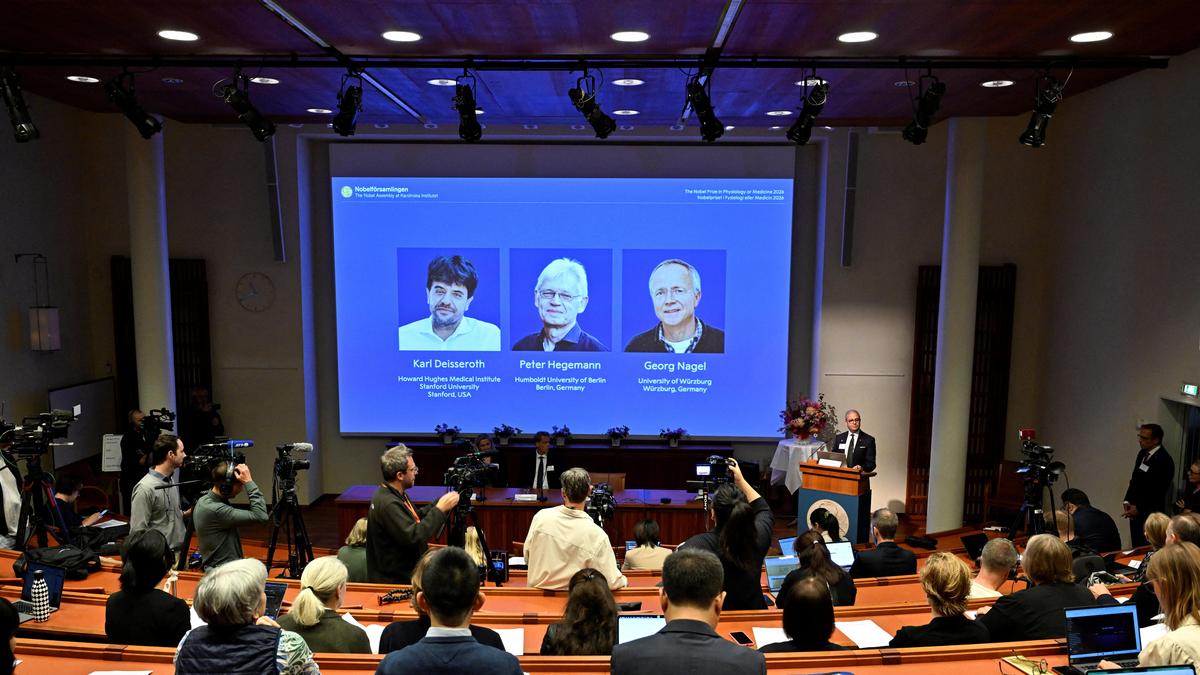
Winning a Nobel Prize is a mark of great prestige, but the award is limited to a small number of recipients, leaving many deserving scientists unacknowledged. The Nobel Foundation’s statutes cap each prize at three individuals and exclude anyone who has died before the announcement. Nominations must come from eligible nominators, further narrowing the pool.
The 2026 Nobel Prize in Physiology or Medicine was awarded to Karl Deisseroth, Peter Hegemann, and Georg Nagel for their work on optogenetics. Their research built on earlier discoveries by Austrian scientist Gero Miessenböck, who first sensitised neurons to light. Miessenböck, now at the University of Oxford, is described as an ‘inventor’ of optogenetics. Hegemann and Nagel identified and characterised the protein channelrhodopsin‑2 (ChR2), and Edward Boyden, a professor of neurotechnology at MIT and the Broad Institute, demonstrated that ChR2 could control neurons. Ernst Bamberg, now emeritus at the Max Planck Institute of Biophysics, supervised Nagel’s PhD and helped translate ChR2 into practical applications. Feng Zhang, also at MIT, was part of a team that adapted halorhodopsin to silence neurons with light. These collective efforts, rather than the laureates alone, made optogenetics a powerful tool in neuroscience and medicine.
The 2026 Nobel Prize in Physics was awarded solely to Francis Halzen for his decisive contributions to the IceCube Neutrino Observatory and the discovery of high‑energy neutrinos of astrophysical origin. IceCube is an international collaboration involving roughly 450 scientists from 58 institutions in 14 countries. The Royal Swedish Academy of Sciences, which awards the physics prize, has not adopted the option to award prizes to organisations, so the award could not recognise the entire collaboration. Halzen’s work, which began with the idea of using Antarctic ice as a neutrino target in 1988, led to the detection of two high‑energy neutrino events in 2012. Japanese physicist Aya Ishihara, a professor at Chiba University, was credited by the collaboration for finding those events and received an International Union of Pure and Applied Physics award in 2013. The 2013 Science paper that reported the neutrinos also named Claudio Kopper, Naoko Kurahashi, and Nathan Whitehorn as corresponding authors.
The 2026 Nobel Prize in Chemistry was awarded to Henri Kagan and Kenso Soai for experimental evidence supporting Frederick Charles Frank’s 1953 model of autocatalysis, enantioselective catalysis, and mutual inhibition. Frank died in 1998, but the 1995 paper by Soai and colleagues included Takanori Shibata, who made essential contributions and later extended the work in a 1999 paper. Shibata, now at Waseda University, was not included among the laureates. The committee also chose not to award U.S. chemical engineer Donna Blackmond, who had extended Kagan’s mathematical approach to non‑linear chemical reactions and advanced understanding of the Soai reaction.
These examples illustrate that Nobel Prizes often focus on singular breakthroughs rather than lifetime achievements and that many collaborators, engineers, and technicians play crucial roles that are not formally recognised. The awards reflect the limitations of individual recognition in a field that advances through collective effort.
mkunth.v@thehindu.co.in Published - October 08, 2026 11:42 am IST