Opinion & Analysis
Public Mourning for Convicted War Criminal Mladic Raises Questions About Lessons of International Justice
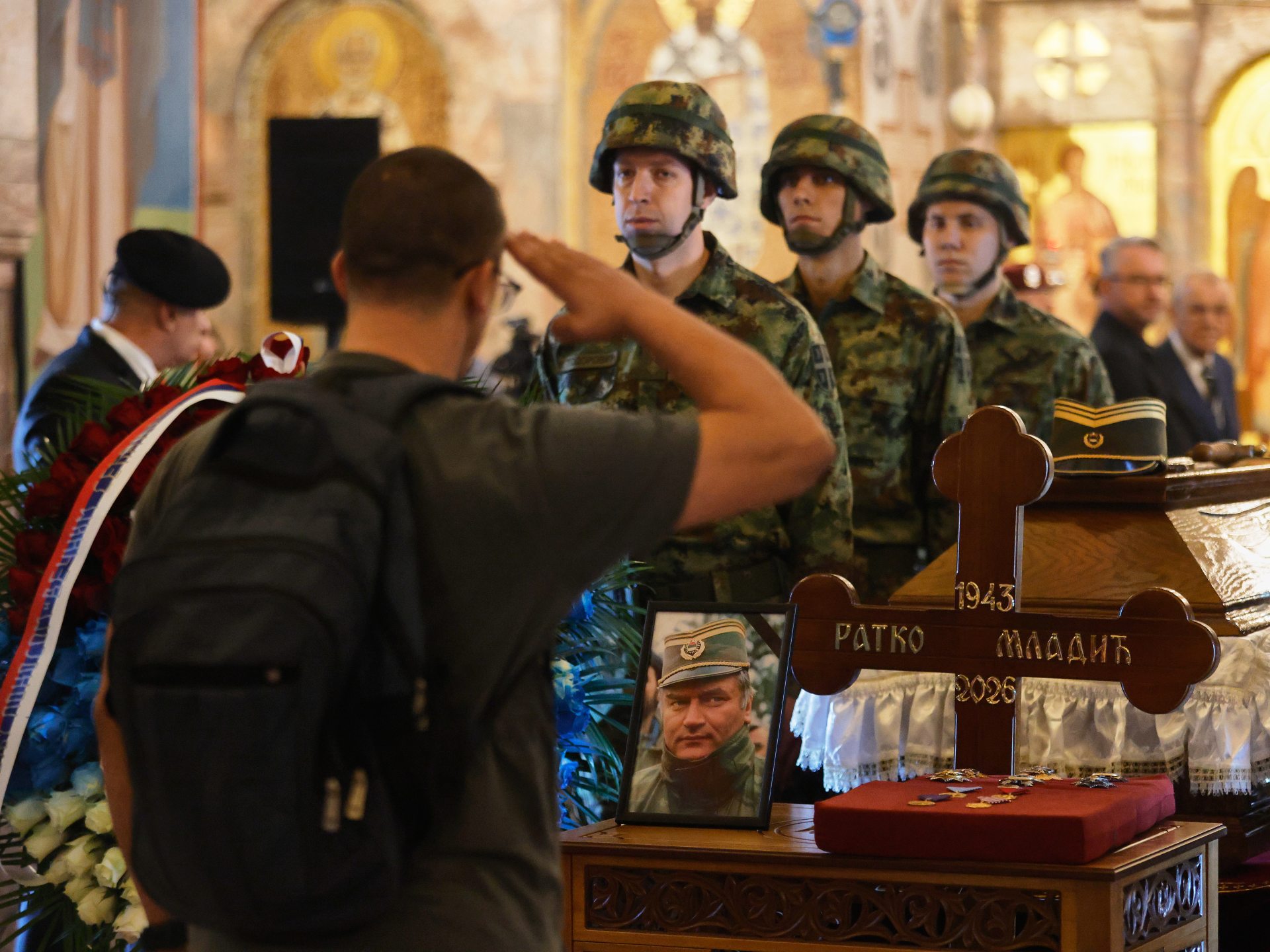
Thousands of people gathered in Belgrade to attend a funeral held with state honors for Ratko Mladic, the former commander of the Bosnian Serb army who was convicted of genocide and crimes against humanity by the International Criminal Tribunal for the former Yugoslavia (ICTY). The ceremony has prompted renewed debate over whether decades of international humanitarian law have had any real effect on political and military leaders.
The author, who worked as a prosecutor for the United Nations—first prosecuting Bosnian Croats and a Bosnian Serb in 1998, and later prosecuting Slobodan Milosevic from 2002 for crimes committed during the wars against Croats, Bosnian Croats, Bosnian Muslims, and Kosovars—argues that nearly thirty years of international justice appear to have taught world leaders very little. Wars pursued by figures such as Russian President Vladimir Putin and US President Donald Trump, the author suggests, show no sign that lessons from past tribunals have been absorbed.
The piece recalls the author's personal history with the former Yugoslavia, beginning with a school exchange trip in 1963, when he stayed with a Serb family in Belgrade linked to Aleksandar Rankovic, once considered the third most powerful man in Yugoslavia after President Josip Broz Tito. The author also worked as a tour guide in Croatia and Montenegro in 1971, describing a period when the Yugoslav ideal of “brotherhood and unity” still appeared intact, despite underlying tensions.
That unity collapsed as Yugoslavia broke apart, the author writes, with political manipulation turning ethnic hatred into a tool for war. Mladic, held responsible for the siege and shelling of Sarajevo and the killing of more than 8,000 men and boys in Srebrenica, is cited as a stark example of how ordinary people can be transformed into perpetrators of atrocities under the influence of political and military leadership.
The article rejects any suggestion that Mladic's actions could be justified by claims of Serbian entitlement to regional dominance in the Western Balkans, comparing such reasoning to the pursuit of hegemony seen in Putin's actions in Ukraine and the former Soviet Union, or Trump's pursuit of resource-rich territories. The author insists that no political goal—whether regional control or the creation of a unified Serb state through ethnic cleansing—can excuse Mladic's crimes.
The author predicts that Mladic will largely fade from memory outside Serbia and Bosnia's Republika Srpska, noting that university students elsewhere in the former Yugoslavia are already unfamiliar with his name. Ultimately, the article concludes that Mladic should be remembered strictly as a war criminal, as documented in ICTY rulings, and expresses hope that those who publicly mourned him will eventually recognize that such displays have no place in a civilized society.
The views expressed are those of the author and do not necessarily reflect the editorial position of Al Jazeera.