World
Shina Musicians Bridge Divided Communities Across the Line of Control
In the remote Tulail Valley near the Line of Control in Indian‑administered Kashmir, 25‑year‑old singer Aasim Yaseen was walking through his village of Buglinder when a college student from a neighbouring hamlet, Tanveer, stopped him. Tanveer played Yaseen’s recent Shina song “Sangh Mukh Shamah” on his phone, which motivated Yaseen to continue his music career. “People here don’t consider music work,” Yaseen says. “Sometimes I think about going into another profession, but then someone plays my song on their phone, and I keep going.”
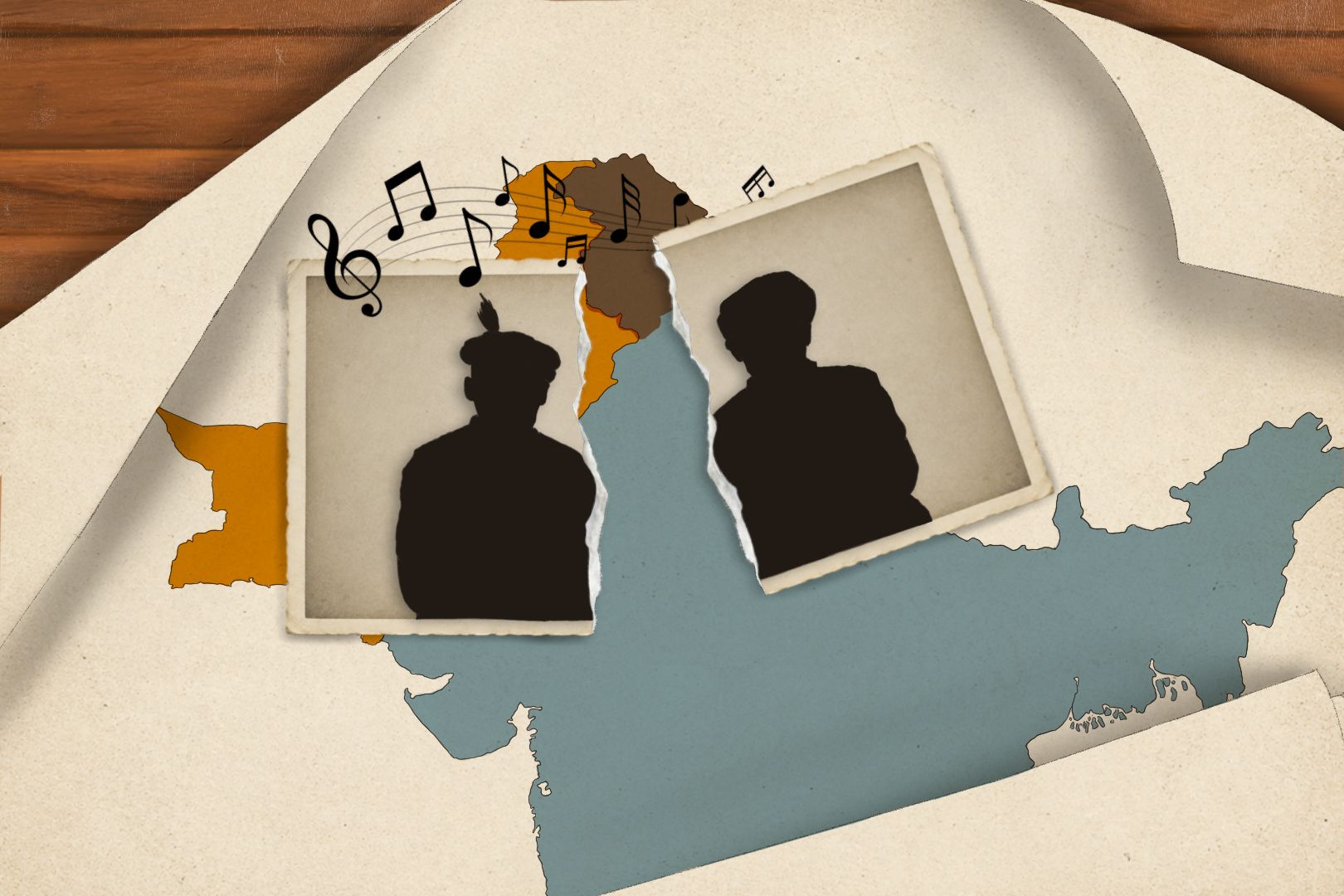
Across Gurez in Indian‑administered Jammu and Kashmir, Drass in Indian‑administered Ladakh, and Pakistan‑administered Gilgit‑Baltistan, young musicians are sharing Shina songs on social media. They keep their language alive and renew ties within a community that has been divided for generations. The songs cross the Line of Control, but musicians face financial pressures, unreliable internet connections and political restrictions on movement.
Yaseen’s family history reflects the separation. His grandfather told him stories about Yaseen’s great‑great uncle, who lived in Gilgit‑Baltistan before Partition and stayed there as the region fell under Pakistani control. Yaseen says movement became extremely difficult after the Line of Control was established, and security concerns eventually led relatives to lose contact. “We were one family,” he says. “But we were divided into two countries.”
Gurez, the homeland of Indigenous Shina‑speaking people, lies on historic routes linking the Kashmir Valley with Central Asia, including the Burzil Pass route to Astore in Pakistan‑administered Gilgit‑Baltistan. Gurez has no local crossing where families can visit relatives in Gilgit. Buses once connected Srinagar with Muzaffarabad and Poonch with Rawalakot, but neither route passed through Gurez. Residents in Gurez and Drass say security restrictions make them wary of calling or messaging relatives across the Line of Control. They worry that making contact could attract suspicion. Sharing Shina songs online feels safer: People on the other side can listen without either person needing to make direct contact.
Artists began sharing songs on Facebook and YouTube in the late 2010s. By 2020, residents were using online Shina music to reconnect with a community scattered across the mountains. A 35‑year‑old teacher from Purana Tulail village, who requested anonymity due to security concerns, says songs have become an emotionally powerful way to communicate. “Songs became a medium,” he says. “Through music, we could convey a message without having to send it. When a singer from this side sings, our community across the border listens to it.”
In Buglinder, Yaseen’s family life is all about farming. Outside the family’s wooden home, a zomo – a hybrid of yak and cattle – stands under a tree while chickens roam the yard. Inside, his mother prepares namkeen chai, Kashmir’s pink salted tea, on a clay stove. The family drinks it with local roti and desi ghee. Yaseen crosses a bridge with the animal towards a neighbouring village on the hillside. Below him, the Kishanganga River flows through the valley before flowing into Pakistan‑administered Kashmir. Above him, bunkers sit atop hills and fences run across the mountains. Cameras surveil the ridgelines, and security checkpoints line the roads. In winter, snow can close the roads for months, making it difficult to reach schools, markets and medical care.
After the April 2025 attack near Pahalgam, which killed 26 people, most of them tourists, India and Pakistan exchanged strikes. In Gurez, residents say they sheltered in bunkers or were evacuated to temporary camps. Many had to leave their homes and livestock behind.
Yaseen’s 71‑year‑old father, Abdul Rahim Sheikh, works the family farm and runs a small shop selling groceries and daily essentials. He herds cattle in a nearby mountain range lined with barbed wire, while Yaseen helps fence a potato field. Later, Yaseen’s sister calls him back to the house. Guests from Mumbai have arrived. The family welcomes them with kehwa, a spiced Kashmiri tea, and introduces them to Yaseen in the kitchen, where he sings. His audience is just a handful of guests, but his recordings help extend his reach much further.
“Politically we are divided, but musically our hearts beat together,” says 38‑year‑old Salman Paras, a prominent contemporary Shina folk singer. Paras was born in Sheikhpora Kilshay, a village in the Minimarg‑Gurez area of Astore district, Pakistan‑administered Gilgit‑Baltistan. He grew up hearing stories of shared ethnic ties and separation from Gurez, where some families from Kilshay remained on the Indian‑administered side after the region was divided. He says his grandfather’s brother stayed behind in Gurez while the rest of his family migrated to Gilgit. Eventually, they lost touch.
Decades later, a Shina musician on the Kashmir side of the Line of Control came across Paras’s songs on YouTube and contacted him to say that relatives of his had been traced to Kangan, a town in central Kashmir where many Dard families migrated from Tulail. Paras has not disclosed the musician’s identity for security reasons, and the families have yet to reconnect. But someone had recognised his family ties through his music.
Paras’s fusion of Shina folk and modern pop has brought the language to listeners beyond Gilgit‑Baltistan. His song “Karay Karay,” recorded with Pakistani singer Ali Zafar, was accompanied by a video filmed during the cherry blossom season in Skardu and in the Katpana Desert, a high‑altitude desert near the city of Skardu in Gilgit‑Baltistan. It brought Shina to audiences beyond the mountainous region and has been viewed millions of times on YouTube. He’s also had recent performances in Dubai and Muscat.
On November 3, Paras went live on Instagram, singing in Shina and several of its regional varieties. The session drew listeners from Gurez, Drass, Kargil and Gilgit‑Baltistan. During that live interaction, Imtiyaz Samoon, a Shina speaker from Gurez on the Indian‑administered side, told Paras how deeply his music is loved in the valley. He said local singers often perform Paras’s songs at community events, and that his music has become part of gatherings throughout Gurez. Paras responded, saying he wanted to collaborate with musicians on the Indian‑administered side and, if the necessary permissions and visa could be arranged, perform in Gurez and Ladakh. “If you look at the official map of Gilgit‑Baltistan today, Gurez and Ladakh are missing,” he says, referring to Shina‑speaking areas on the Indian‑administered side. “But in my mind, I’ve drawn a cultural map that includes Chitral, Kohistan, Gurez and Ladakh. They are my people.”
Iftikhar Uddin Iftikhar, 29, a singer based in Gilgit, has watched a similar audience grow around his music. He began learning music in 2015 under Shina folk singer Muhammad Amin Shah and released his first Shina album in 2018. He now collaborates with local performers, composes music and records in studios in Gilgit. “Now I have friends across the border: Shina speakers in Kashmir and Ladakh,” he says. “They listen to my music. I never thought my songs would reach them.” Iftikhar considers Paras an inspiration. He wants to build his career and forge a path for younger performers. “Shina music is our identity,” he says. “I am not just promoting songs – I am keeping our language alive.”
Yaseen’s songs are finding listeners, but he still struggles to afford studio time. He normally lives in Srinagar, more than 160 km (100 miles) from home, where he studies music at Cluster University and performs at local events. When Tanveer approached him in Buglinder, he was visiting his family to help with the annual harvest. His interest in singing began at school. Standing on a hill above a neighbouring village, he points towards his childhood school and remembers Rasheed Samoon, a teacher who gave him 10 rupees to sing his first poem, “Aavo Mil Kar Kam Karain” (Let’s work together). Now, when he can afford it, Yaseen rents a studio in Srinagar. Producing a song, including studio time and production costs, runs him between 30,000 and 35,000 Indian rupees ($318–$372), he says. Musicians share microphones, speakers, instruments and editing skills to reduce costs. For his song “Malalak,” released in April, for example, Yaseen shared the cost of video production and editing software with fellow musician Zia Ul Alam.
Younis Majeed, 27, from Izmarg village, is part of the same emerging generation of musicians in Gurez. He blends Shina folk melodies with contemporary beats. His song “Tamah Hoon” (I Have a Desire) has reached more than 21,000 viewers online. “The internet lets us get to know each other again,” he says. “It reconnects us emotionally and culturally, both across and within borders.” But the infrastructure supporting that connection is fragile. Some villages close to the Line of Control have little or no mobile coverage. Artists may have a smartphone but no quiet place to record, or they may be able to upload a song but not earn from it.
Further east, in Drass in Indian‑administered Ladakh, 24‑year‑old singer Zain Drassi faces similar problems. In early September, he performed with a local band at the Drass and Suru festivals. For him, the performances were a chance to bring a shared musical tradition back into public view. “It was a small recovery of our cultural space after it had been limited for so long by war and political borders,” he says. Drass was a key theatre of the 1999 Kargil War, and residents have lived with displacement and restrictions on movement. Today, Drassi says, local musicians also struggle to find the resources needed to make professional recordings. “The internet has brought us closer to our people in Gurez and Gilgit, but practically we have different challenges,” he says. Musicians can record vocals locally, he explains, but must travel elsewhere for composition, arrangements and professional production, seeking services in Srinagar, Bhaderwah or neighbouring Himachal Pradesh. Traditional instruments and musicians skilled in playing them are also difficult to find.
The younger performers are finding new ways to record and distribute Shina songs. Much of the repertoire they draw on, however, survived through singers and writers who had no digital audience.
In Kangan, in central Kashmir, 53‑year‑old singer Yousuf Naseem has spent three decades preserving Shina through music. Sitting on his veranda, he plays a six‑stringed rabab. His songs carry memories of migration, loss and the home he left behind. Born in Dangithal, near the Line of Control in Gurez Valley, Naseem remembers long winters, family storytelling and songs passed along by older relatives. “The elders in our house were our library,” he says. “Whatever they hummed, we sang.” During the 1999 Kargil conflict, his family was among those forced to leave Gurez. They resettled in Kangan. “We lost everything,” he says. “But the songs travelled with us.”
Naseem began taking Shina music to new listeners in Srinagar. In Bohri Kadal, a historic market in the old city where many Dard families work as wazas, or chefs, he gave a shopkeeper a copy of his first cassette, Dardistan, and asked him to play it every morning. His voice began travelling through the market. “People would ask what language it was,” Naseem says. “It was Shina. For many, it was the first time they had heard it.”
While Naseem carried Shina music beyond Gurez, Fareed Ahmed Kaloo worked to preserve it within the valley. At the Shina Cultural Centre near Dawar, young musicians gather as Kaloo, 67, adjusts his harmonium and begins to sing. He wears a traditional shoka and white pakol cap. “Gilgit, Kargil, Gurez, Drass – our pride, our own, This is our Golden Garden: Dardistan, our home.” Kaloo leads the Habba Khatoon Dramatic Club, a cultural group founded in 1976 to preserve Shina folklore in Gurez. “After Partition, our culture faded,” he says. “Kashmiri music dominated, and our Dardic roots went silent.”
For years, he travelled between villages on foot, carrying a harmonium and a tumbak naari, a clay percussion instrument. He performed at weddings, fairs and local gatherings, accepting food, a place to sleep or a small honourarium as payment. “We didn’t do it for money,” he says. “We did it because someone had to, and no one else would.” Some of the club’s earliest members have died. Others left amid cross‑border shelling and never returned. Kaloo stayed, teaching folk songs to younger generations. He now listens to new tracks on his phone and admires how musicians in Gilgit have developed their sound while retaining elements of traditional Shina music. “They’ve gone far ahead of us,” he says with a smile. “As they should. Our songs must evolve, but never lose their roots.”
The connection between these generations also runs through the work of Masood Samoon, a 78‑year‑old Shina writer and linguist from Gurez. For more than two decades, Samoon has written poetry that musicians have turned into songs. He wrote Yaseen’s songs “Malalak” and “Sangh Mukh Shamah.” “Yousuf Naseem sang my songs,” Samoon says. “He took my words to Kashmir, to people who had never heard Shina before.” “Now Aasim Yaseen sings them,” he adds. “My words travel farther now than I could.”
In Gurez and Drass, Shina has relied heavily on oral transmission, with limited support from formal education. But new primary‑school textbooks introduced by the Jammu and Kashmir school board this year are intended to give the language a stronger place in classrooms. A Srinagar‑based linguist who specialises in Shina welcomes the books but says their impact will depend on how the language is taught and whether children continue to use it in everyday life. He requested anonymity for fear of repercussions. “Written resources are valuable, particularly for a language spoken by a relatively small population, but efforts to preserve Shina must also support its continued use as a spoken language,” he says. Samoon’s poems are part of that spoken life. They are performed by older singers, recorded by younger artists and heard by listeners who may speak different varieties of Shina. He says people from one area may not understand every word sung in another dialect. Yet the songs continue to find audiences. “Music is a boundless thing,” Samoon says. “Shina is the language of my heart. When musicians sing my words, I travel across mountains and borders – even when I cannot physically travel there.”
As evening settles over Srinagar, Yaseen sits with fellow musicians at Al‑Bahr Studio, working on another Shina track. The lyrics draw on folk tradition. The beat is modern. The language is the same one heard in Naseem’s cassettes, Kaloo’s village performances and Samoon’s poetry. But the route it takes has changed. Yaseen hopes one day to share a stage with musicians in Gilgit. For now, he records in Srinagar, performs when he can and returns to Tulail with new songs. “The border will remain,” he says. “But our songs will still travel.”