India
Shenbagathoppu Dam Releases 100 Cusecs as It Reaches 80% Capacity
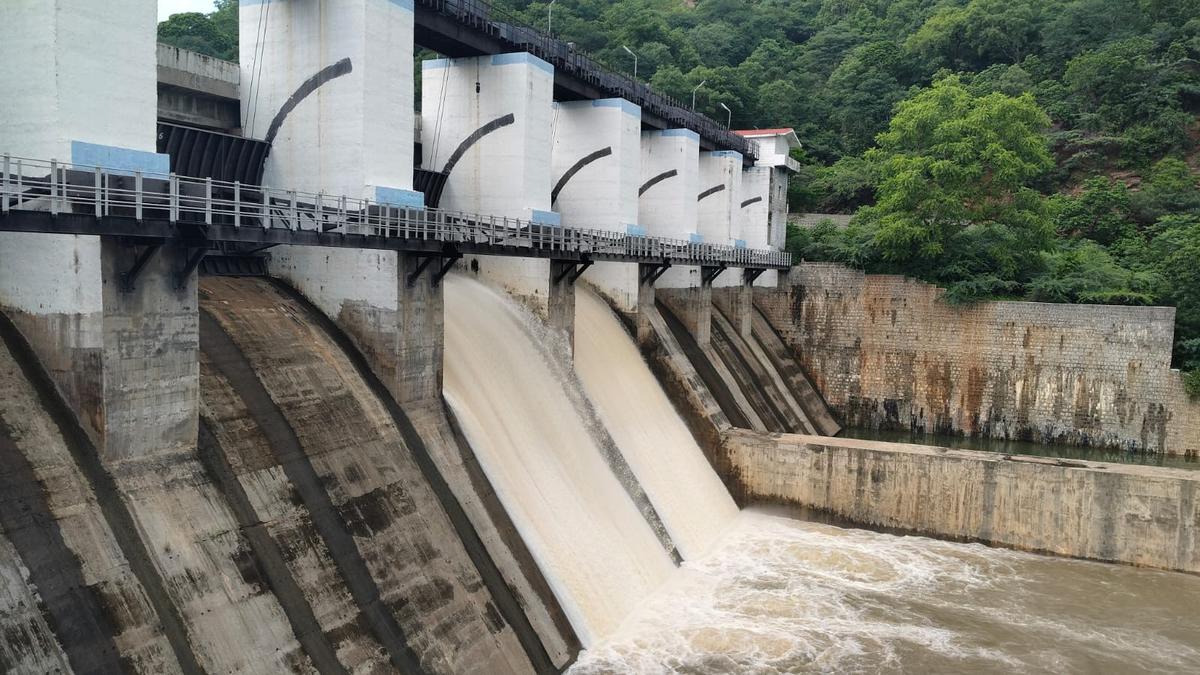
Continuous rain has prompted the release of water from the Shenbagathoppu dam in Tiruvannamalai. The Water Resources Department, which manages the dam, said that about 100 cusecs of water per second were released when the reservoir reached roughly 80 percent of its total storage capacity. The dam’s current water level is 56.24 feet, compared with its full capacity of 62.32 feet. Assistant Engineer A. Raja Ganapathy explained that, in line with safety norms, excess rainwater must be released when a dam nears 80 percent capacity to protect the structure. He added that catchment areas, especially the Jawadhu Hills that supply the dam, have been receiving steady rains. Collector Vandhana Garg of Tiruvannamalai has cautioned residents in Cheyyar, Arani, Vandavasi, and Polur—towns along the Kamandalam Naganathi river—against crossing the waterbody as river flow rises. The released water is currently being discharged into 48 tanks—18 in Polur, 12 in Arani, 9 in Arcot, 8 in Cheyyar, and 1 in Vandavasi—through four check dams in the district, including Alliyabhad and Karnakur, thereby recharging the local water table. On Saturday, heavy rain affected Vellore, Gudiyatham, Arcot, Ambur, Vaniyambadi, Chengam and surrounding villages in Vellore, Ranipet, Tiruvannamalai, and Tirupattur districts.
Frequently asked questions
Why was water released from Shenbagathoppu dam?
The dam released about 100 cusecs of water per second when its reservoir reached roughly 80% of its total storage capacity, as required by safety norms to protect the structure during continuous rain.
Where is the released water being discharged?
The released water is being discharged into 48 tanks—18 in Polur, 12 in Arani, 9 in Arcot, 8 in Cheyyar, and 1 in Vandavasi—through four check dams in the district, including Alliyabhad and Karnakur, thereby recharging the local water table.