World
Trump’s Mixed Messages on Iran as US Strikes Qeshm Island and Iran Prepares for Possible Nuclear Targeting
By Nils Adler
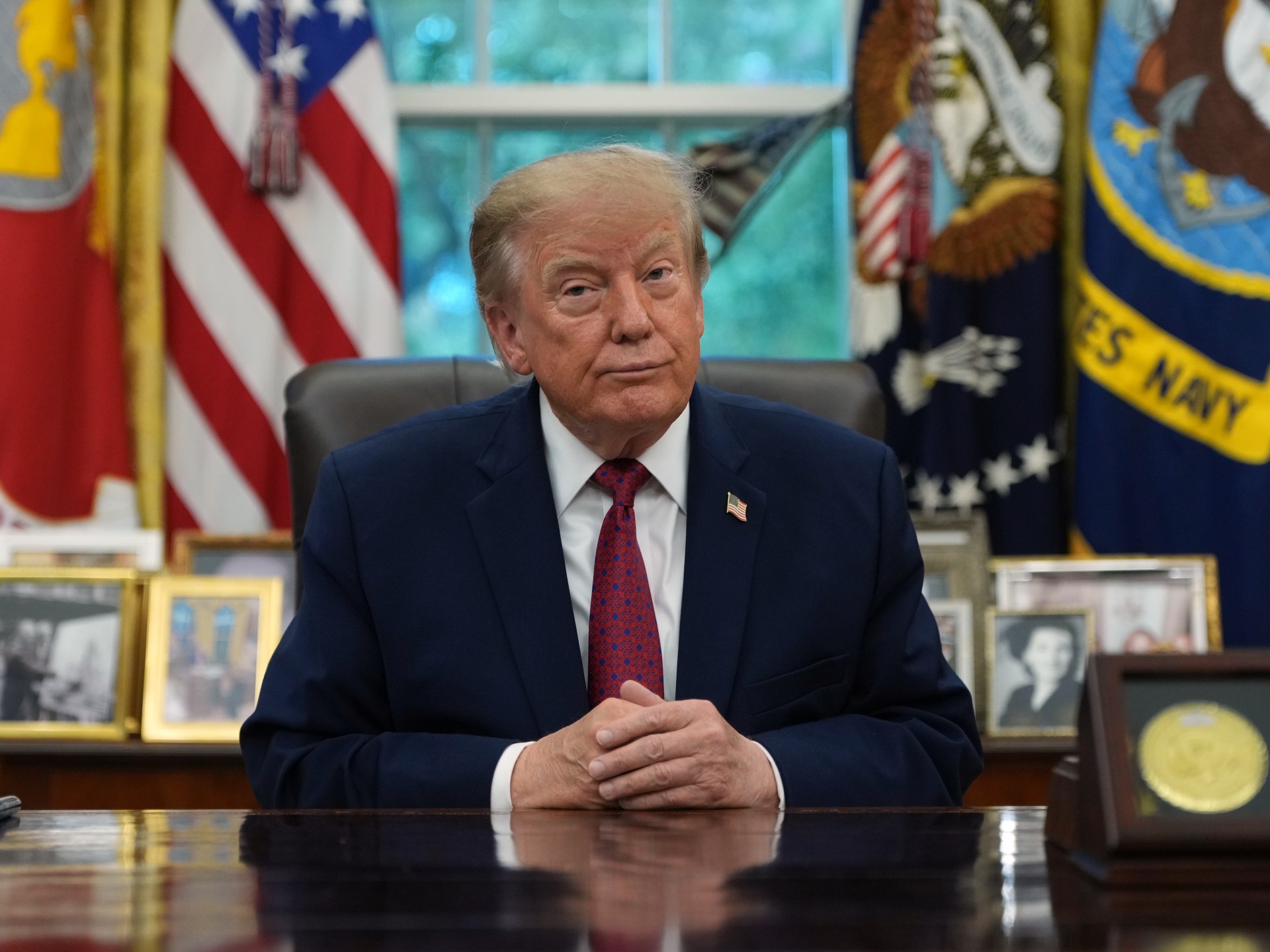
Since the mid‑term elections, President Donald Trump has alternated between threats to Iran and claims that a resolution to the conflict is near. After accepting a Republican defeat that he said was partly due to his war on Iran, Trump told reporters on Thursday that the United States may have to “destroy” the rest of Iran, adding that people will “know soon enough” if he acts. On Friday, U.S. forces carried out what Trump described as “minor strikes” against Iranian air‑defence systems, and Iran’s state news agency IRNA reported that two missiles again struck Qeshm Island in the Strait of Hormuz. On the same day, Trump said the U.S. administration is talking to Iranian representatives and told reporters, “We’ve made a lot of progress with Iran.”
Trump has said the U.S. is negotiating with Tehran several times on Friday. “We’re dealing with them now. They want to make a deal,” he told reporters, without providing further details. On Saturday, Majed al‑Ansari, spokesperson for the Qatari Ministry of Foreign Affairs, dismissed claims circulating on X that negotiations had failed, warning that such claims benefit “only those seeking to prolong the war.”
The U.S. confirmed it carried out military strikes on Qeshm Island on Friday. Iranian state media reported two missile strikes in the Suza area of the island. Earlier in the week, the U.S. described “defensive strikes” on the island, a primary naval base for Iran that houses missile launch systems. An unnamed U.S. official told the Associated Press that Washington had conducted the strikes to prevent “Iranians using surface‑to‑air missiles against U.S. assets.” Iranian state broadcaster IRIB reported that the country’s air‑defence forces intercepted and destroyed a U.S. MQ‑9 drone over the island. In response to reports of explosions, U.S. Central Command (CENTCOM) said the situation is “relatively calm.”
Iran appears to be preparing for a potential U.S. strike on its nuclear sites. The United Kingdom’s Times reported that Iran is distributing iodine tablets to communities near its nuclear facilities, citing a Ministry of Health official who said, “Trump can no longer be trusted. He may go through with this crime.” The official added that during every war, Iran has tried to distribute the tablets within a radius of 2–3 km of nuclear facilities. An Iranian political journalist said officials had been told at a recent briefing that a U.S. nuclear strike on the heavily fortified Pickaxe Mountain site, beneath which is believed to be a large complex of tunnels and facilities, is being seriously considered. The Young Journalists Club (YJC) reported that health authorities have been distributing iodine tablets to residents of Bushehr, home to Iran’s only operational nuclear power plant. The U.S. State Department’s Rewards for Justice program announced a reward of up to $20 million and possible relocation for information about Iran’s nuclear programme, including its facilities, equipment and associated personnel.
Trump faces a dilemma. He has long insisted he will not accept Iran’s conditions for reopening the Strait of Hormuz and restarting peace talks, which include lifting sanctions, unfreezing Iranian assets, ending the U.S. naval blockade on Iranian ports and guaranteeing an end to attacks. Facing strong opposition to the war at home and within his own party after losing control of both houses of Congress, Trump must decide whether to bend to these demands or risk further backlash by continuing attacks.
Iran’s strategy of responding to U.S.–Israeli attacks by targeting bases and facilities in neighbouring Gulf countries has weakened both Trump and Israeli Prime Minister Benjamin Netanyahu at home and narrowed their options in any confrontation. Hassan Ahmadian, an associate professor at the University of Tehran, wrote on X that Iran is threatening to widen its responsive strikes, suggesting countries beyond the Gulf could be hit next. Ahmadian said Trump has no clear idea of how a limited strike would end, and that feeds his personal hesitation and the split views of his circle on Iran. “None of this means he won’t attack Iran,” he said, but Trump wants to be sure a strike is worth it, gives him “a respectable way out,” and does not lead Iran to widen its response into an all‑out war against U.S. forces and Israel.
Iran’s “cognitive warfare” has kept Trump “in the fog” about what would follow a limited war, Ahmadian said, and he “needs to make up his mind fast, before next January.”
What will happen next? The U.S. and Iran say they are prepared for any eventuality. Axios quoted a U.S. official saying that CENTCOM is preparing for the resumption of major military operations in Iran and is just waiting on orders from Washington. Tehran warned it will retaliate on a wider scale than it has done so far if the U.S. resumes the war. “In the event of a new aggression, any country or force that helps America attack Iran can be a legitimate target of the Islamic Republic,” a spokesman for the supreme adviser to the commander of the Aerospace Force of the Islamic Revolutionary Guard Corps said on Thursday. Iran has also warned that cables, data centres and artificial intelligence facilities across the Gulf region could be attacked if war erupts again.
Behind the rhetoric, diplomatic efforts continue. On Thursday, Iran offered the U.S. a new nuclear and peace proposal via Qatari mediators, to be discussed only after Washington meets Tehran’s seven demands, a senior Iranian official told Reuters. The U.S. is examining the proposal. Former Iranian diplomat Hadi Afghahi told Al Jazeera that Tehran can ease the path to a settlement if the U.S. also shows flexibility. He argued that Trump “really does not want to go to war, because war again will cost him more.” However, Afghahi cautioned that Trump “is still surrounded by a group of hawks,” including the energy and treasury secretaries. Qatari Prime Minister and Foreign Minister Sheikh Mohammed bin Abdulrahman bin Jassim Al Thani urged the U.S. and Iran not to wait for a “perfect moment” to reach a deal to end the war.