Science
Cave in Catalonia Reveals 280 Palaeolithic Engravings, Ranking Third Largest Mediterranean Site
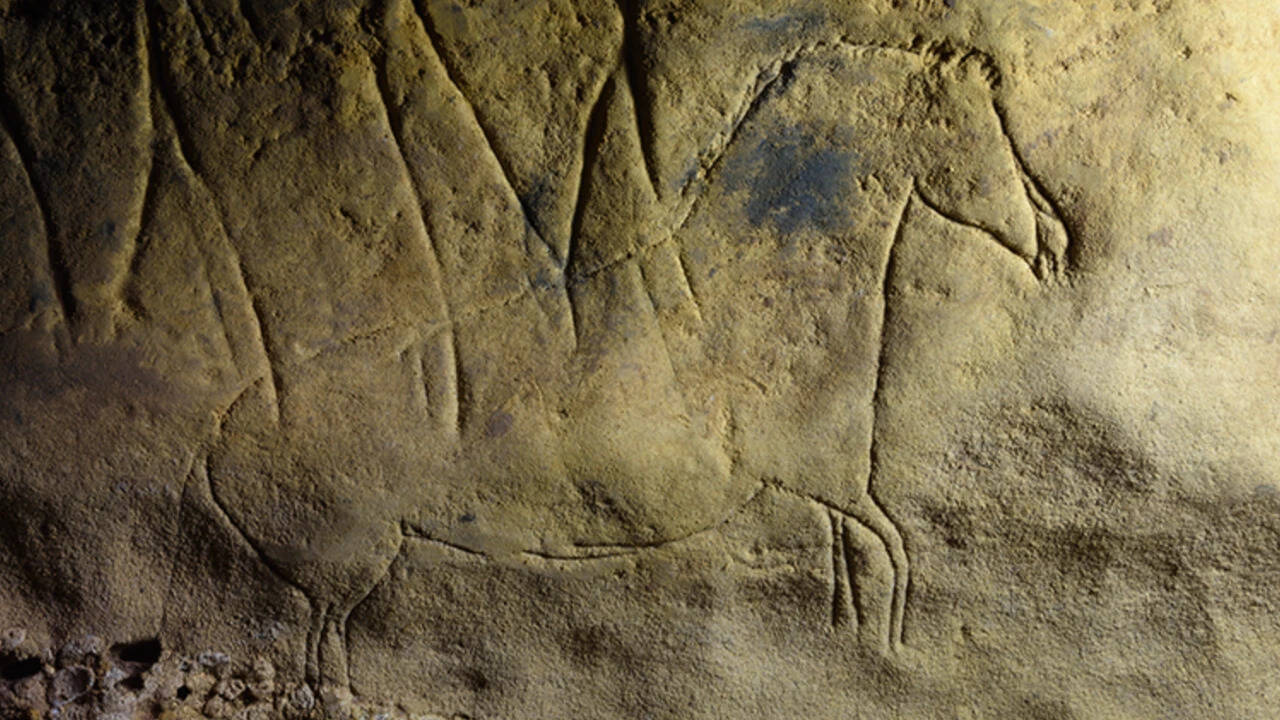
In a cave in Catalonia, Spain, archaeologists have identified 280 Palaeolithic motifs, including 55 animal figures and various non‑figurative designs, making it the third largest known Paleolithic cave‑art assemblage on the Mediterranean side of the Iberian Peninsula. The discovery, reported by Josep Maria Vergès Bosch and Míriam Salas‑Altès of the Catalan Institute of Human Paleoecology and Social Evolution (IPHES‑CERCA) in the journal *Antiquity* on 5 November 2026, focused on the Cova de la Font Major in northeastern Spain.
The cave has been known to visitors since at least the 12th century, and its entrance became popular with speleologists and treasure hunters from 1957 onward. Despite this long history of human presence, the prehistoric engravings had not been noticed until 30 October 2019, when a researcher observed marks on the walls of the Gatoneres de Cal Palletes section that differed from later graffiti. Close examination revealed that these marks were incisions from the Paleolithic period.
The engravings were made by incising and scraping the rock, producing a variety of forms that provide insight into how prehistoric communities expressed themselves through images and symbols. The collection includes 55 zoomorphic representations—figures of animals such as a bear—as well as lines and geometric shapes. The site’s high number of animal figures contrasts with most other Mediterranean Iberian sites, where 75 % contain no more than five animal figures and over 90 % contain no more than 20.
The find challenges the view that Paleolithic art was concentrated mainly in the Franco‑Cantabrian region. Prior to this discovery, only two representations had been identified in northeastern Iberia, yet the Cova de la Font Major suggests a more substantial artistic tradition in Catalonia. The motifs differ from those associated with the neighboring Franco‑Cantabrian tradition, indicating a distinct regional style.
The discovery not only expands the known body of Paleolithic art but also raises questions about the density of human activity in the area during the Ice Age, reshaping researchers’ understanding of the cultural landscape of Paleolithic Europe.
Frequently asked questions
How many Paleolithic motifs were identified in the Cova de la Font Major?
280 motifs, including 55 animal figures.
When were the Paleolithic engravings first discovered?
30 October 2019, when a researcher observed marks on the walls of the Gatoneres de Cal Palletes section.
Why is the Cova de la Font Major significant in the context of Mediterranean Paleolithic art?
It is the third largest known Paleolithic cave‑art assemblage on the Mediterranean side of the Iberian Peninsula and contains a high number of animal figures, contrasting with most other sites.