Science
Medieval Chain‑Mail Armour Discovered Near Ammunition Chest on 15th‑Century Danish Warship
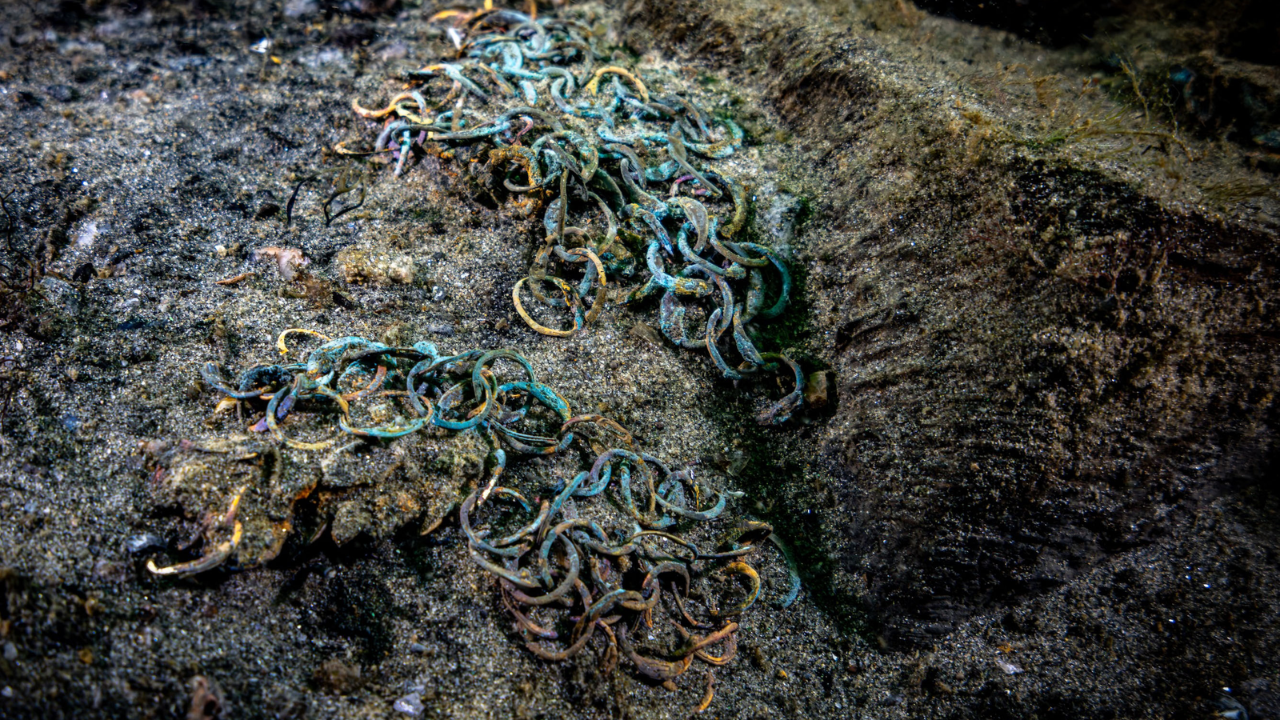
Underwater archaeologists from the University of Southampton, Södertörn University and Stockholm University have found exceptionally well‑preserved fragments of medieval chain‑mail armour close to an ammunition‑tool chest on the wreck of the Danish flagship Griffin (also known as Gribshunden). The discovery was announced in a research update released on 24 November 2026. The team was examining the ship’s superstructure, particularly the forecastle, when they noted exposed copper‑alloy chain‑mail fragments near the chest. The area beneath the forecastle is thought to have been used for storing military equipment, although its exact purpose remains uncertain.
Dr Rodrigo Pacheco‑Ruiz, a visiting fellow at Southampton’s Centre for Maritime Archaeology and co‑investigator on the Griffin project, noted that historical records indicate German mercenaries, known as Landsknechts, were aboard the ship when it sank. The newly found armour may therefore have been associated with these soldiers and their equipment, though the researchers have not yet identified the armour’s owner or precise function.
Rolf Fabricius Warming, a Southampton alumnus and doctoral researcher at Stockholm University who leads the project with Professor Johan Rönnby of Södertörn University, explained that high‑quality chain‑mail could remain in use for long periods. Soldiers often repaired and reused their armour rather than replacing it, so the fragments could represent older military equipment that was still in service when Griffin sank.
The ammunition‑tool chest itself is also of interest. Earlier expeditions had found lead objects that might have been linked to ammunition moulds, but their exact purpose is unclear. The team has collected samples of lead and other materials from the chest for further analysis, hoping to learn more about how weapons and ammunition were manufactured, stored and supplied aboard the vessel.
Griffin was the royal warship of King Hans of Denmark. The ship also served diplomatic purposes, travelling to England in 1493 with representatives of the monarch. In 1495 it was anchored north of Stora Ekö Island off the Swedish coast when an explosion caused it to catch fire and sink; King Hans was not aboard at the time. The wreck was rediscovered by divers in the 1970s and has since become an important archaeological site. Its remarkably preserved condition, aided by the Baltic Sea’s low salinity, offers researchers an opportunity to investigate late medieval shipbuilding, naval warfare and maritime technology.
The latest investigation combines traditional underwater archaeology with robotic seabed mapping and high‑resolution three‑dimensional imaging. An uncrewed surface vehicle surveyed the seabed while divers documented the ship’s structure and archaeological remains. Photogrammetry was used to create detailed 3D images of the wreck, placing the discoveries in their wider context.
In an interview with Live Science, Rolf Fabricius Warming said the researchers also hope to determine whether German mercenaries brought their own ammunition and tools aboard or received them from the Danish royal fleet. Further analysis of the chain‑mail and ammunition‑tool chest may provide clues about the equipment, its origins and the organisation of military forces aboard one of Europe’s important late medieval royal ships.
Frequently asked questions
What was discovered on the wreck of the Danish flagship Griffin?
Fragments of medieval chain‑mail armour and an ammunition‑tool chest.
When was the discovery announced?
The research update was released on 24 November 2026.
What do researchers hope to learn from the ammunition‑tool chest?
They hope to learn more about how weapons and ammunition were manufactured, stored, and supplied aboard the vessel.