Science
Spanish Copper Mine Reveals Links to Bronze Age Scandinavia
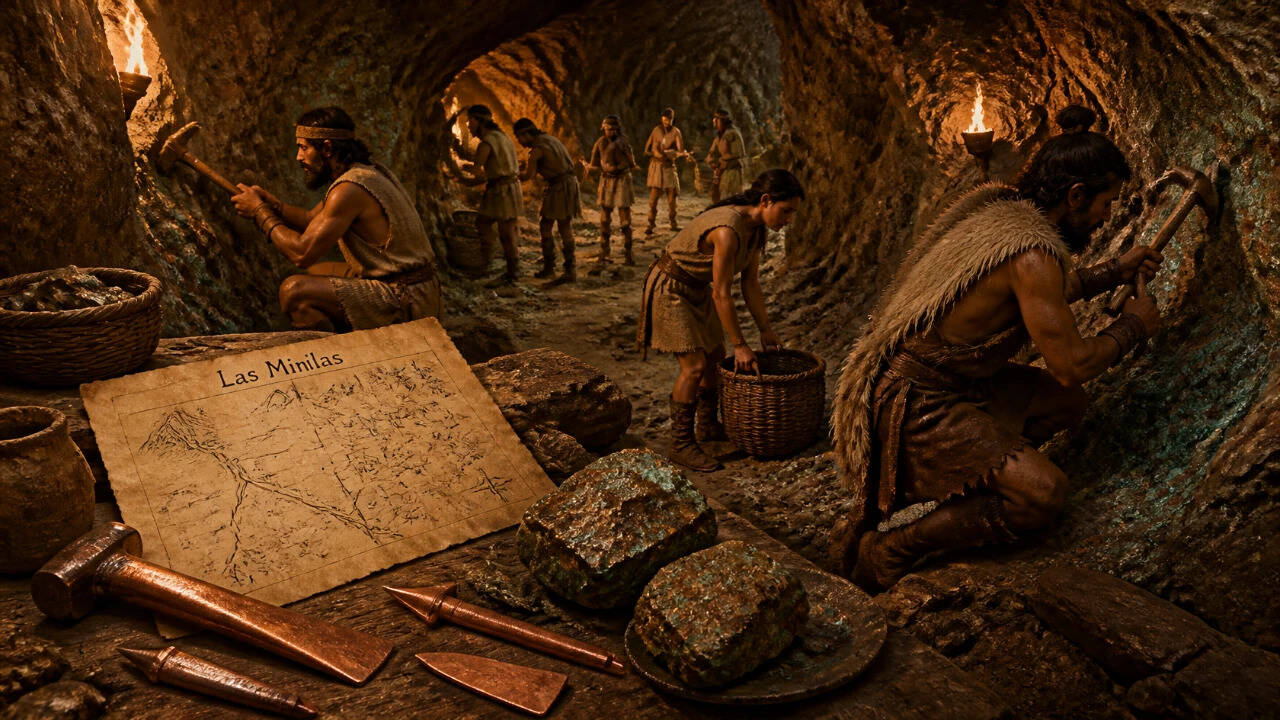
Archaeologists studying Las Minillas, an ancient copper mine in the Badajoz region of southern Spain, have uncovered evidence that copper from the site may have reached Scandinavia during the Late Bronze Age. The team conducted excavations, underground surveys and radiocarbon dating, publishing their findings in the journal Antiquity. They recovered hundreds of stone tools, including 735 grooved stone hammers, and fragments of handmade pottery. Charcoal samples yielded 17 radiocarbon dates that place the mine’s activity between roughly 1350 and 750 BC, with copper production likely occurring between about 1300 and 800/700 BC. This makes Las Minillas the largest securely dated Late Bronze Age copper mine in Iberia to date.
The researchers identified 84 mining sites across the Iberian Peninsula, suggesting a wide network from southern Portugal to southeastern Spain, though the full extent and overlap of activity remain unclear.
Lead‑isotope analysis of ores and metalworking remains from Las Minillas was compared with Bronze Age objects. Eleven Scandinavian bronze artifacts displayed signatures consistent with copper from Las Minillas, indicating that metal extracted in southern Spain may have travelled far north, likely through multiple intermediaries and trading networks. The study does not claim direct transport from Spain to Scandinavia, but it demonstrates connections between distant European communities.
Historically, Bronze Age copper production has focused on regions such as Wales, the Austrian Alps and the Italian Alps. Production at these older sites declined around the middle of the second millennium BC, and the study suggests that southern Iberia became a more important copper source from about 1300/1200 BC. Las Minillas is estimated to have produced between 49 and 738 tonnes of copper, with a cautious estimate of around 197 tonnes. The copper may have reached distant markets via maritime routes along the Atlantic coast.
Several Iberian mines remain unexplored or undated, so the full scale of the mining network is still uncertain. Further research could clarify whether these sites formed a large, active copper‑producing region or operated at different times.
Las Minillas offers insight into how communities separated by thousands of kilometres could be linked through the movement of metal, with copper from Spanish mines potentially ending up in objects used by people who never knew its origin.
Frequently asked questions
When was Las Minillas active?
Between roughly 1350 and 750 BC, with copper production likely between about 1300 and 800/700 BC.
How much copper did Las Minillas produce?
Las Minillas is estimated to have produced between 49 and 738 tonnes of copper, with a cautious estimate of around 197 tonnes.