Science
Modi Urges Science to Translate into Tangible Benefits for Society
By Jacob Koshy
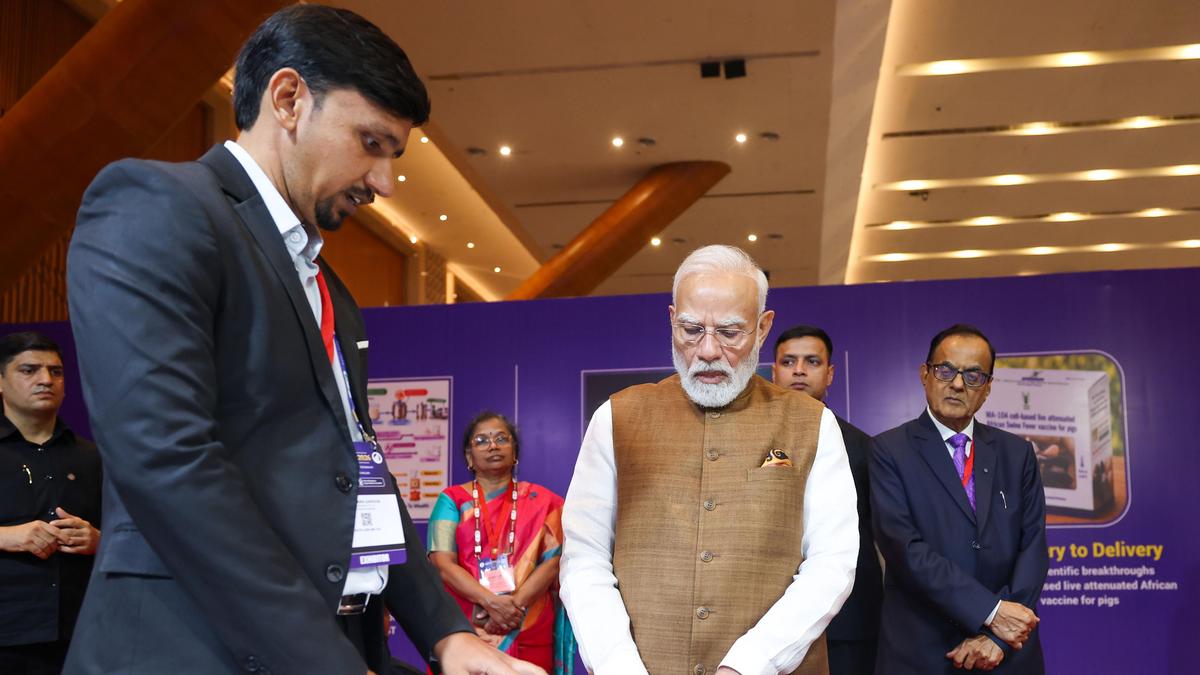
Prime Minister Narendra Modi said on Tuesday, October 27, 2026, that science succeeds only when it moves from the laboratory to the people and improves their lives. Speaking at the Emerging Science, Technology and Innovation Conclave (ESTIC), he warned that science should not become “merely a forum for discussion” but must deliver measurable outcomes.
Modi noted that India’s science and technology narrative has historically involved catching up with other countries, but in the 21st century the country has become a leader in scientific and technological developments. He cited the discovery of zero, Chandrayaan’s landing near the lunar south pole, Mangalyaan’s success on the first attempt, and the vaccines developed during the COVID‑19 pandemic as examples of India’s culture of discovery.
The audience at the conclave included three Nobel Laureates, senior technocrats of India’s scientific establishment, startup founders and scientists from India and abroad. Modi said a country’s technological capabilities depend on its research and announced efforts to “speed up” the Anusandhan National Research Foundation (ANRF). He highlighted a commitment of ₹1 lakh crore to research, including ₹12,000 crore for taking research from the laboratory to the market, with private investors partnering equally, and new commitments of ₹24,000 crore.
He pointed out that the number of patents filed in India has risen from about 50,000 to 1.5 lakh, describing this as evidence of a strengthening culture of innovation rather than merely an increase in number.
On artificial intelligence, Modi posed an “important question” about how to exercise scientific judgment in the age of AI. He said science works by questioning paradigms and looking at problems with fresh eyes, and that AI can perform routine tasks quickly and raise productivity but should not limit scientists’ thinking or independent thought, and its answers must meet the accuracy standards of scientists.
Referring to the birth anniversary of nuclear scientist Homi J. Bhabha on October 30, Modi said a developed India will need large quantities of nuclear energy. He noted that the 500 MW Prototype Fast Breeder Reactor (PFBR) has reached first criticality, strengthening the country’s long‑term energy position. He also highlighted Indian space start‑ups, a rocket made in India that placed a satellite in orbit on its first attempt, and the country’s satellite docking capability. Indian‑made AI chips are reaching other countries, a domestic AI model has been built, and work is underway on battery technology based on Indian raw materials.
Modi said the needs of sectors ranging from nuclear energy to space to AI and semiconductors differ, but India’s emerging technologies are rising together. Describing India as a young country with vision and imagination, he said it needs a generation capable of leading in technology. He summed up the guiding principle as: “We will do it.”
Frequently asked questions
What amount did Modi pledge for research to move from lab to market?
₹12,000 crore for taking research from the laboratory to the market, with private investors partnering equally.
How many patents were filed in India according to Modi?
The number of patents filed in India rose from about 50,000 to 1.5 lakh.
What milestone did the 500 MW Prototype Fast Breeder Reactor achieve?
The 500 MW Prototype Fast Breeder Reactor (PFBR) has reached first criticality.