Science
Atlantic Dye Release Reveals 140‑Fold Difference in Vertical Mixing Across Mixed Layer
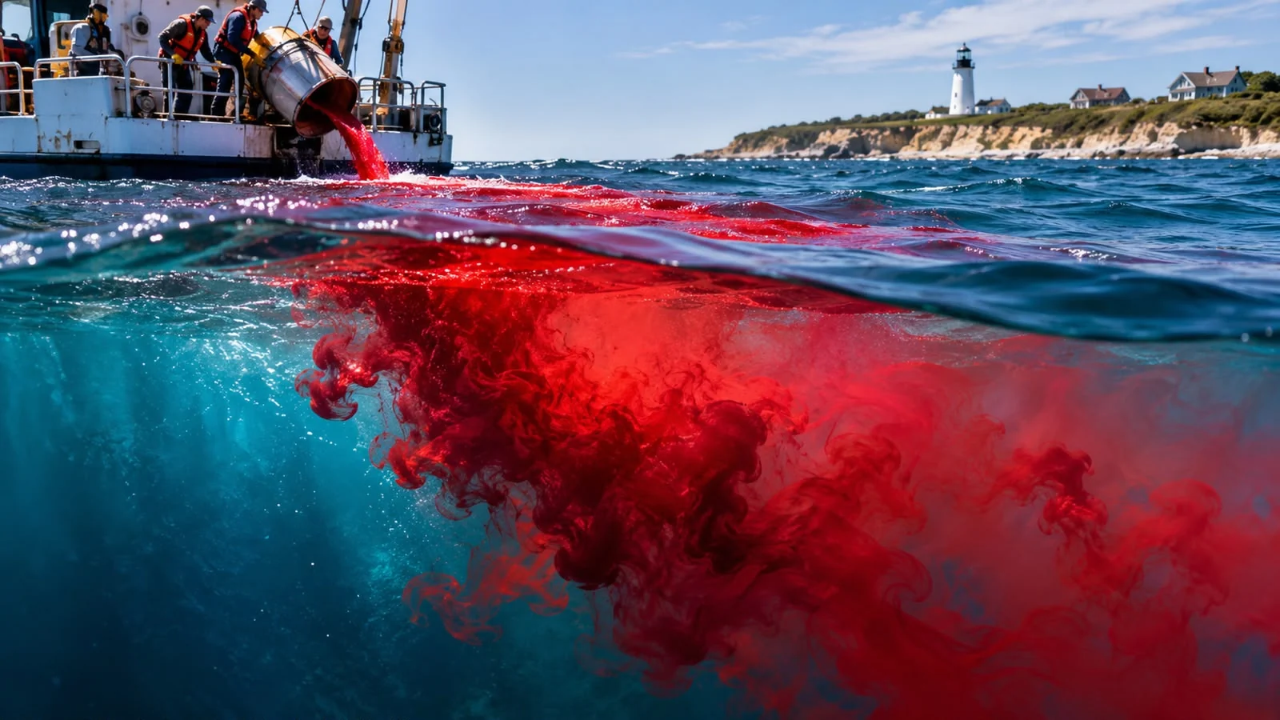
On August 16–17, 2018, scientists released 75 kg of rhodamine dye 28 km south of Martha’s Vineyard, Massachusetts, to study water movement in the Atlantic. The dye, a neutrally buoyant tracer, was pumped from the R/V Connecticut in a rhodamine‑ethanol mixture designed to match the density of near‑surface seawater. Researchers tracked the dye’s concentration through the water column and combined the data with measurements of currents, temperature, and other properties.
The experiment showed that the dye spread readily within the ocean’s upper mixed layer, where turbulence from wind and surface forcing keeps properties relatively uniform. Vertical diffusivity in this layer was estimated at about 7 × 10⁻⁴ m² s⁻¹. At the base of the mixed layer, where water becomes more stratified in the pycnocline, diffusivity fell to roughly 5 × 10⁻⁶ m² s⁻¹—about 140 times lower. Thus, mixing within the mixed layer was far more efficient than mixing across its base.
During the 33‑hour survey, 99 % of the dye remained in the mixed layer. Some dye was detected below the mixed layer, but its distribution was patchy and did not match the concentrations above. The researchers suggested that the dye that appeared below the mixed layer may have left the upper layer earlier at a different location and then been transported horizontally by currents.
The sharp contrast in mixing rates underscores the role of ocean stratification. Turbulence can distribute a tracer quickly within the mixed layer, but density differences make it difficult for water and dissolved substances to cross into the stratified ocean below. Downward penetration from the mixed layer was found to be a slow, intermittent process occurring over several days rather than a uniform, hour‑by‑hour transfer.
These findings are important for oceanographers who use mixing estimates to improve models of heat, nutrient, pollutant, and other dissolved substance transport. The dye’s horizontal movement was largely explained by currents measured with high‑frequency radar, with only a small additional contribution from turbulent diffusion. The experiment demonstrates that the ocean’s ability to move material depends not only on flow direction but also on the water layer in which the material resides, revealing a surprisingly effective barrier beneath the restless surface.
Frequently asked questions
What was the purpose of the rhodamine dye release?
To study water movement and vertical mixing in the Atlantic Ocean.
How much did vertical diffusivity change from the mixed layer to the pycnocline?
It decreased from about 7×10⁻⁴ m² s⁻¹ to about 5×10⁻⁶ m² s⁻¹, roughly 140 times lower.
What percentage of the dye remained in the mixed layer during the survey?
99 % of the dye remained in the mixed layer during the 33‑hour survey.