Science
Jurassic Docodont Reveals Early Mammal‑Like Swallowing and Semi‑Aquatic Lifestyle
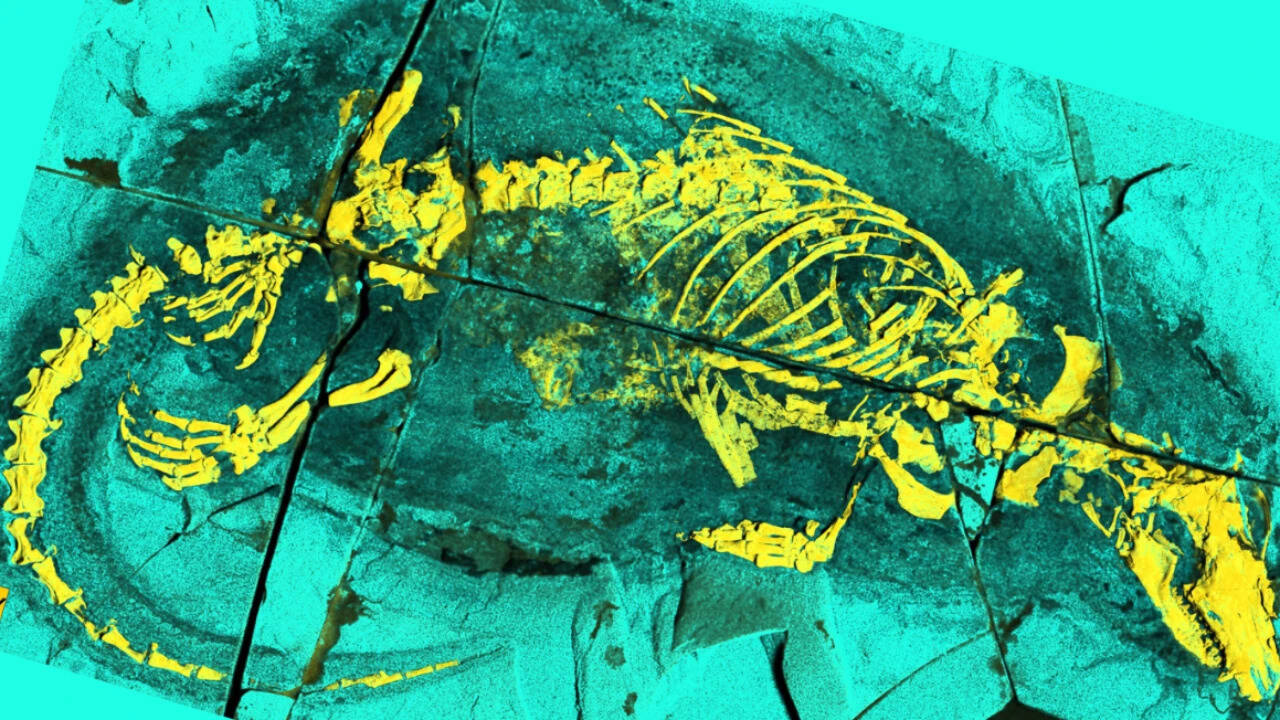
Scientists from the University of Chicago have described a 165‑million‑year‑old fossil from Inner Mongolia, China, that belongs to a docodont species named *Megacauda sungei*. The nearly complete skeleton shows a broad, flattened tail and specialized throat bones that resemble the hyoid complex of modern mammals. The fossil also preserves strong hind limbs with long outer digits, a wide, H‑shaped vertebral column, and a skull with sharp canine and cheek teeth. Tiny vertebrate bones found in the stomach cavity suggest the animal ate small animals, possibly salamanders, indicating a semi‑aquatic hunting strategy. The presence of a U‑shaped hyoid structure, which supports muscles used for chewing and swallowing, provides some of the earliest evidence of a feeding mechanism that later enabled mammals to diversify into many dietary niches. The discovery, published in *Nature* on Wednesday, shows that complex throat anatomy and swimming adaptations were present in early mammal relatives long before the evolution of modern mammals.