Science
New Crocodile Species Discovered in Sphinx‑Building Rocks, Snout Missing Like Monument’s Nose
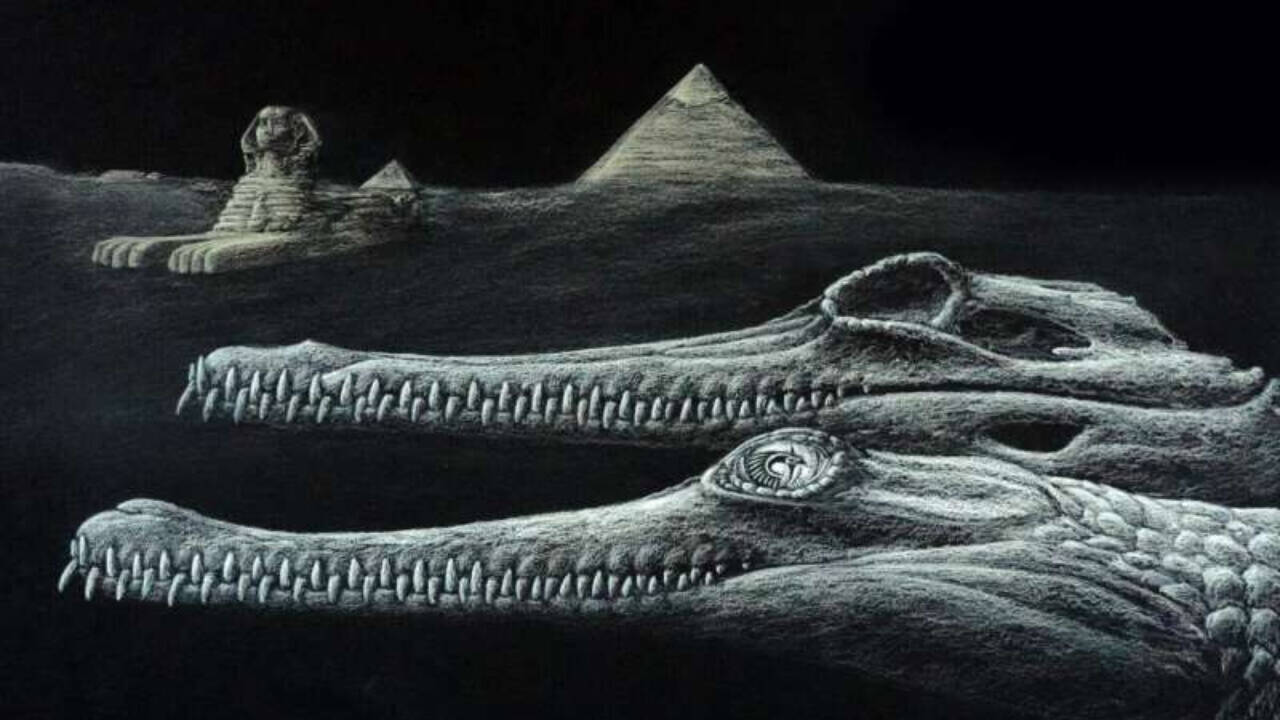
A fossil found in the same 45‑million‑year‑old Mokattam Formation that supplied stone for the Great Sphinx has been identified as a new extinct crocodile species, Herugavialis cairensis. The skull, recovered in the 1920s and previously assigned to the false gharial Tomistoma, was reexamined using CT scanning and modern analytical methods. The study, published in Royal Society Open Science, revealed anatomical differences that justify a new species designation. The skull is largely complete but lacks the tip of its snout, a detail that echoes the missing nose of the Sphinx. Herugavialis adds to evidence that ancient Egypt hosted a diverse array of long‑snouted crocodilians, including at least two other gavial species. The discovery highlights the rich marine ecosystems of the early Eocene Mediterranean and the evolutionary history of gavials, which have existed for over 100 million years. The researchers named the species after Heru, an ancient Egyptian deity linked to Horus, noting the poetic parallel between the fossil’s missing snout and the Sphinx’s absent nose. The findings were reported by Phys Org and the Royal Society Open Science journal.