Science
Kagan and Soai Awarded 2026 Nobel Prize in Chemistry for Breakthroughs in Asymmetric Synthesis
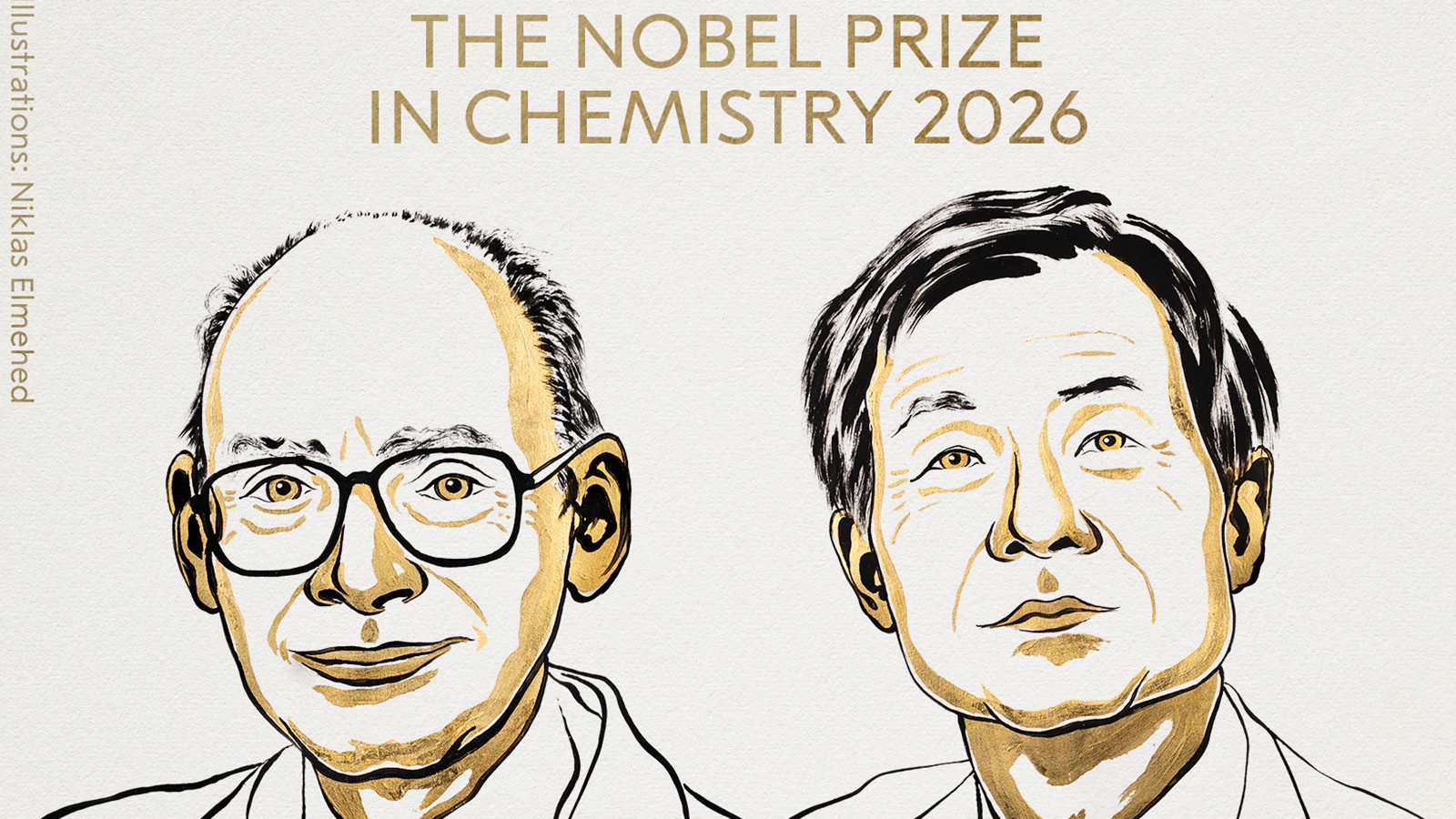
The Royal Swedish Academy of Sciences announced on Wednesday that Henri B. Kagan of Université Paris‑Sud in Orsay, France, and 95‑year‑old Kenso Soai of the Tokyo University of Science have been awarded the 2026 Nobel Prize in Chemistry. The prize was awarded “for the discovery of non‑linear effects and autocatalysis in asymmetric organic synthesis.” Kagan’s work revealed a new way to manipulate chemical reactions, enabling a greater excess of one mirror image to be produced than previously thought possible. His findings are expected to aid chemists in developing reactions for pharmaceuticals, flavours, scents, and new materials. Soai’s contribution is the Soai reaction, the first chemical reaction that produces only one of the two possible mirror images. The Nobel Committee described the reaction as “one of the most spectacular chemical experiments ever conducted” and highlighted its significance for understanding the origin of homochirality in living systems. The award recognises both scientists’ solutions to a century‑old chemical mystery about how molecules of a single mirror‑image can arise spontaneously.