Politics
India Pushes BRICS for Stable Trade Rules, Local Currency Payments as Russia Floats Grain Exchange
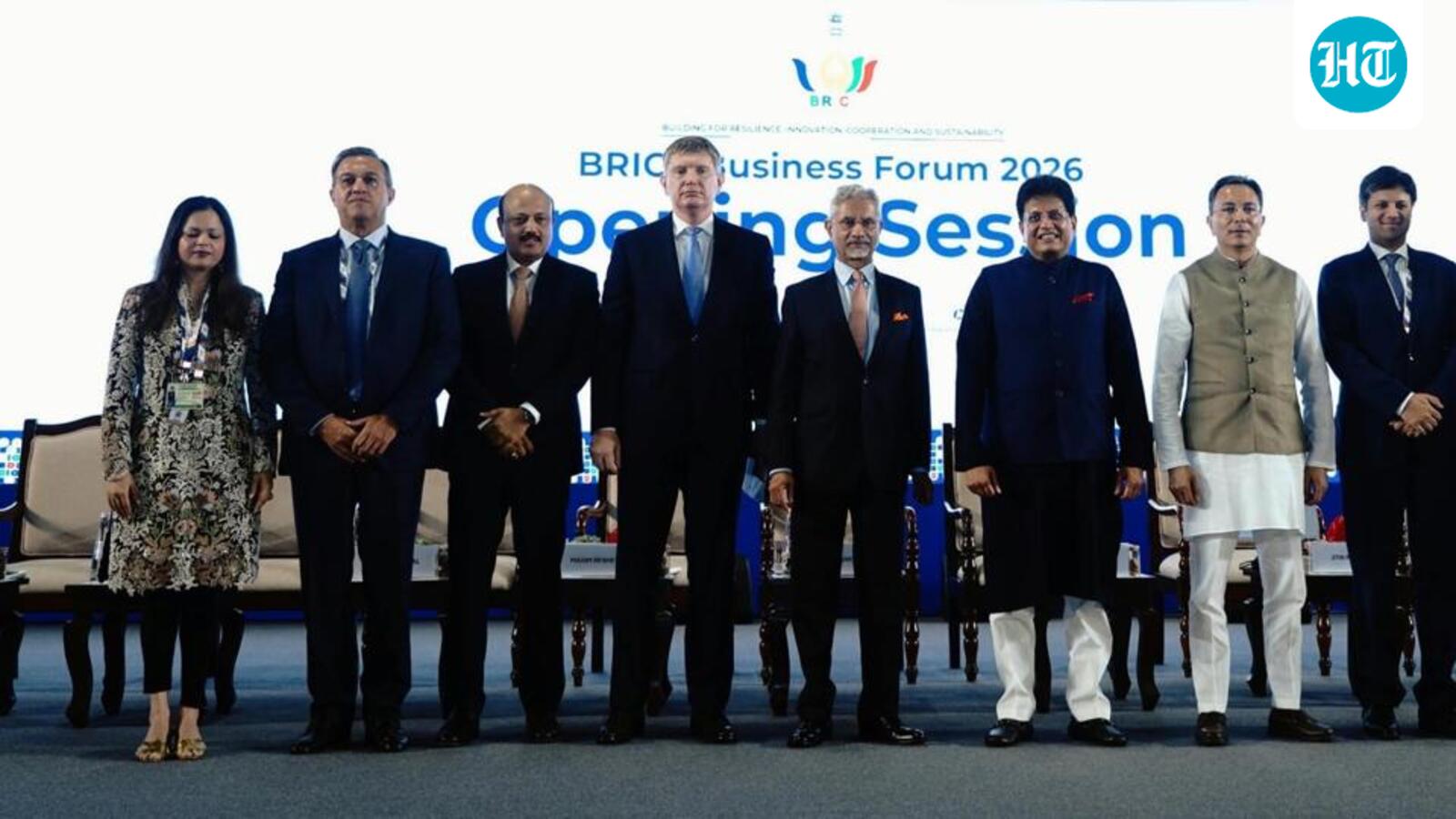
India called on BRICS nations to establish a predictable business climate, build resilient supply chains, and interlink payment systems to boost trade in local currencies, while Russia proposed creating a BRICS grain exchange to strengthen food security among member countries. The remarks came during the BRICS Business Forum held in New Delhi.
External Affairs Minister S Jaishankar, delivering the keynote address, said India's chairship priorities center on resilience, innovation, cooperation, and sustainability, noting these themes are especially relevant given current global conditions. He described a world marked by volatility and complexity, citing economic disruptions from geopolitical conflicts, pandemics, and climate change, alongside new opportunities arising from digitisation and technological progress.
Jaishankar emphasized the growing importance of supply chain connectivity and trade facilitation, alongside strengthening services, agriculture, agri-technology, digital delivery, MSMEs, startups, and women-led enterprises. He advocated greater self-reliance within BRICS to enhance economic security, stating the goal is to build capacity to absorb shocks while staying competitive and connected. He called for genuine market practices, dependable logistics, diversified commercial ties, transparent trade and investment, and energy systems capable of managing disruption. He also pointed to digital public infrastructure, artificial intelligence, fintech, and advanced manufacturing as key growth areas.
Commerce and Industry Minister Piyush Goyal, addressing roughly 2,000 delegates, noted that BRICS accounts for nearly a quarter of global trade, with India serving as a key pillar of intra-bloc commerce. He called for deep, resilient trade with diversified supply chains, urging members to open markets to each other's products, including raw materials and critical minerals. He also urged simplifying regulatory procedures and speeding up customs clearance, and called for opening services markets and easing recognition of professional qualifications across borders.
Goyal highlighted India's Unified Payments Interface, which now handles more than 250 billion transactions annually—over half of global transaction volume—and is accepted in 11 countries. He urged BRICS members to link payment systems and conduct trade in local currencies.
BRICS currently comprises Brazil, Russia, India, China, South Africa, Egypt, Ethiopia, Indonesia, Iran, Saudi Arabia, and the United Arab Emirates.
Russian Minister of Economic Development Maxim Reshetnikov said Russia has significantly shifted toward local currency trade settlements. Three years ago, the dollar and euro made up 85% of settlements for Russian exports; that figure has since fallen to about 11%. He described an alternative international financial system linking thousands of banks across multiple countries as a key strategic asset. Reshetnikov proposed establishing a BRICS grain exchange—a unified trading platform allowing producers, traders, and buyers to transact directly—arguing that BRICS nations, despite being major grain producers and consumers, still depend on price benchmarks reflecting other markets' interests.
Commerce Secretary Rajesh Agrawal noted that trade among BRICS countries has grown from $84 billion in 2003 to nearly $1.2 trillion in 2024. He referenced the Jaipur Trade Ministers' Meeting held August 7, where members reaffirmed support for the multilateral trading system centered on the WTO. Agrawal stressed the need for institutional mechanisms providing traders with affordable credit, noting the global trade finance gap stands at $2.5 trillion, and highlighted the Jaipur Consensus as a foundation for a common BRICS financing mechanism, particularly for MSMEs.
Minister of State for Commerce and Industry Jitin Prasada outlined India's two main priorities as BRICS chair: achieving balanced trade relationships among members and expanding trade in services, especially digital services, artificial intelligence, digital public infrastructure, and data centers. He said the future direction for BRICS trade lies increasingly in digital services rather than traditional trade alone.