World
Trump’s Tariff Strategy Continues to Shape U.S. Trade Policy
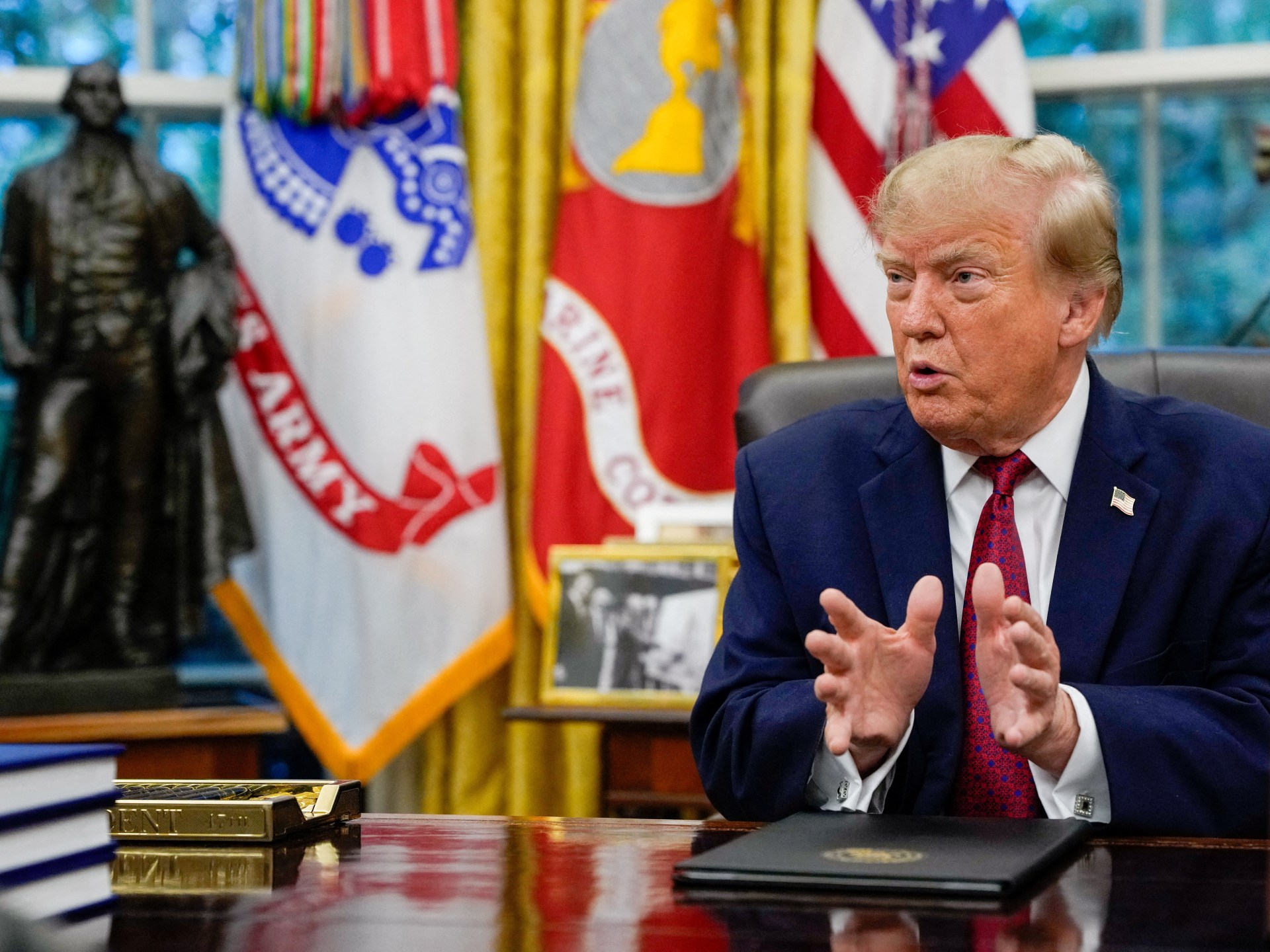
On November 25, President Donald Trump’s administration announced a new set of tariff schedules that affected more than 53 percent of U.S. trade, including the European Union, China, Japan, Indonesia and Taiwan. The announcement was met with little market reaction; the S&P 500 and the 10‑year Treasury yield barely moved. In contrast, Trump’s April 2, 2025 “Liberation Day” announcements triggered a 10.5 percent drop in the S&P 500 over two days, wiping roughly $5 trillion in market value and causing a sharp rise in Treasury yields.
Trump’s tariffs have become normalized in two ways. First, markets now view tariffs as a routine part of his administration’s policy. Trump has repeatedly stated his belief in tariffs, citing a 15‑20 percent duty on Japanese goods as an example. Second, the administration is using less blunt instruments. After defeats in the U.S. Court of International Trade and the Supreme Court over broader tariffs justified under the International Emergency Economic Powers Act (IEEPA), the new tariffs are proposed under Section 301 of the Trade Act of 1974, following an eight‑month investigation into alleged structural excess capacity in manufacturing.
Section 301 tariffs are not new; they were used by Reagan in 1987 and Clinton in 1999. Because they require investigations, hearings and public comment, courts are less likely to overturn them. The U.S. Supreme Court is expected to defer to the White House even when the reasoning appears questionable.
The new tariffs will raise the average U.S. statutory tariff rate from 11.4 percent to 13.9 percent, with Mexico’s rate yet to be announced. The rates cap at 15 percent for the EU, Japan, South Korea, Taiwan and Switzerland, and at 20 percent for Vietnam, in line with prior agreements. They do not stack on top of existing forced‑labour duties or Section 232 tariffs on steel, aluminium, cars and other specific industries.
The Section 301 investigation into China found that tariffs up to 40 percent were warranted, but the administration proposed a 20 percent tariff that would stack on the earlier 20 percent tariff from Trump’s first term, potentially bringing combined rates to about 45 percent. If a trade truce with China is not extended, the combined rate could rise to 65 percent, a point likely to be discussed at the G20 summit in Miami on December 14‑15.
Tariffs remain a key tool in Trump’s geoeconomic strategy, but their future depends on political dynamics. In an NBC News exit poll, 66 percent of voters said Trump’s tariff policies hurt the national economy. The Congressional Budget Office estimated that Trump’s signature budget law would add $3.4 trillion to primary deficits over a decade. The federal deficit was 5.8 percent of GDP in fiscal 2025 and 6.2 percent in fiscal 2026, partly due to Supreme Court rulings that reduced customs revenue and required refunds of $166 billion collected under IEEPA.
Opponents of Trump’s tariffs have introduced the “End Trump’s Tariff Tax Act,” and the Committee for a Responsible Federal Budget estimates that repealing remaining tariffs would cost about $85.5 billion a year. Repeal would still need to survive Trump’s veto, and Democrats are likely to seek piecemeal tariff exemptions in funding deals while Trump maintains the threat of further tariffs. The debate over reversing tariffs and determining alternative revenue sources has only just begun.
Frequently asked questions
What percentage of U.S. trade is affected by the new tariffs announced on Nov. 25?
More than 53% of U.S. trade.
How did the market react to the Nov. 25 tariff announcement?
The S&P 500 and the 10‑year Treasury yield barely moved.
What is the projected combined tariff rate on China if the trade truce is not extended?
The combined rate could rise to about 65%.