India
40,000‑Square‑Metre Garden Planned Along Yamuna to Protect Taj Mahal
By Hemendra Chaturvedi, Harsh Yadav
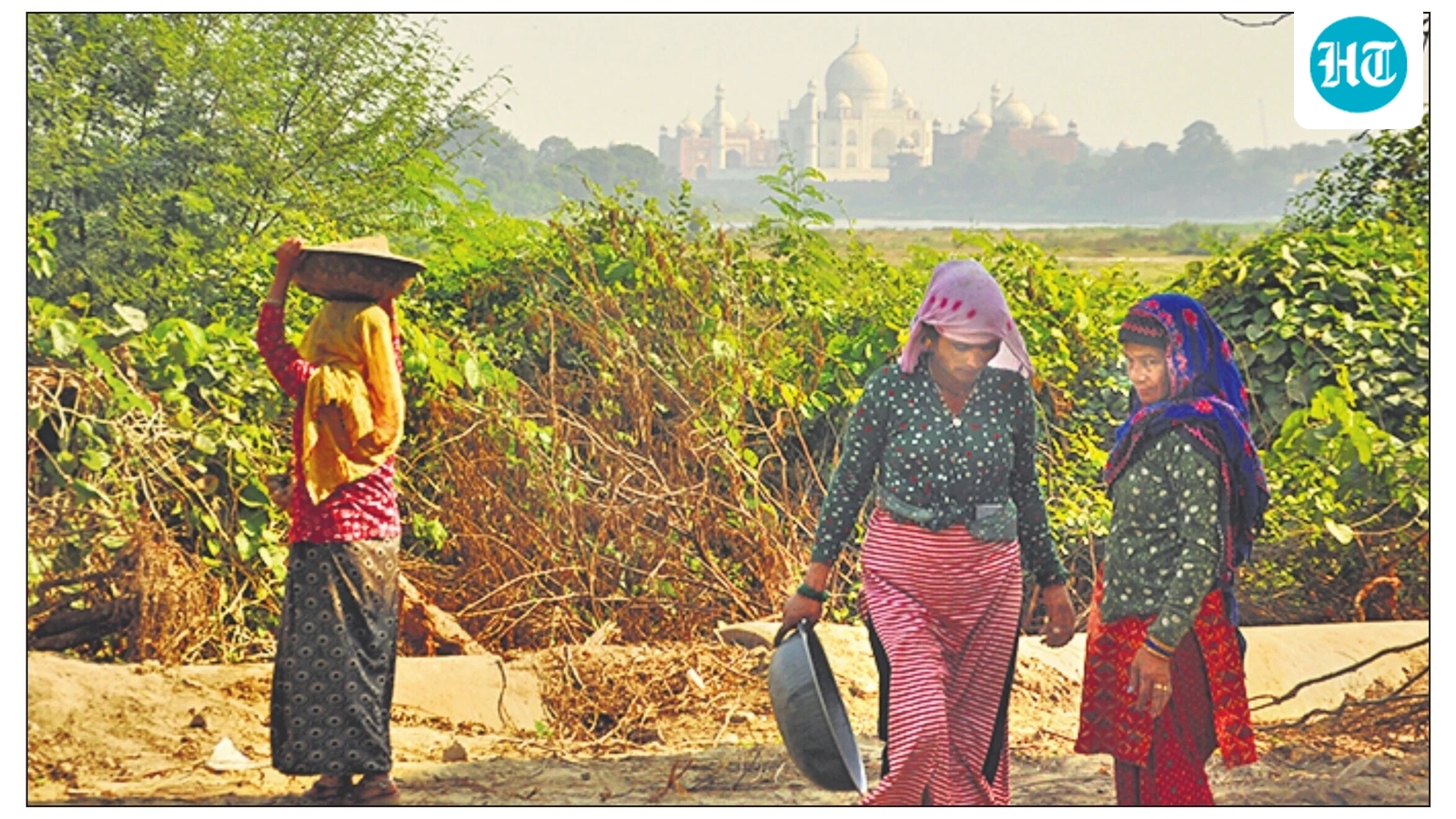
The state horticulture department will develop a 40,000‑square‑metre patch of land along the Yamuna between Agra Fort and the Taj Mahal into a landscaped garden. Uttar Pradesh horticulture minister Dinesh Pratap Singh said the project aims to protect the Taj from dust and pollution by increasing green cover and to give tourists a more serene setting for viewing the monument. An initial allocation of about ₹1.5 crore has been made, and work is expected to finish in the coming months. Rajnish Pandey, superintendent of the horticulture department in Agra, noted that three lawns already exist in front of Agra Fort and that the new patch will follow the same pattern. Existing trees on the site will be preserved and incorporated into the landscaping, with ornamental and seasonal plants added. The garden lies along Yamuna Kinara Road, facing Agra Fort and looking toward the Taj Mahal, and is part of a cluster of Taj View Gardens along the river. The Archaeological Survey of India (ASI) manages a garden of over 25,000 square metres, while the horticulture department oversees about 16–17 acres, including its existing garden and the new patch. Work began in September. Pandey said cultural events might be held once the project is completed, and the green cover will help hold suspended particulate matter (SPM) in the air around the Taj. Agra Development Authority vice‑chairperson Vijay Kumar said the body is supporting the project at every stage. The initiative follows Supreme Court directions to increase greenery near the Taj. An ASI official noted that the agency’s gardens cover about 10–12 acres along the river and are being developed in compliance with the Court’s orders to keep the air clean near the monument. The proposed Taj heritage corridor, announced in 2002 by former Chief Minister Mayawati, aimed to divert the Yamuna to reclaim about 75 acres of riverbed for commercial use. Environmentalists and a Supreme Court‑appointed expert panel said the project lacked ecological or structural studies and could endanger the heritage sites. The Court stayed the project in May 2003 and ordered a CBI probe into irregularities in July 2003. KC Jain, an activist, said expert committees found that developing greenery on the affected patches was the best way to safeguard the area, and the Court approved the plan. In its 1996 Taj Trapezium judgment, the Court noted that sulphur dioxide from nearby industries combined with moisture to form sulphuric acid. In May 2018, a bench of Justices MB Lokur and Deepak Gupta expressed concern that the Taj’s marble had turned yellowish, then brownish and greenish. SN Tripathi of IIT Kanpur’s Centre for Environmental Science and Engineering said that continuous felling of trees in the Taj Trapezium Zone, along with dust and vehicular pollution, significantly contributes to the yellowing of the Taj Mahal’s marble.
Frequently asked questions
What is the size of the planned garden?
The garden will cover 40,000 square metres along the Yamuna between Agra Fort and the Taj Mahal.
How much funding has been allocated for the project?
An initial allocation of about ₹1.5 crore has been made.