World
EU Deputy Secretary General Skoog Highlights India‑EU Cooperation Amid Geopolitical Tensions
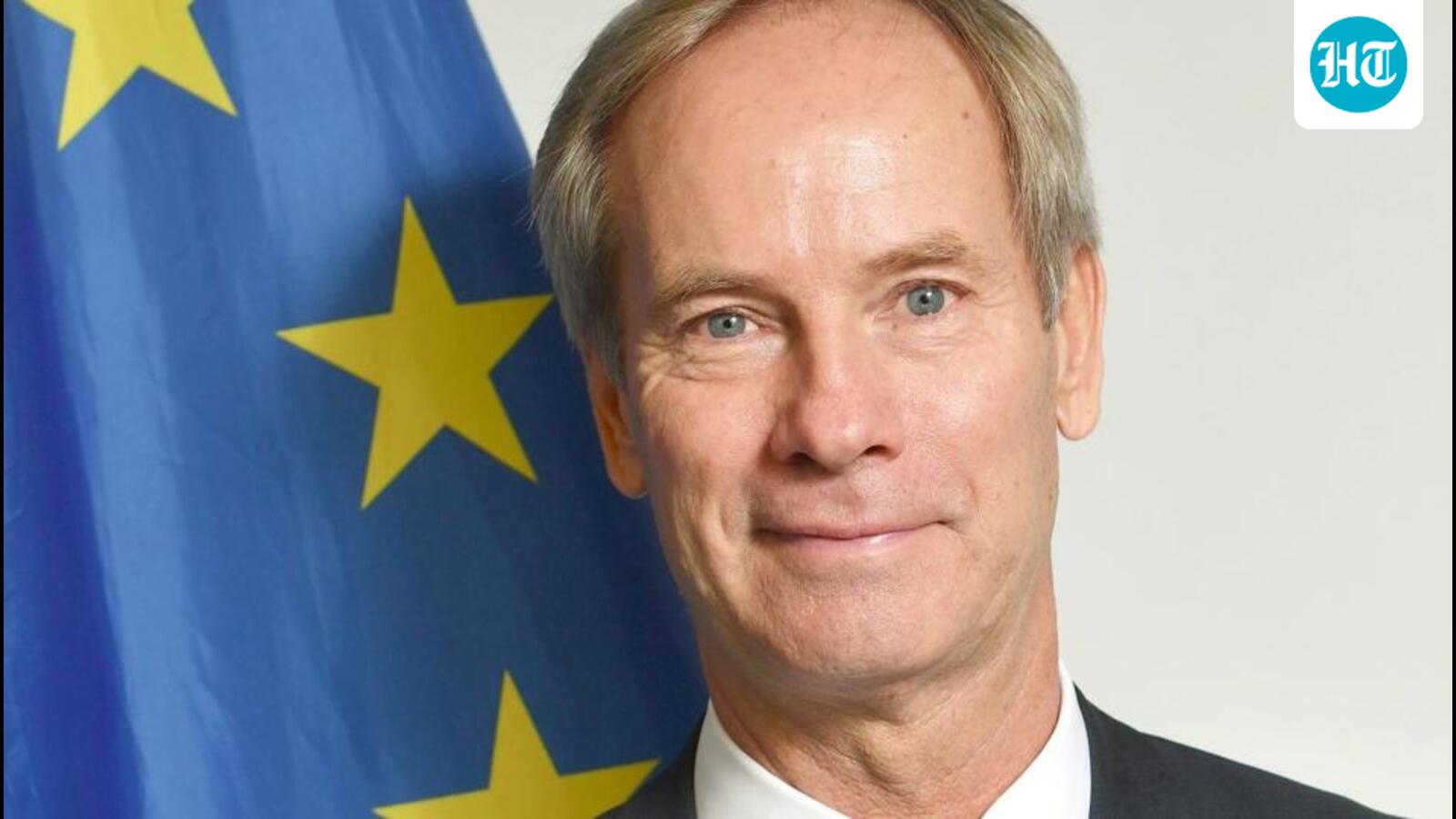
EU deputy secretary general for political affairs Olof Skoog said on Friday that India and the European Union have strong reasons to deepen cooperation because of concerns over China, Russia and U.S. trade policies. Skoog, who is in New Delhi for political consultations ahead of the signing of the India‑EU free trade agreement (FTA) next month, welcomed India’s proposals to end hostilities but noted that many such moves have been blocked by Russia.
Skoog explained that the FTA is progressing well, with a signature planned for December 16 and subsequent scrutiny by the European Parliament. He added that a bilateral investment agreement is still needed to provide predictability, safety and security for investments, which would help the private sector apply the FTA’s benefits.
Regarding the India‑EU Security and Defence Partnership (SDP), Skoog said the partnership has led to more intense consultations and a shift from a buyer‑seller relationship to deeper cooperation on hard security. He noted that the SDP allows for new areas of collaboration, including loans to member states for investments and partnerships with countries that have SDP agreements, such as India.
Skoog acknowledged that India’s long‑standing military relationship with Russia is an integral part of the dialogue, but he emphasized that any material or political facilitation of Russia’s aggressive posture toward EU countries is a sensitive issue.
He said the EU and India should work more closely on hybrid threats, disinformation and protection of critical infrastructure, noting that foreign interference and manipulation of information are used to influence elections. He also highlighted the importance of maritime security, including undersea cables, and the need for cooperation on the Indo‑Pacific to ensure freedom of navigation and respect for international law.
Skoog expressed optimism that deeper cooperation would lead to concrete actions such as military exercises, port calls by EU member states and joint operations like Atalanta and Aspides, which interact positively with the Indian Navy in the northern Indian Ocean.
On the Russia‑Ukraine war, Skoog welcomed initiatives by India and others to release grain and open the Black Sea to supplies for world food security, but said that such initiatives have been blocked by Russia. He described Russia’s current strategy as expanding attacks against Ukraine and the civilian population, and noted that Russia’s timetable for negotiations does not align with those of the United States, Europe, India or Ukraine.
Skoog concluded that India and the EU should view each other as key partners for the future, especially in promoting rule‑based order, freedom of navigation and respect for sovereignty.