World
Osh Faces Controversy as Urban Renewal Displaces Residents and Threatens Heritage Sites
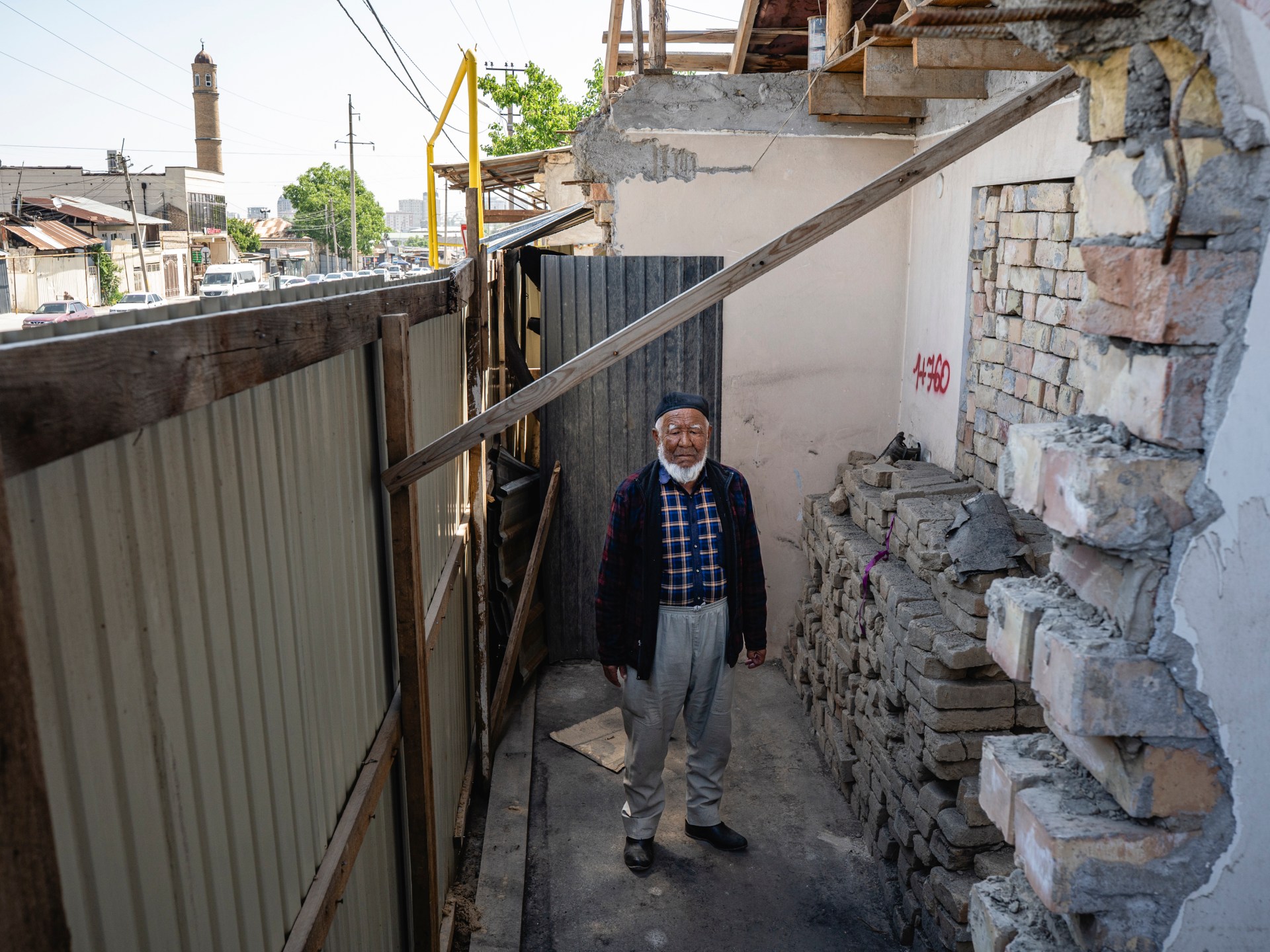
Osh, Kyrgyzstan’s second‑largest city, is undergoing a large‑scale regeneration programme that includes new IT hubs, apartments, schools, nurseries, transport projects, a waste‑to‑energy plant and a livestock complex. A modern school for 530 children, equipped with solar panels, was finished in ten months and is expected to open soon, the government said last week. However, several hundred homes have been demolished to make way for the new infrastructure, raising concerns about the future character of the city.
The rapid modernization threatens Sulaiman‑Too, a UNESCO World Heritage site located just five kilometres from the Uzbek border. Osh has a population of about 470,000, roughly 40 % of whom are Uzbek. 84‑year‑old Uzbek resident Mogamed Kambarow said the authorities “want to erase us from the history of this city.” In March, a third of his home was destroyed when municipal workers widened Alisher Navoi Street. Kambarow received no compensation and now lives in the remaining part of his house. An 11‑year‑old girl was injured by falling bricks during the demolition.
The redevelopment has affected more than 750 households, including many Kyrgyz families. According to Interbilim, a legal aid organisation in Osh, 65 % of households learned of the demolition when city workers painted the Russian word *snos* (meaning “demolition”) on their walls. Some residents received letters demanding they leave within three days; others were visited by the mayor, who announced the plans.
Osh sits at the eastern end of the Ferghana Valley, an agricultural heartland divided among Kyrgyzstan, Uzbekistan and Tajikistan. Historically the city was predominantly Uzbek, but the borders drawn in 1924‑27 placed it within Kyrgyzstan. The city’s old quarters, known as *mahallas*, once featured flat‑roofed houses behind high fences and grape‑vine‑lined yards.
Sulaiman‑Too is a holy site for Muslims and has been a UNESCO World Heritage Site since 2009. The mountain hosts a mosque built by Babur, a cemetery with graves dating back to the 14th century, and is visited by locals such as 73‑year‑old retired pilot Abduraim Amanbaev, who climbs the mountain every Friday.
Interbilim says the city was supposed to agree on compensation with each household before demolition. Disputes should have gone to court. While some families received new flats, many were moved to Ene‑Say, a residential area 10 km outside Osh, or to an apartment block in the city. Some residents have not received deeds for their new homes, preventing them from registering their address or accessing free healthcare and other services. A 37‑year‑old woman in Ene‑Say said her family has not been given the deeds for their flat.
The city’s debt totals up to 3 billion soms ($34 million), according to Kyrgyz media, though authorities rejected that figure and said the budget for the year is 5.2 billion soms ($57 million). Officials did not respond to questions about the backlash over the development plans.
Sulaiman‑Too attracts about 370,000 visitors each year. Renovation work began in October, funded by the World Bank at a cost of $12 million and expected to last one year. The project includes improving footpaths, replacing lighting and building a car park. The mountain’s buffer zone covers 4,788 hectares (11,830 acres), including Navoi Street. City officials say these restrictions make it harder to develop Osh.
Sabira Soltongeldieva, head of the National Commission of the Kyrgyz Republic for UNESCO, said Bishkek has asked to reconsider how the buffer zone is used. Former mayor Jenishbek Toktorboev, nicknamed “Demolition Uncle,” had ordered the destruction of the old Jayma Bazaar and built apartment blocks at the foot of the mountain, exceeding buffer‑zone rules. He was dismissed in February. The new mayor, Janar Akaev, has continued to propose new developments, including a cable car to the mountain’s summit and a proposal to remove the mountain from the UNESCO list, which the culture ministry rejected.
"This is the most complete example of a sacred mountain in Central Asia," said Hairullo Ibaydullaev, deputy director of the National Historical and Archaeological Museum Complex Sulayman, carved inside the mountain.
Frequently asked questions
What does Osh's regeneration programme include?
The programme includes new IT hubs, apartments, schools, nurseries, transport projects, a waste‑to‑energy plant and a livestock complex.
How many households have been affected by the demolition?
More than 750 households, including many Kyrgyz families, have been affected by the demolition.
What is the status of Sulaiman‑Too during the regeneration?
Sulaiman‑Too is a UNESCO World Heritage Site since 2009, attracts about 370,000 visitors annually, and is undergoing a $12 million renovation funded by the World Bank.