Politics
Democrats Seek to End Trump‑Led Iran War, but Long‑Standing Bipartisan Hostility Persists
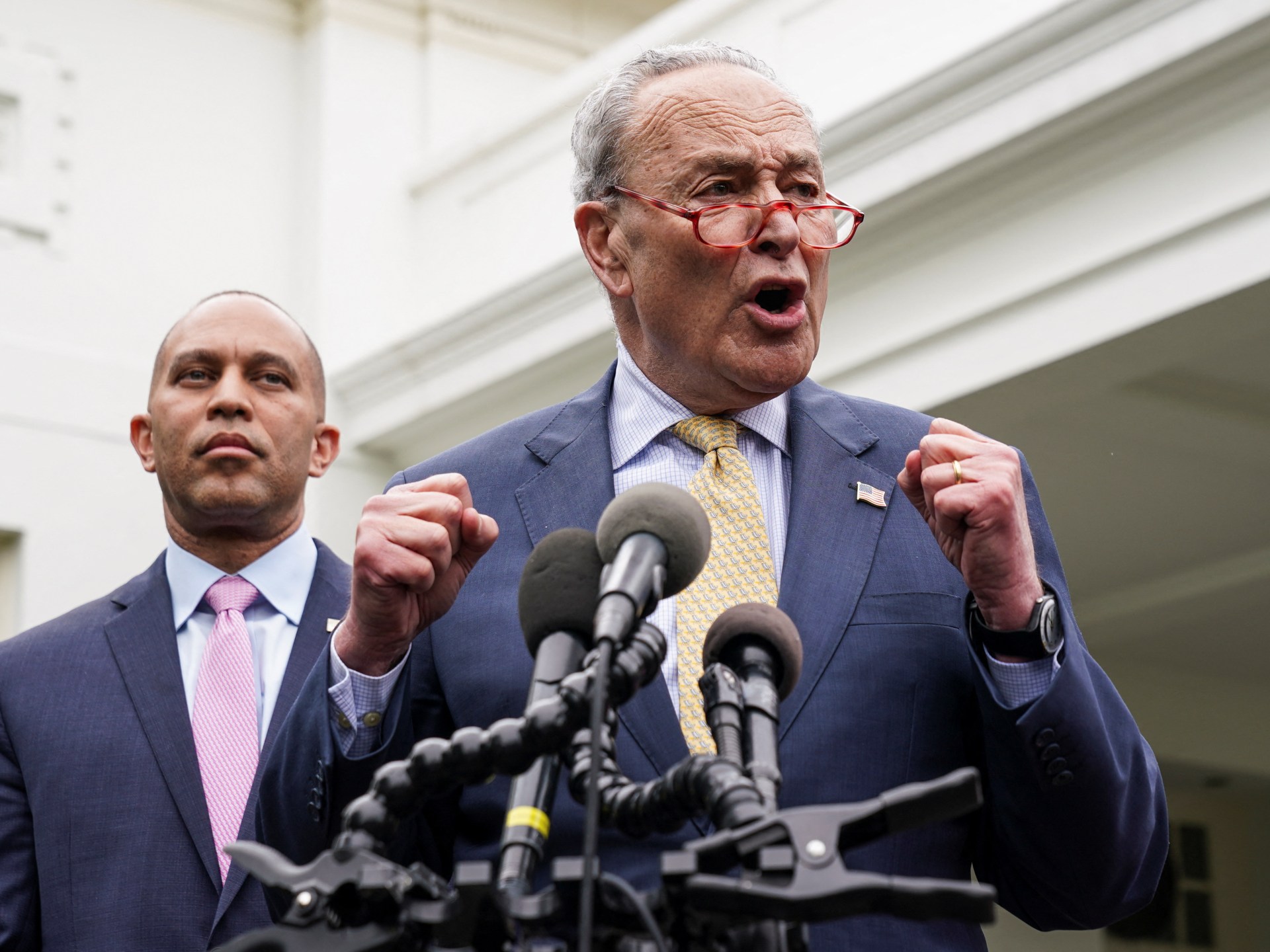
The Democratic Party’s landslide victory in the U.S. midterm elections came amid widespread opposition to the nine‑month war in Iran, which has driven energy prices higher domestically and worldwide. Democratic leaders, including those traditionally seen as hawkish on Iran, have called for an immediate end to the conflict. “We have to work and move aggressively to end the reckless and costly war of choice in Iran right out of the gate,” said presumptive incoming House Speaker Hakeem Jeffries last week. A day after the Democrats’ decisive win, Senate Minority Leader Chuck Schumer, who opposed the 2015 nuclear agreement with Iran, said Americans did not know “what the heck we’re fighting for in Iran.” Tehran’s Supreme Leader Mojtaba Khamenei warned that the election outcome would not change Washington’s policy toward Iran, calling those expectations “seriously mistaken.” Analysts question whether Democratic opposition to the war reflects a fundamentally different approach to Iran, a country that successive U.S. administrations—both Democrat and Republican—have sought to isolate diplomatically and economically.
Since the 1979 Islamic Revolution, U.S. hostility toward Iran has largely superseded partisanship. Under President Jimmy Carter, the U.S. began imposing sanctions after the seizure of the U.S. embassy in Tehran. Republican administrations continued pressure, and President Bill Clinton expanded economic isolation through a “dual containment” policy targeting both Iran and Iraq. In 1996, Clinton signed legislation imposing sanctions on foreign companies investing in Iran’s energy sector; the bill passed 415–0 in the House. Even when Washington and Tehran found common interests, rapprochement opportunities were short‑lived. After the September 11 attacks, Iran cooperated with the U.S. against the Taliban, but months later President George W. Bush branded Iran part of an “axis of evil.”
Maryam Jamshidi, associate professor of law at the University of Colorado Boulder, notes that both parties have broadly viewed post‑revolutionary Iran as an enemy to be constrained. “Both parties have broadly viewed post‑revolutionary Iran as an enemy to be constrained, marginalised, and suffocated,” she told Al Jazeera. She added that the worst rounds of sanctions came under Democratic presidencies, specifically Clinton and Obama. In 2010, Obama intensified pressure by signing the Comprehensive Iran Sanctions, Accountability and Divestment Act, targeting foreign companies supplying Iran with refined petroleum products. The bill passed 408–8 in the House and 99–0 in the Senate.
Political analyst Negar Mortazavi argues that continuity of economic pressure does not mean the parties pursued identical policies. “It would be historically inaccurate to suggest that their approaches towards Iran have been essentially the same,” she said. She points to the contrast between Obama’s diplomatic breakthrough and Trump’s decision to wage war.
Obama’s administration imposed sweeping international sanctions but also engaged directly with Tehran, culminating in the 2015 nuclear agreement (JCPOA). Iran agreed to curb uranium enrichment and pledged not to develop nuclear weapons, while the U.S. loosened many sanctions and released some frozen funds. Mortazavi described the JCPOA as “more than a nuclear agreement,” representing a possibility of a fundamentally different relationship based on diplomacy rather than confrontation. During Obama’s second term, the U.S. and Iran also cooperated against ISIL.
Biden, who had campaigned on restoring the JCPOA, failed to revive it and retained much of Trump’s “maximum pressure” tactics. Mortazavi notes that Biden’s approach reflects the hawkish, traditional establishment wing of the Democratic Party. He provided extensive military, financial, and diplomatic support to Israel during the Gaza conflict, continuing to supply weapons and shield Israel diplomatically despite the civilian death toll.
Iranian distrust of Washington predates the Islamic Republic, dating back to the 1953 CIA‑backed coup that restored Shah Mohammad Reza Pahlavi. For Iranian leaders, recognizing any distinction between Democratic and Republican administrations is complicated by the lack of a lasting settlement. Jamshidi said the Obama administration failed to deliver meaningful sanctions relief, and Biden similarly failed to follow through on promises. In September 2023, a Qatar‑mediated prisoner exchange allowed the transfer of $6 billion in frozen Iranian funds for humanitarian purchases, but access was blocked after the October 7 attacks on Israel.
These diplomatic failures have reshaped political debates within Iran. The 2015 agreement was a victory for officials who advocated engagement, but Trump’s withdrawal, Biden’s failure to revive the deal, and the subsequent war have strengthened arguments that Washington seeks regime change. Analysts note that within Iran’s political establishment, pragmatists believe Iran’s military and political wins should lead to diplomatic and economic gains, while hawkish voices demand total victory at the negotiating table.
The Democrats’ election victory comes amid a broader debate within the party over Washington’s role in the Middle East, particularly its support for Israel and reliance on military intervention. Mortazavi points to a growing progressive and anti‑war wing challenging the party’s traditional foreign‑policy establishment. Some newly elected Democrats, such as Darializa Chevalier and Adam Hamawy, have called for a shift in the broader approach toward Iran. However, without control of the White House, the Democrats’ ability to pursue a fundamentally different foreign policy is limited. Their immediate test will be whether they use congressional power to challenge Trump’s continuation of the war. They have legislative tools—restricting war funding, investigating military operations, and preventing further escalation—but such measures could face a presidential veto and would require Republican support for a two‑thirds majority.
Questions remain over the Democratic establishment’s willingness to confront Trump over Iran. Jamshidi notes that the selection of pro‑Israel Congressman Jeffries as the Democratic nominee for House Speaker suggests Democrats may not fulfill their campaign promise to end the war soon, if at all. Neither Jeffries nor Schumer has committed to how they will end the war. Even if Democrats succeed in ending the conflict, their willingness to pivot away from the broader framework of economic sanctions, military pressure, and isolation that often defines Washington’s relationship with Tehran remains uncertain. For Iranian leaders, successive Democratic administrations suggest that an opening for diplomacy does not guarantee lasting change in U.S. policy. “None of Iran’s various leadership factions believe that they should sit back and expect Democrats to change the course of U.S. policy toward Iran,” Nikpour said, “though they likely internally understand that Democrats are at least in theory more likely than Republicans to be open to diplomatic solutions.”
Frequently asked questions
What did House Speaker Hakeem Jeffries say about ending the Iran war?
He said, "We have to work and move aggressively to end the reckless and costly war of choice in Iran right out of the gate."
What was Senate Minority Leader Chuck Schumer's view on the Iran war?
He said Americans did not know "what the heck we’re fighting for in Iran."
What did Iran's Supreme Leader Mojtaba Khamenei say about the U.S. election outcome?
He warned that the election outcome would not change Washington’s policy toward Iran, calling expectations "seriously mistaken."