World
New Jersey’s 116‑Year‑Old Portal Bridge Replaced by Fixed‑Span Structure, Eliminating Train Delays
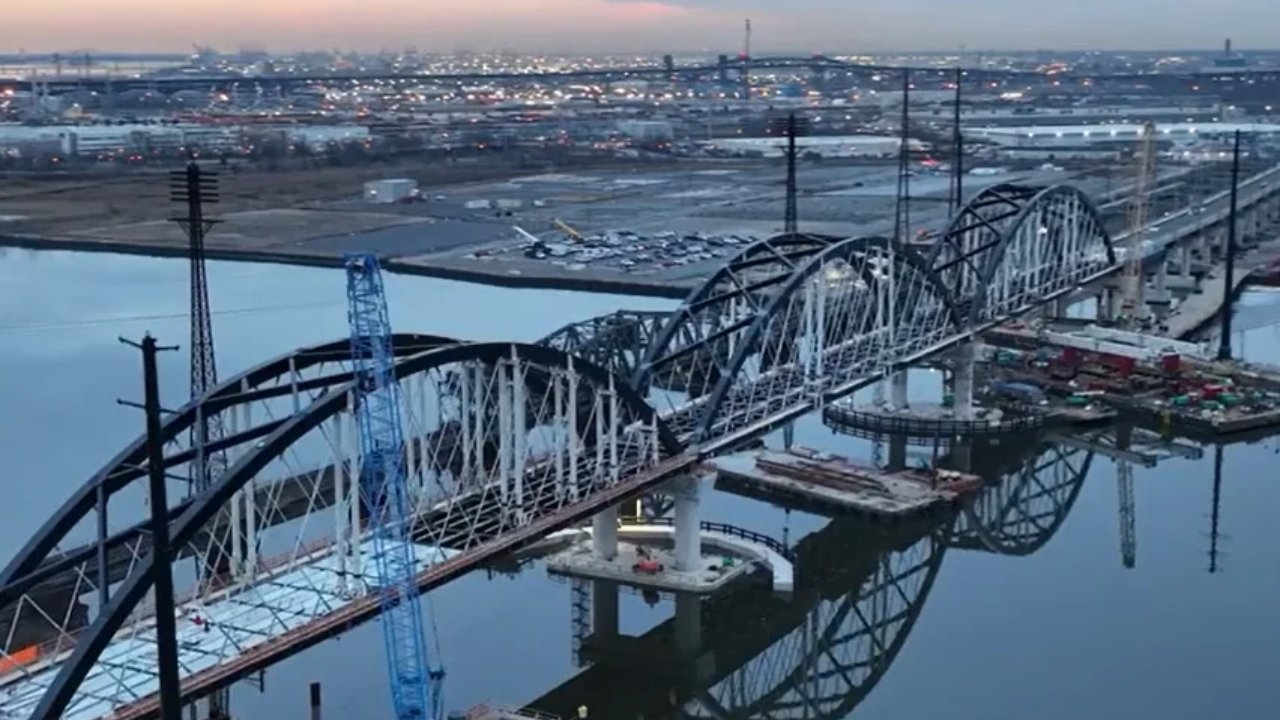
For more than a century a railway bridge in New Jersey required a swing‑open mechanism whenever boats passed beneath it, disrupting train services. The 1910 Portal Bridge, built by the Pennsylvania Railroad, was a movable swing‑span that rotated to allow marine traffic on the Hackensack River. When the vessels passed, the bridge had to return to its railway position before trains could resume crossing. The ageing structure developed mechanical problems and sometimes failed to close properly, causing delays for the more than 450 NJ TRANSIT and Amtrak trains that crossed it each weekday, carrying about 200,000 passengers.
After years of construction, a $2.36 billion replacement entered full service on November 16, 2026. The new Portal North Bridge is a fixed‑span structure that rises roughly 50 feet above the river, doubling the clearance available under the original bridge. Boats can now pass beneath it without the bridge opening, allowing trains and marine traffic to operate independently. The two‑track bridge extends about 2.44 miles along the Northeast Corridor and was built with retaining walls, concrete piers, deep foundations, steel spans and supporting railway infrastructure.
The $1.56 billion construction contract was awarded to the Skanska/Traylor Bros joint venture in October 2021. Funding came from federal, state and regional sources, including the U.S. Department of Transportation, New Jersey and Amtrak. The project is part of the Gateway Program, which seeks to modernise and expand passenger railway infrastructure between Newark and New York.
The transition to the new bridge occurred in stages to keep service running. The first track of the new bridge opened on March 15, 2026, while the old swing bridge remained in use for the second track. The final transfer began on October 9 and was completed on November 16, when both tracks became fully operational. Five weeks of service adjustments, including diversions for some NJ TRANSIT commuters heading to New York, were required.
The new crossing supports train speeds of up to 90 mph, compared with 60 mph on the original bridge, and is expected to reduce delays and improve reliability. The 1910 Portal Bridge is scheduled for dismantling in 2027, ending a century‑long arrangement in which railway services had to make way for passing vessels. The new bridge allows trains to continue moving while boats pass underneath without either having to wait for the bridge to open or close.
Frequently asked questions
When did the new Portal North Bridge enter full service?
The new Portal North Bridge entered full service on November 16, 2026.
What is the speed limit on the new bridge compared to the old one?
The new bridge supports train speeds of up to 90 mph, compared with 60 mph on the original bridge.
Who was awarded the construction contract for the new bridge?
The $1.56 billion construction contract was awarded to the Skanska/Traylor Bros joint venture in October 2021.