World
US Proposes 25% Tariff on Indian Goods, Potentially Reduced to 17% with Trade Deal
By Danita Yadav
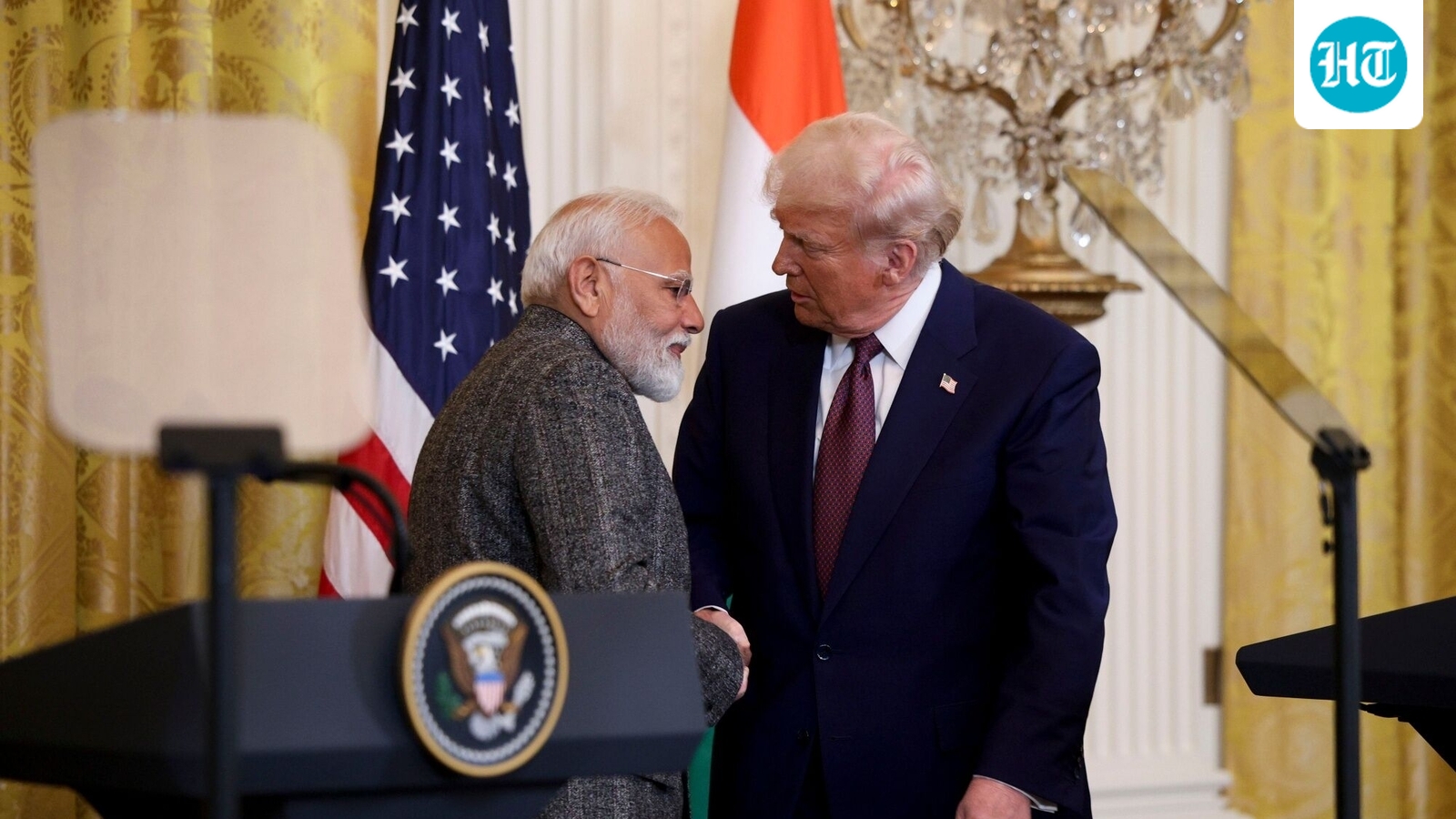
The United States announced on Wednesday a proposed tariff of up to 25 percent on Indian goods. The U.S. Trade Representative’s office added that the rate could be lowered to 17 percent if New Delhi agrees to a trade deal with Washington. The announcement comes amid a broader shift in U.S.–India trade relations that began in April 2025.
In early April 2025, President Donald Trump declared a ‘Liberation Day’ exercise, which led to a 26 percent tariff on India—comprising a 10 percent baseline duty and a 16 percent reciprocal duty. Trump’s administration later suspended the 16 percent reciprocal duty for 90 days, keeping the 10 percent baseline. After the suspension ended, a revised 25 percent tariff was announced on July 31, 2025, effective August 7. In August, Trump added another 25 percent tariff in response to India’s participation in the BRICS summit and its trade ties with Russia, raising the total tariff to 50 percent, alongside Brazil.
On February 2, 2026, India and the U.S. unveiled a framework for a bilateral trade deal. The White House stated that the tariff would be cut to 18 percent, and the additional 25 percent tariff linked to Russian oil purchases would be removed. Later that month, the U.S. Supreme Court ruled that the International Emergency Economic Powers Act does not grant Trump the authority to impose tariffs unilaterally, invalidating the earlier ‘Liberation Day’ tariffs. Following the ruling, Trump imposed a 10 percent tariff on imports from all countries for 150 days under Section 122 of the Trade Act of 1974. After this period, the administration used Section 301 of the Trade Act to impose a 10 percent tariff on India, citing concerns about forced labour.
In September, President Trump signed the Sanctioning Russia and Iran Act, allowing tariffs of up to 100 percent on countries buying Russian oil and gas, including China and India. The president later waived these taxes in October, citing national interest.
Under the current Section 301 investigation into excess capacity, the U.S. proposes a 25 percent tariff that could be reduced to 17 percent if a trade deal is reached. This new duty would not be added to the 10 percent tariff that Indian exporters have paid since the July investigation into forced labour allegations. India has said it is reviewing the U.S. notice and maintains that it does not have structural excess capacity in any sector. The trade deal has not yet been signed, and officials such as Commerce and Industry Minister Piyush Goyal, U.S. Ambassador to India Sergio Gor, and Secretary of State Marco Rubio have indicated that the final percentage is still subject to negotiation.
Frequently asked questions
What tariff rate has the U.S. proposed for Indian goods?
The U.S. proposes a 25 percent tariff on Indian goods.
Under what circumstances could the tariff be reduced?
The tariff could be reduced to 17 percent if a trade deal is reached with New Delhi.
Has the U.S.-India trade deal been signed?
The trade deal has not yet been signed; officials indicate the final percentage is still subject to negotiation.