World
Kim Inspects Nuclear Sites, Urges Expansion Amid Trump’s Unfulfilled Meeting Offer
By Ayush Pandey
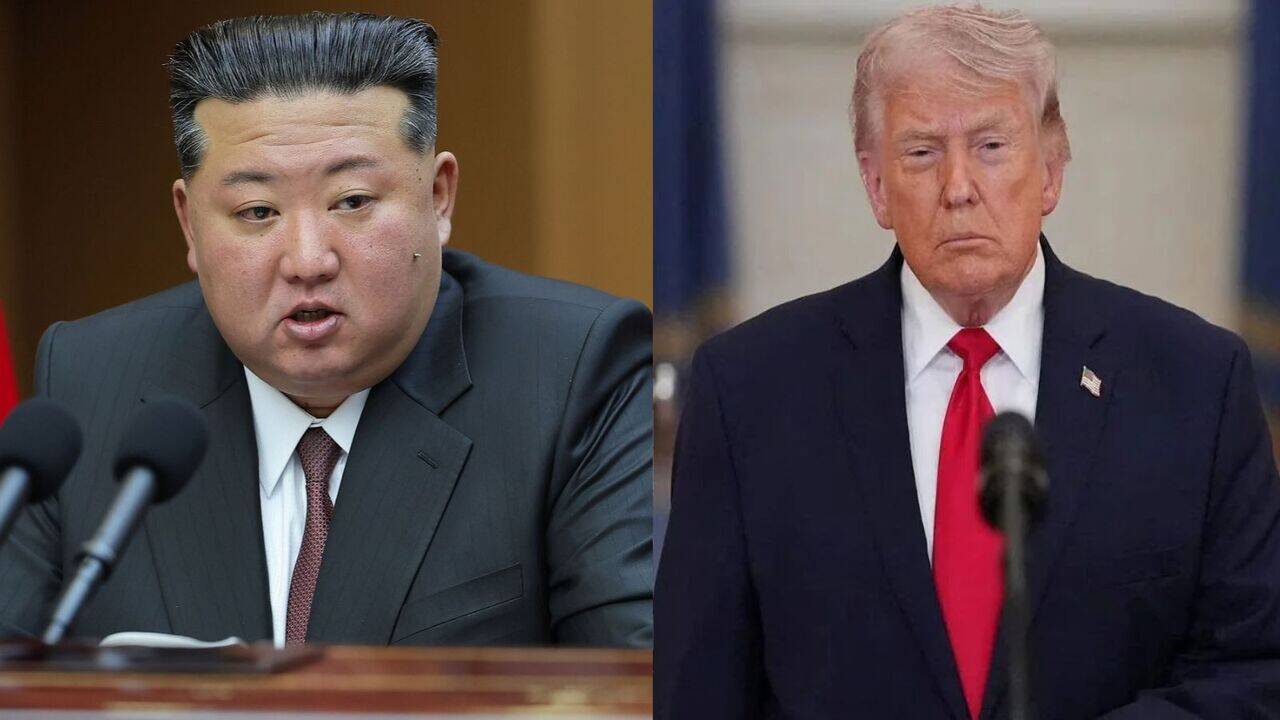
North Korean leader Kim Jong Un visited two nuclear‑materials production facilities, one newly opened and the other under expansion, and called for further development of the country’s nuclear arsenal. The inspection, carried out on Wednesday with senior military officials, was reported by the state news agency Korean Central News Agency (KCNA). Photographs released by KCNA show Kim walking through halls with rows of equipment believed to be centrifuges for uranium enrichment and displays of nuclear warheads, though some images were blurred. KCNA also said Kim visited a nuclear‑powered equipment production base and a nuclear research institute.
Kim said the visit aimed to strengthen defence capabilities in response to what he described as “variable nuclear threats approaching the Korean Peninsula moment by moment.” He accused the United States of encouraging regional allies to acquire nuclear‑powered submarines and of committing to share nuclear weapons with them. “The validity and substantiality of our possession of nuclear weapons and the trend of bolstering up its nuclear capability in quality and quantity are an irreversible reality,” Kim said, according to KCNA.
He also called for further development of low‑yield battlefield nuclear weapons, arguing that deploying such weapons across multiple domains was essential given the security situation. Kim referred to South Korea as the “inevitable reality facing the border with the most dangerous enemy state,” underscoring Pyongyang’s focus on its southern neighbour as a primary threat.
The remarks reinforce Kim’s position that North Korea will not abandon its nuclear programme, which has become central to the country’s military strategy and political leadership. In recent years, the programme has accelerated following the collapse of high‑level negotiations with President Donald Trump in 2019. The two leaders had held multiple rounds of diplomatic engagement during Trump’s first term, but those efforts failed to produce an agreement on denuclearisation and sanctions relief.
North Korea has disclosed uranium enrichment facilities only on a few occasions. The country first revealed a facility at its main Yongbyon complex to visiting American scholars in 2010. Pyongyang has not disclosed the locations of the two facilities inspected by Kim this week. In June, images released by North Korea of parts of a uranium enrichment facility during another visit by Kim were assessed by outside experts as likely an additional enrichment site suspected at Yongbyon. Last week, International Atomic Energy Agency Director General Rafael Grossi said North Korea had been expanding its original uranium enrichment facility at Yongbyon, describing the development as “a cause for serious concern.”
North Korea can produce nuclear weapons using either highly enriched uranium or weapons‑grade plutonium. The country has facilities to produce both materials at Yongbyon. Last year, South Korea’s Unification Minister Chung Dong‑young said North Korea was operating four uranium enrichment facilities that were running daily.
President Trump reiterated his willingness to resume diplomatic engagement with Kim during his recent visit to China for the Asia‑Pacific Economic Cooperation (APEC) summit. However, the proposed meeting did not materialise, and North Korea made no public response to the offer. In an interview with the New York Post, Trump said Kim had not ignored the outreach and that a meeting could happen later, noting that the timing was not right during a busy two‑day period. He also said he could revive diplomatic engagement by restarting the exchange of letters that the two leaders maintained during his first term, though they had not corresponded recently.
Kim has indicated he could consider returning to negotiations if Washington abandons what Pyongyang calls its “hostile policy” toward North Korea and recognises the country’s status as a nuclear state. Experts believe Kim seeks international recognition of North Korea as a nuclear‑armed state, which could strengthen his position in negotiations and allow him to push for the lifting of international sanctions.
Alongside expanding its nuclear programme, Kim has increasingly shifted North Korea’s foreign policy toward strengthening ties with Russia and China, its Cold War‑era allies. The diplomatic shift followed the breakdown of negotiations with Washington in 2019 and has helped Pyongyang strengthen its regional position while pursuing its ambition of establishing North Korea as a permanent nuclear power. The latest inspection and call for further nuclear weapons development indicate that Pyongyang remains committed to expanding its arsenal, even as Trump continues to express interest in restarting direct diplomacy.
Frequently asked questions
Which nuclear facilities did Kim Jong Un visit during his inspection?
He visited a newly opened nuclear‑materials production facility and another under expansion, as well as a nuclear‑powered equipment production base and a nuclear research institute.
What did Kim Jong Un call for during his visit?
He called for further development of low‑yield battlefield nuclear weapons and urged expansion of North Korea’s nuclear arsenal.
Why did the proposed meeting between Kim Jong Un and President Trump not happen?
Trump’s proposed meeting did not materialise during his visit to China for the APEC summit, and North Korea made no public response to the offer.