World
Settler Arson in West Bank Sparks Political Outcry and International Sanctions
By Today News Hours Editorial Desk
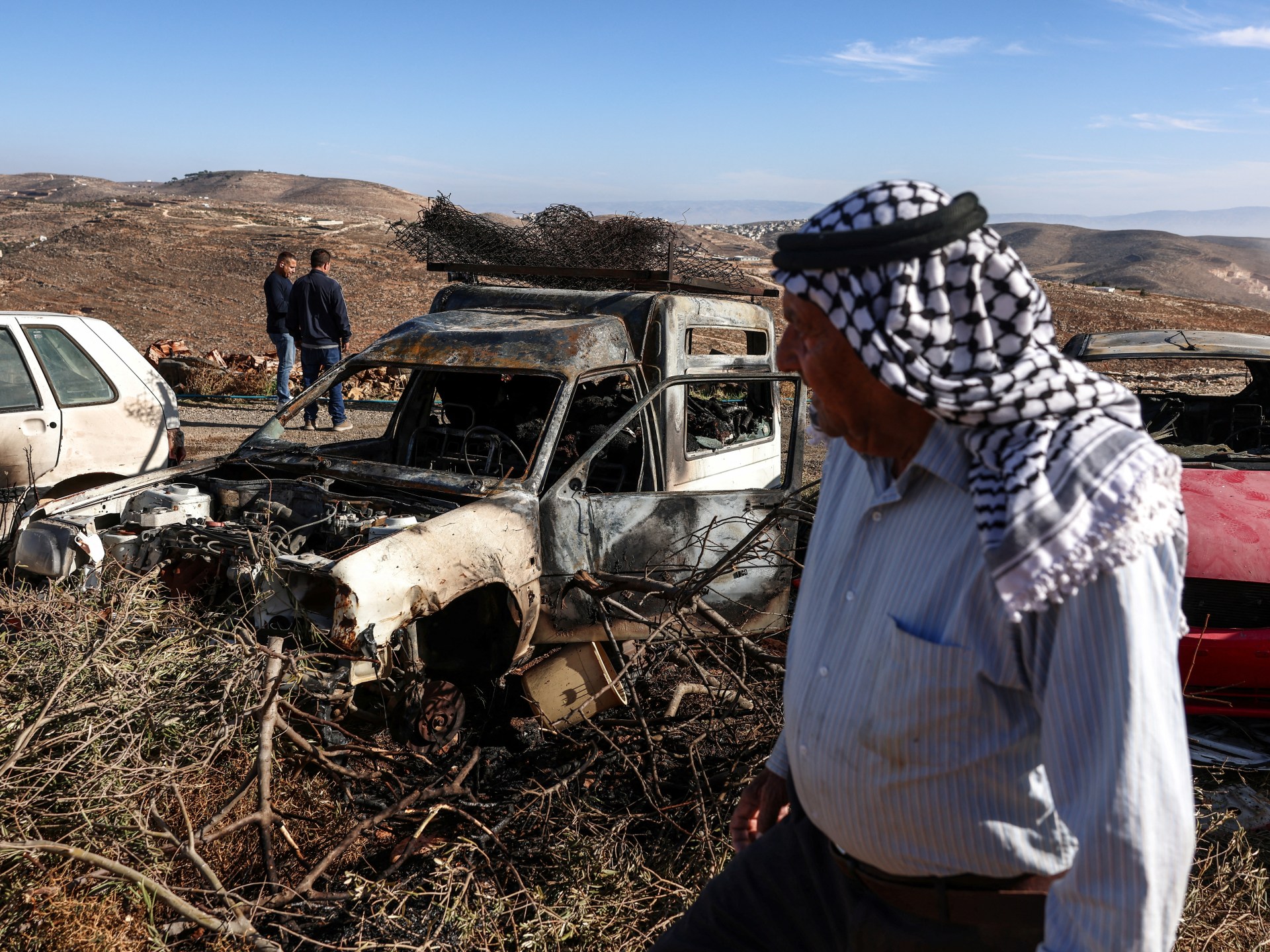
Israeli settlers set fire to at least a dozen vehicles and several homes in five Palestinian villages across the occupied West Bank over the weekend, spray‑painting the words “Revenge” and “Greetings from Susya,” apparently referring to the recent evacuation of an outpost near that village. Police opened investigations, but no arrests have been reported. In chat groups, settlers made light of the attacks, with one joking about the upcoming Jewish festival of lights: “Hanukkah is only in two weeks. We are in suspense.”
The incidents are part of a surge in settler violence against Palestinian villages and drew sharp condemnation from Prime Minister Benjamin Netanyahu’s political rivals. Former army chief Gadi Eisenkot, who is seeking to form a new government, called the attacks “Jewish terrorism in every sense of the word” and blamed far‑right ministers Itamar Ben‑Gvir and Bezalel Smotrich. Former Prime Minister Naftali Bennett accused the government of enabling the attacks, while Yair Lapid called them “pogroms.”
Britain froze the assets of eight Israeli settlement firms and Australia imposed sanctions on settlers and their organisations. The United Nations Humanitarian Country Team’s latest report notes that more than 400 attacks causing casualties or damage have occurred in the West Bank since September, including attacks against activists, journalists and diplomats.
Other incidents reported by Wafa and local sources include: - Settlers shot Asmat Tamimi in the abdomen while attacking olive pickers in Nabi Saleh on November 20, and beat farmer Mahmoud al‑Harimi on his land in Abu Njeim on November 23. - During an olive harvest in Beitillu on November 20, settlers slashed the tyres of four cars of journalists. - Settlers cut the main power line of al‑Mughayyir and blocked its entrances on the night of November 22. - Bulldozers destroyed dozens of olive trees in al‑Mughayyir, about 70 trees in Aghziwa, burned groves in Burqa, ploughed 50 dunams in al‑Farisiya and cut a water line in al‑Masoudiya. - Israeli forces demolished every structure at Khirbet Samra in the northern Jordan Valley over the weekend, including water tanks that supplied the village’s drinking water. - In Hebron, the army posted demolition notices on two Area A buildings containing 25 and 40 apartments. - Settlers built a yeshiva in Area A in the village of Yasid, intended to be under full Palestinian Authority control. - A military judge upheld the administrative detention of Burin olive harvest organiser Ghassan Najjar, and an Israeli court extended the detention of Gaza doctor Hussam Abu Safia by six months.
In Israel, a Jewish driver rammed pedestrians in Kafr Qasim on November 18, wounding eight Palestinian citizens; police said there was no nationalist motive and the driver tested positive for drugs. On November 19, masked men set fire to a mosque in Ed‑Dahi and left graffiti about revenge for a settler killed in March.
In Gaza, the Ministry of Health’s death toll since the October 2025 ceasefire rose from 1,650 on November 16 to 1,679 on November 23, bringing the total number of deaths in the war since October 2023 to 74,746. On November 18, Israeli tanks and bulldozers crossed the “Yellow Line” in central Gaza in the first publicly announced ground push since the ceasefire, targeting a tunnel; about 6,000 people fled the area. A drone strike on November 21 hit a van carrying meals from a charity kitchen in Tal al‑Hawa, killing three people. On November 20, drones killed at least seven people in central Gaza.
The Gaza Health Ministry warned on November 22 of an out‑of‑season rise in meningitis linked to damaged sewage networks, with 12 deaths reported. A child died from lead poisoning on November 23, blamed on Israel’s ban on new batteries.
The Beit Hanoon crossing reopened for aid screening on November 18, allowing about 20 trucks a day. Five aid groups gave the United States President Donald Trump’s peace plan a score of four out of 26, saying it failed to deliver adequate aid, protection, freedom of movement, reconstruction or economic revival.
The arsons in the occupied West Bank struck a nerve amid Israeli coalition negotiations. Ben‑Gvir called Eisenkot’s condemnation a “down payment” to MK Ahmad Tibi, leader of the Arab Ta’al party. Yesha Council chair Israel Ganz condemned the arson but said the term “Jewish terrorism” served those seeking to tarnish Israel. Foreign Minister Gideon Saar condemned “a handful of extremists” but promised countermeasures following the British and Australian sanctions. Israel’s left‑leaning attorney general froze the E1 settlement tender until a new government is sworn in. Netanyahu’s Likud party and Eisenkot’s Yashar ended coalition talks without a deal on November 22 over who would lead the country and whether Ben‑Gvir would join the new government. Eisenkot indicated that if a broad coalition fails, he may rely on outside support from the Joint List and Ra’am, the two Arab parties whose potential support Netanyahu has repeatedly demonised during negotiations, to form a minority government.
Frequently asked questions
Which countries imposed sanctions on Israeli settlers following the arson attacks?
Britain froze the assets of eight Israeli settlement firms and Australia imposed sanctions on settlers and their organisations.
How many vehicles and homes were set on fire by settlers in the West Bank?
At least a dozen vehicles and several homes were set on fire in five Palestinian villages.
What was the reaction of Israeli political leaders to the arson incidents?
Former army chief Gadi Eisenkot called the attacks “Jewish terrorism in every sense of the word,” former Prime Minister Naftali Bennett accused the government of enabling the attacks, and Yair Lapid called them “pogroms.”