World
US Military Footprint in the Middle East May Shrink After Iran Conflict
By Umar Farooq
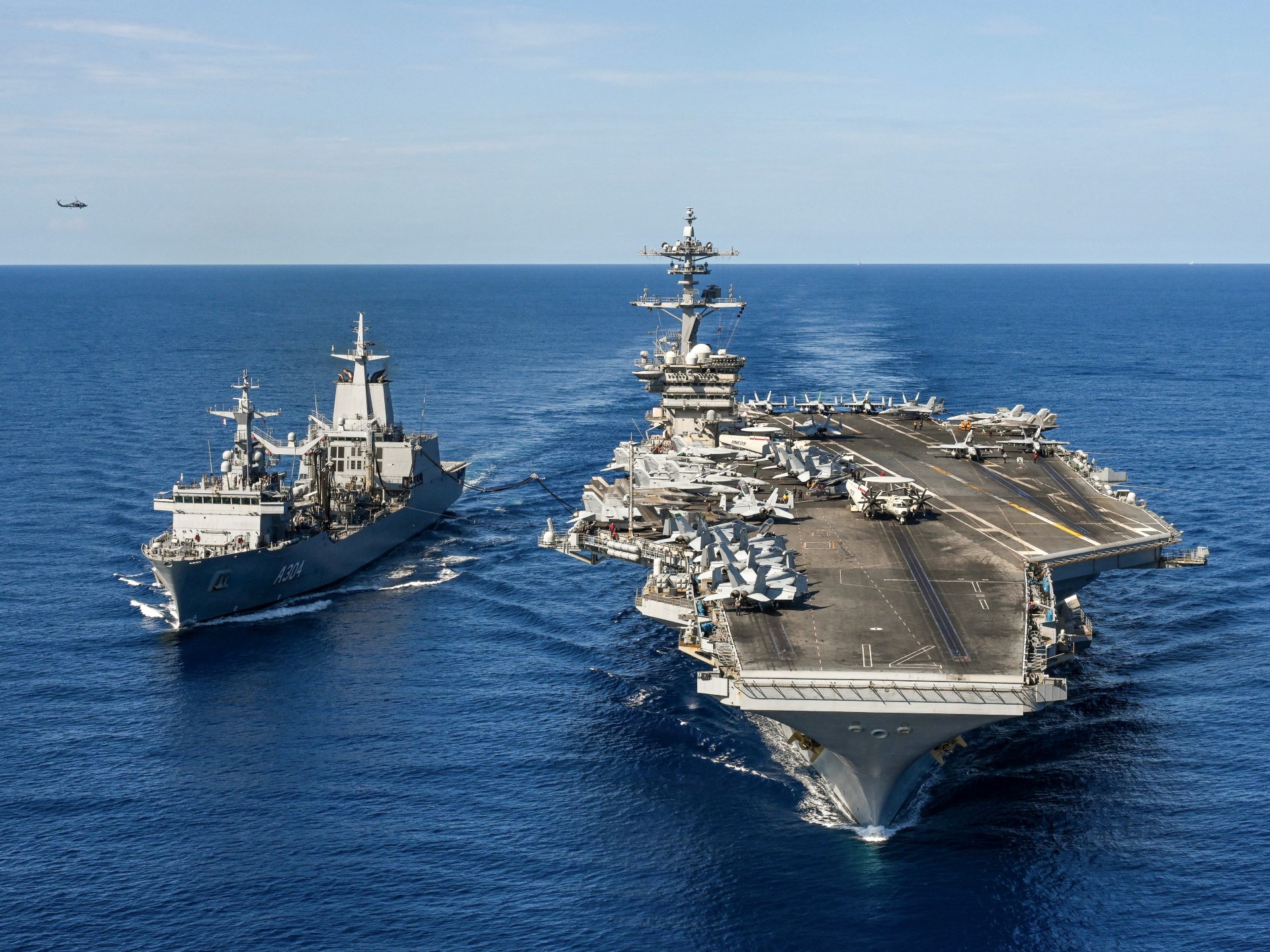
Experts say the fallout from the Iran war and domestic opposition could lead to a smaller permanent U.S. presence in the Middle East. The United States currently has up to 50,000 troops and about 19 major military installations in the region, with assets in Bahrain, Jordan and Saudi Arabia. The war has exposed vulnerabilities in protecting Washington’s assets, prompting speculation that a downsizing may occur once the conflict ends.
Michael O’Hanlon, senior fellow at the Brookings Institution, expects the U.S. to eventually scale back its presence, describing a future that would be smaller, more dispersed, more hardened and generally farther from Iran, though not in every case. As the war enters its 10th month, damage to U.S. installations could translate into a strategic shift.
Repair costs are a major obstacle. The Center for Strategic and International Studies estimates that fixing damaged infrastructure on U.S. bases could cost $9.4 billion. Hundreds of structures have been damaged since the war began on February 28. One affected site is the U.S. Naval Support Activity in Bahrain, home to Naval Forces Central Command and the Fifth Naval Fleet. The Congressional Research Service reports that the base sustained serious damage early in the conflict and estimates repair costs at more than $400 million.
Other assets have been impacted. A Department of Defense inspector general report in September found the U.S. lost dozens of aircraft, including attack helicopters and advanced fighters such as the F‑35A and F‑15E. By October, Pentagon figures put the total cost of the Iran war at over $47 billion.
Rebuilding bases is unlikely until the war ends, according to Mark Cancian, senior adviser with the Defense and Security Department at CSIS. He says that if a ceasefire or stability is reached, there will be a reduction in U.S. forces and a rebuilding of some bases, but not all sites struck by Iran. Cancian cites the Bahrain headquarters of the Fifth Naval Fleet and the Combined Air Operations Center at Al Udeid airbase in Qatar as examples that may be moved underground or relocated further from the Gulf.
Kelly Grieco, senior fellow at the Stimson Center, notes that major bases in Bahrain or Qatar are liabilities because they are within the range of Iranian missiles and drones. She argues that moving bases further away will not protect them long term as Iran improves its reach. Instead, she suggests cultivating access to a network of airstrips and temporary bases that could be used if another conflict erupts. In the Iran war, the U.S. has relied heavily on facilities such as Israel’s Ben Gurion airport for refuelling.
Downsizing has been a goal across several administrations. President Donald Trump completed troop withdrawals from Syria and Iraq in 2025, and President Joe Biden oversaw the U.S. pullout from Afghanistan in 2021. Practical realities, however, have limited large‑scale drawdowns. Cancian says both administrations wanted to reduce the force posture but have not been able to do so.
New alliances may also shift reliance on U.S. military resources. In August, Saudi Arabia, Turkey and Pakistan signed the Mecca Joint Defence Agreement, committing the countries to aid each other in case of an attack. The pact could trigger a regional realignment away from the U.S. The three countries have more than 1.4 million active personnel, thousands of tanks and aircraft, and a combined defense budget of over $124 billion. The agreement is likely to expand to include Egypt and Syria.
Domestic frustration is growing. A recent Ipsos–Reuters poll found that 71 percent of Americans want Congress to end the war on Iran. The conflict has been unpopular in the 2026 midterms, with Trump’s Republican Party losing key races to Democrats who opposed the war. Vice President J.D. Vance blamed the Iran conflict for his party’s poor showing. Both parties are leaning away from a foreign interventionist stance, and there is an overall inclination to extricate the U.S. military from the Middle East.
For most Americans, the region has been seen as a site of constant interventions since 1990, many of which have not ended well.
Frequently asked questions
How many U.S. troops are stationed in the Middle East?
Up to 50,000 troops.
What is the estimated cost to repair damaged U.S. bases from the Iran war?
$9.4 billion according to CSIS.
How much does it cost to repair the U.S. Naval Support Activity in Bahrain?
More than $400 million as estimated by the Congressional Research Service.