Law & Justice
Appeals Court Allows Rent‑Stabilisation Dispute to Continue Over Manhattan Apartment
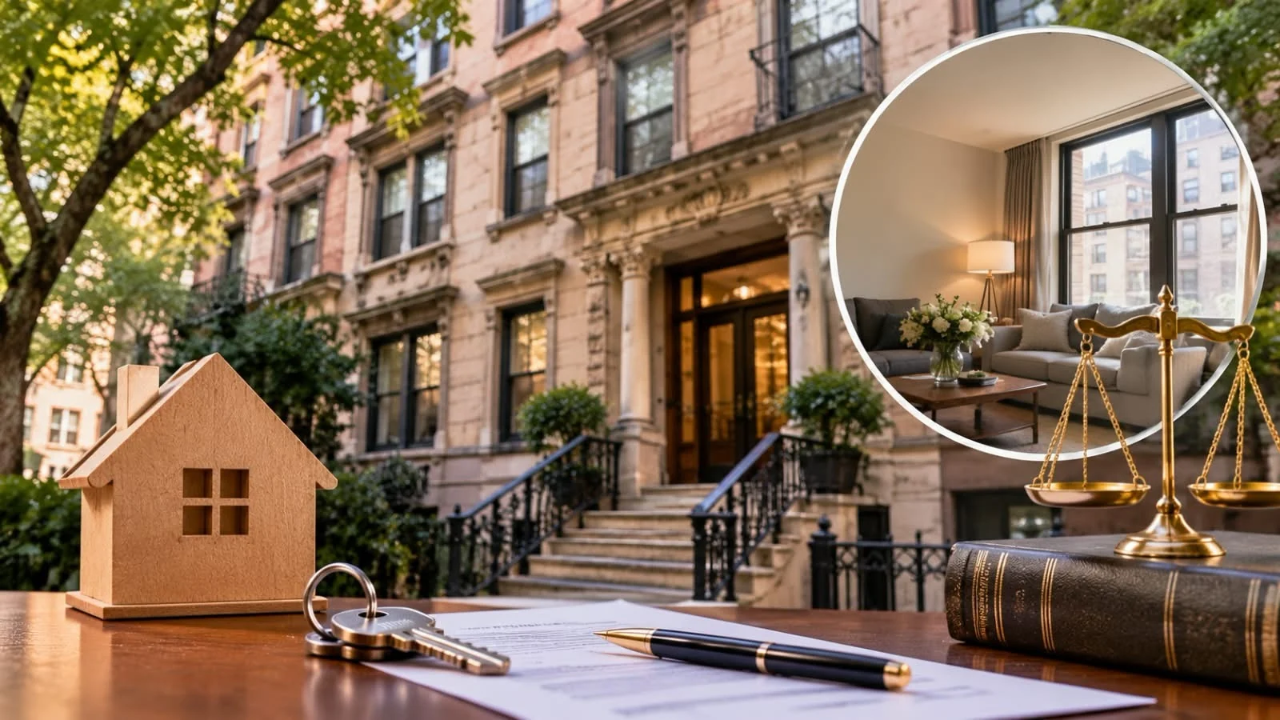
An appeals court has ruled that a New York landlord’s attempt to recover possession of an apartment cannot be decided solely on the basis of a commercial lease, allowing the tenant’s rent‑stabilisation claim to proceed. The case involves E. Terese Carpenter, who has lived in a Manhattan apartment at 38 East 64th Street for more than 20 years. The landlord, 38 East 64th Street, LLC, rented the unit to Nile, Inc., a company owned by Carpenter, beginning around 2006. Although the premises were an apartment, the landlord required Nile to sign a commercial lease stating that the space would be used exclusively for business purposes. The building’s certificate of occupancy, however, permits only residential use.
Carpenter maintains that she has always intended to use the apartment as her home and has lived there for more than two decades. The landlord argued that it knew about and accepted this residential occupation despite the commercial lease wording. The landlord subsequently sued for possession of the apartment, payment for its use and occupancy, and attorneys’ fees under the lease agreement.
Nile and Carpenter counter‑claimed that the apartment remained subject to New York’s Rent Stabilisation Law and that the commercial lease arrangement was used to improperly remove the unit from rent regulation. They also alleged that the landlord had illegally and fraudulently deregulated the unit, seeking a court declaration recognising Carpenter as a lawful rent‑stabilised tenant.
In May 2025, New York County Supreme Court Justice Lyle E. Frank denied the landlord’s request for summary judgment. The landlord appealed to the First Department of the New York Supreme Court’s Appellate Division. On November 19 2026, the First Department unanimously affirmed the lower court’s order, rejecting the landlord’s summary‑judgment motion and the dismissal of the defendants’ counterclaims. The court found that the evidence raised factual questions about the apartment’s residential use and the landlord’s knowledge and acceptance of that use, and that the defendants had sufficiently stated their counterclaims regarding rent‑stabilised status and alleged illegal deregulation.
The ruling does not determine whether Carpenter is a rent‑stabilised tenant or whether the landlord illegally deregulated the apartment; those issues remain to be decided in future proceedings. The decision means that the commercial lease alone cannot resolve the dispute over the apartment’s residential use and potential rent‑stabilised status, allowing Carpenter and Nile to continue pursuing their claims while the landlord’s action to recover possession remains unresolved.
Frequently asked questions
What did the First Department decide regarding the landlord’s summary‑judgment motion?
On November 19 2026, the First Department unanimously affirmed the lower court’s order, rejecting the landlord’s summary‑judgment motion and the dismissal of the defendants’ counterclaims.
Does the ruling determine if the apartment is rent‑stabilised?
No, the ruling does not determine whether Carpenter is a rent‑stabilised tenant; that issue remains to be decided in future proceedings.
What was the nature of the lease between the landlord and Nile, Inc.?
The landlord required Nile, Inc. to sign a commercial lease stating the space would be used exclusively for business purposes, even though the building’s certificate of occupancy permits only residential use.