World
Houthis Strike Saudi PIF Tower, Following Earlier Attack on Aramco HQ
By Bhanu Pratap
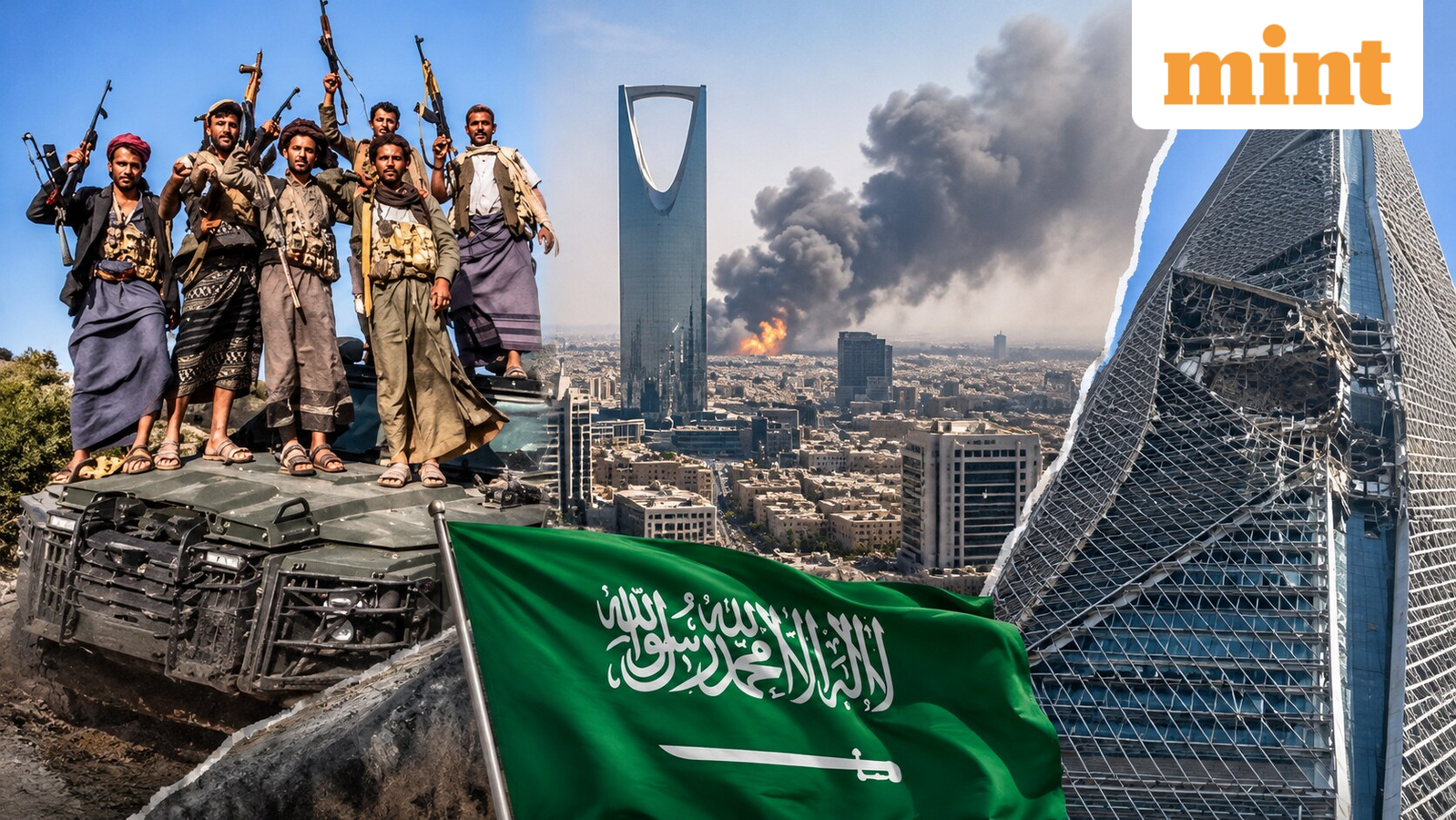
Yemen’s Iran‑backed Houthi rebels struck the 80‑storey headquarters of Saudi Arabia’s Public Investment Fund (PIF) in Riyadh’s King Abdullah Financial District on Thursday. The attack damaged several floors, blew out windows on seven to eight levels, and bent parts of the building’s metal façade. Repair crews were seen replacing damaged glass shortly after the incident. Saudi Civil Defence described the strike as a terrorist attack by the Houthis, noting that the building and nearby structures suffered material damage but no casualties were reported, according to the state news agency SPA. A photograph released by authorities showed the damage.
This is the second major landmark targeted by the Houthis in less than two weeks. On November 8, the group struck the Riyadh headquarters of state‑owned oil giant Saudi Aramco, another symbol of the kingdom’s economic power. The attacks raise concerns about the security of Saudi Arabia’s financial and commercial infrastructure at a time when Riyadh seeks to attract international investors, diversify its economy and position itself as a global business hub.
The PIF, with assets of around $1 trillion, finances and invests in projects across tourism, infrastructure, technology, entertainment and sports, and is central to Crown Prince Mohammed bin Salman’s Vision 2030 programme to reduce dependence on oil revenues. The King Abdullah Financial District, where the PIF Tower is located, is part of Riyadh’s ambition to become an international financial centre.
The Houthis claimed to have targeted Riyadh’s financial centre twice on Thursday, once at dawn and again in the evening, and announced attacks on King Khalid International Airport, Khamis Mushait airbase and the SADAF Petrochemical Company in Jubail. Saudi authorities had not immediately confirmed these additional claims. The Saudi‑led coalition said it had dealt with a missile threat launched toward Riyadh, with debris falling in the area. The kingdom’s foreign ministry said it reserved the right to take all necessary measures to defend its sovereignty and protect its citizens and national assets.
The escalation comes as Saudi Arabia faces the prospect of a prolonged military campaign in Yemen. Saudi officials now anticipate that the conflict could stretch for another six months, according to sources familiar with the kingdom’s plans. Riyadh reportedly wants its allies on the ground to make territorial gains before entering negotiations with the Houthis. The Saudi‑led coalition has also replaced its commander overseeing operations in Yemen.
The Houthis have expanded control over strategically important parts of Yemen, including the country’s Red Sea coastline and the Bab el‑Mandeb Strait, a critical shipping route connecting the Red Sea with the Gulf of Aden. They have also made gains around Taiz, while forces aligned with Yemen’s internationally recognised government have faced setbacks. Saudi Arabia first intervened in Yemen in 2015, leading an Arab coalition after the Houthis seized the capital, Sanaa, and large parts of the country. The intervention failed to produce a decisive victory, and a ceasefire reached in 2022 largely held until hostilities reignited this year. The renewed conflict threatens to undermine the kingdom’s economic priorities, as repeated attacks on oil facilities, airports and financial infrastructure could complicate efforts to reassure foreign investors about the security and stability of the country.
Frequently asked questions
Which building did the Houthis strike on Thursday?
The 80‑storey headquarters of Saudi Arabia’s Public Investment Fund (PIF) in Riyadh’s King Abdullah Financial District.
Were there any casualties reported from the attack on the PIF tower?
No casualties were reported; only material damage was noted.
What other targets did the Houthis claim to have attacked on the same day?
They claimed attacks on King Khalid International Airport, Khamis Mushait airbase, and the SADAF Petrochemical Company in Jubail.