World
Gaza Civil Defence Faces Vehicle Shortages Amid Ongoing Conflict
By Maram Humaid
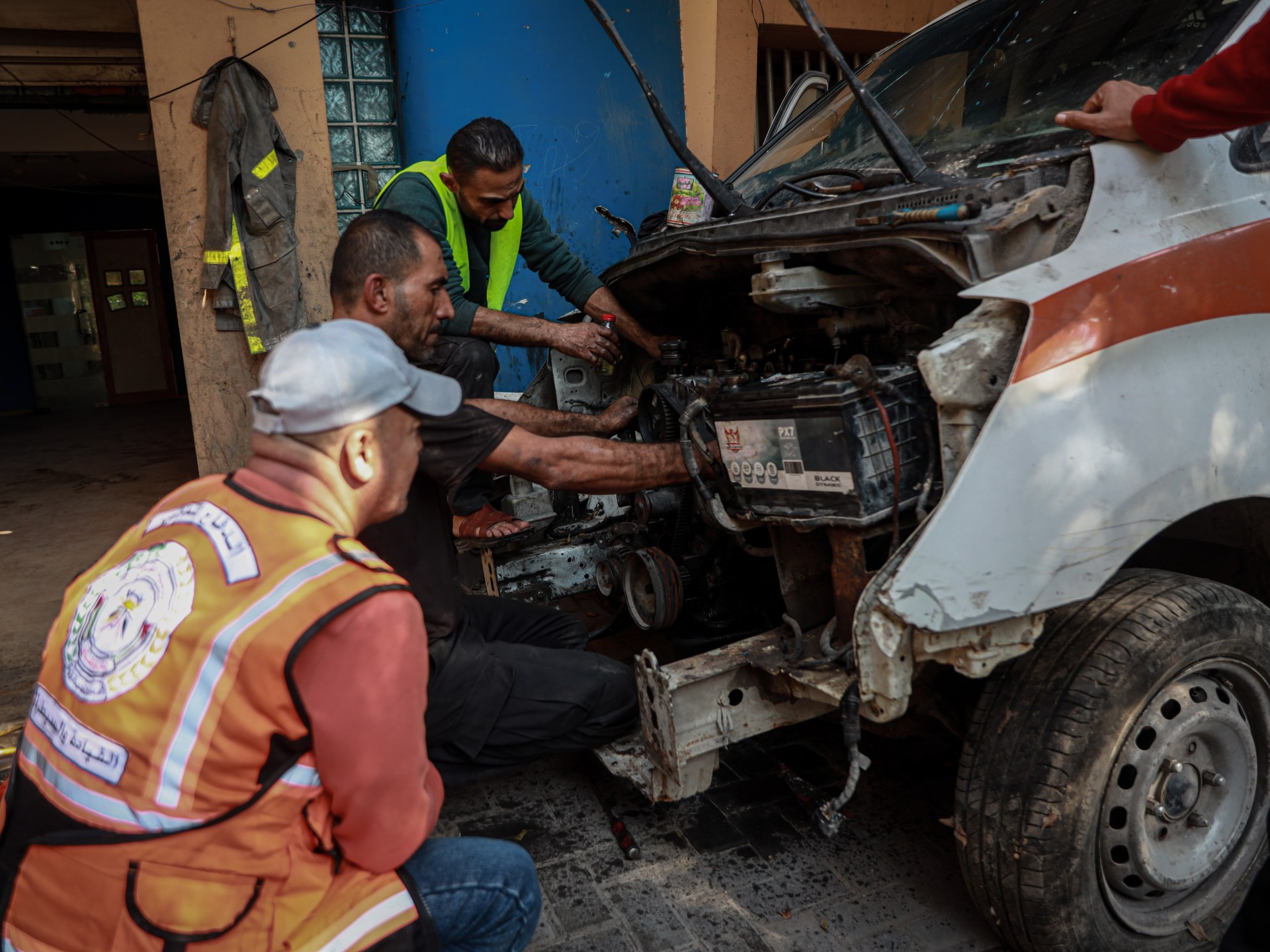
More than 85 percent of Gaza Civil Defence vehicles are out of service, leaving crews struggling to reach trapped people. In Gaza City, a Civil Defence crew heard an explosion near the al‑Qattan Centre on November 3 and rushed to respond. The only fire engine available was not working, so field officer Abdullah al‑Majdalawi and his team carried their equipment on foot, arriving at the site about ten minutes later. They transported injured people back and recovered a body. A similar incident in southern Gaza City’s Sabra neighbourhood last month saw a vehicle break down while the crew was responding to an Israeli air strike; by the time they reached the scene, several people had been killed and others were critically injured. Al‑Majdalawi said arriving sooner could have improved survival chances.
The department’s only dedicated rescue vehicle, a Toyota Hilux pick‑up truck more than 20 years old, has been out of service for weeks. It requires a power steering pump, tyres, a turbo component and functioning lights. The crew has patched tyres with flour dough and used other temporary fixes, but the vehicle’s turbo system is faulty and its lights are unreliable. Without it, crews rely on larger fire engines that are difficult to manoeuvre through streets crowded with tents, makeshift shelters and market stalls. When emergencies occur simultaneously in different areas, teams must choose where to respond first.
The United Nations Office for the Coordination of Humanitarian Affairs (OCHA) warned in a May 1 report that restrictions on the entry of engine oil and spare parts for vehicles and rubble‑removal machinery are severely impacting humanitarian operations in Gaza. OCHA said prolonged shortages are causing vehicles and generators to break down beyond repair, affecting the movement of humanitarian teams, ambulance services and other essential operations.
Raed al‑Dahshan, director of Gaza City’s Civil Defence, said many vehicles have been in service since 1994 and have carried out tens of thousands of missions. Years of use, damaged roads and the demands of the war have worn out much of the fleet. Al‑Dahshan said many Civil Defence vehicles have exceeded their expected service life and urgently need replacing. International fire‑service guidelines generally recommend replacing front‑line fire engines after 15 to 20 years of operation.
Repairing the vehicles has become increasingly difficult. Local workshops have limited capacity, and the department often has to refurbish old parts or find alternatives because replacement parts are unavailable. Maintenance officer Abd al‑Fattah al‑Nimra said the team has faced many problems with spare parts and their high prices, and that the occupation prevents parts from entering. Even basic items such as tyres have become extremely expensive, while the cost and shortage of engine oil add another burden to already limited maintenance budgets.
The shortage of equipment comes as Civil Defence teams continue to respond to the consequences of Israel’s war on Gaza, including air strikes, fires and buildings at risk of collapse. With winter now under way, officials fear that heavy rain and strong winds will further weaken already damaged structures, creating more emergencies at a time when rescue teams have fewer vehicles and limited equipment to respond. Heavy rains in early November caused damaged buildings to collapse and flooded displacement sites across Gaza, but Civil Defence teams were only able to respond to a minority of the distress calls they received.
More than 140 Civil Defence personnel have been killed during the war, al‑Dahshan said. The department has fewer than 1,000 employees across Gaza’s five governorates, and many continue working despite inadequate resources and a lack of regular salaries. Civil Defence personnel and equipment are entitled to protection under international humanitarian law, including Article 62 of Additional Protocol I to the Geneva Conventions, which provides for the protection of civilian civil defence organisations and their personnel.
Al‑Dahshan warned that without urgent support, the department could reach a point where it is unable to respond to people’s calls. The time it takes to reach an injured person can determine whether they survive, he said. For al‑Majdalawi, the immediate needs are basic: functioning vehicles, spare parts, tyres, engine oil and fuel. “We are not asking for much,” he said. “We need tyres, engine oil and fuel. We are ready to dig through the rubble for hours and days to rescue people, but we need the equipment to do that.”
Frequently asked questions
What percentage of Gaza Civil Defence vehicles are out of service?
More than 85 percent are out of service.
What are the main reasons for the vehicle shortages?
Restrictions on engine oil and spare parts, high prices, and occupation preventing parts from entering.
How many Civil Defence personnel have been killed during the war?
More than 140 personnel have been killed.