India
India’s 2026 Population Forecasted at 1.47 billion, Highlights Youth Dividend Opportunity
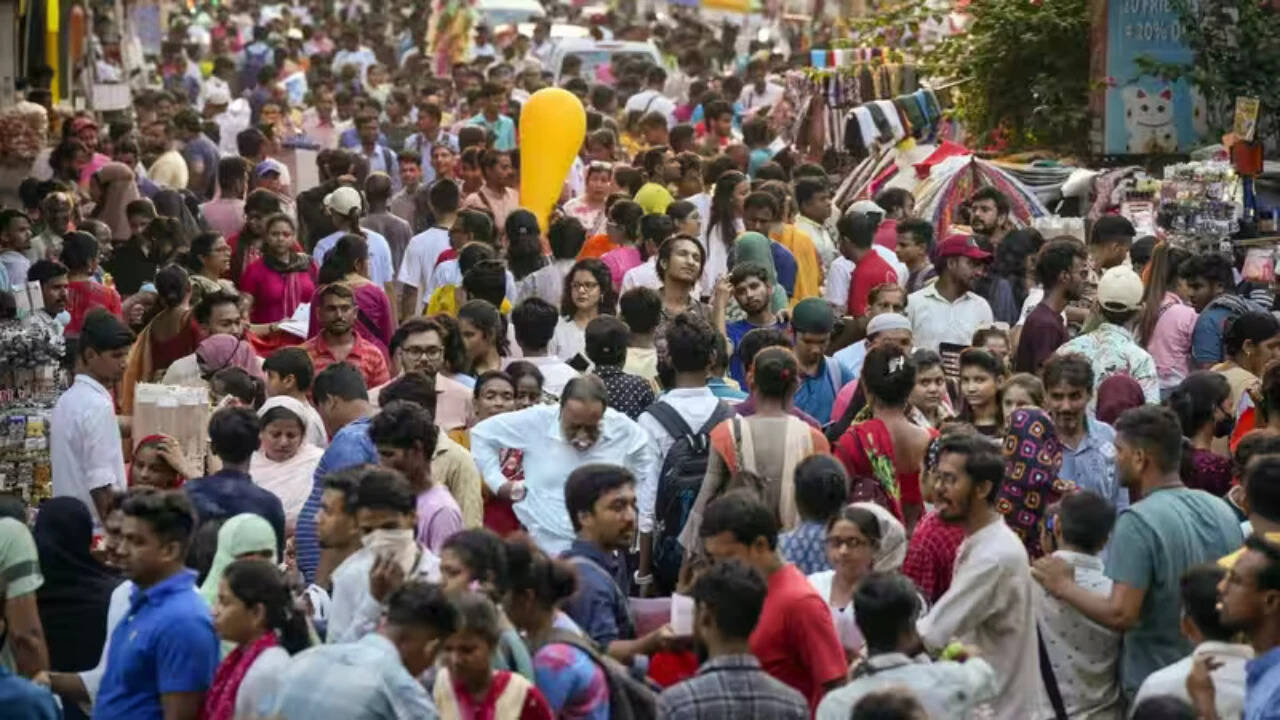
India’s population is projected to reach 1.47 billion (147.66 crores) in 2026, with a doubling time of 81 years, according to the UNFPA State of the World Population Report 2026 released Thursday. The country’s population is expected to grow to about 1.7 billion (170 crores) before beginning to decline roughly 40 years from now. In 2025 the population was 1.46 billion, and in 2024 it was 1.44 billion.
The report notes that more than one in four Indians are aged 10 to 24, describing this as India’s “youth moment” and urging investment while the dividend window remains open. India surpassed China as the world’s most populous country in 2023, with 142.86 crores compared to China’s 142.57 crores.
China’s mid‑year population for 2026 is estimated at 1.41 billion (141.29 crores). Seventy percent of China’s population is aged 15‑64, 15% is 65 and older, the fertility rate is 1.0, and life expectancy is 76 for men and 82 for women.
In India, 24% of the population is aged 0‑14, 17% is 10‑19, and 26% is 10‑24, underscoring the youth dividend. Sixty‑nine percent of Indians are aged 15‑64, and 8% are 65 or older. Life expectancy is 71 years for males and 74 for females.
Globally, the 2026 population is estimated at 8.3 billion with a doubling time of 84 years. Global life expectancy at birth is 71 for men and 76 for women.
India’s Total Fertility Rate is 1.9, unchanged from last year and below the replacement level of 2.1 births per woman, indicating fewer children than needed to maintain the population size.
The report also draws on UNFPA’s Global Demographic Futures Survey of more than 108,000 internet‑connected adults in 73 countries, including 1,722 in India. The survey highlights aspirations around relationships, parenthood, and life goals, and the conditions that influence people’s ability to realize them.
Survey findings from India show high optimism: 83% of respondents feel positive or very positive about the future, despite concerns about conflict, economic insecurity, and inequality. Women aged 18‑39 describe an ideal family size of 2.1 children, and nearly 85% of childless respondents aged 35‑39 would ideally like to become parents.
UNFPA stresses that young people need confidential, non‑judgmental sexual and reproductive health information and services—including contraception, menstrual health, STI prevention, and referral—as well as pre‑pregnancy, maternal, and post‑natal care. The organization calls for India to expand and strengthen youth‑responsive primary care.
Frequently asked questions
What is India's projected population in 2026?
1.47 billion (147.66 crores) according to the UNFPA State of the World Population Report 2026.
When is India's population expected to start declining?
Roughly 40 years from now, after reaching about 1.7 billion.
What percentage of India's population is aged 10‑24?
26% of the population is aged 10‑24, highlighting the youth dividend.