India
Courts Can Enforce Clean‑Air Rights, but Implementation Gaps Persist
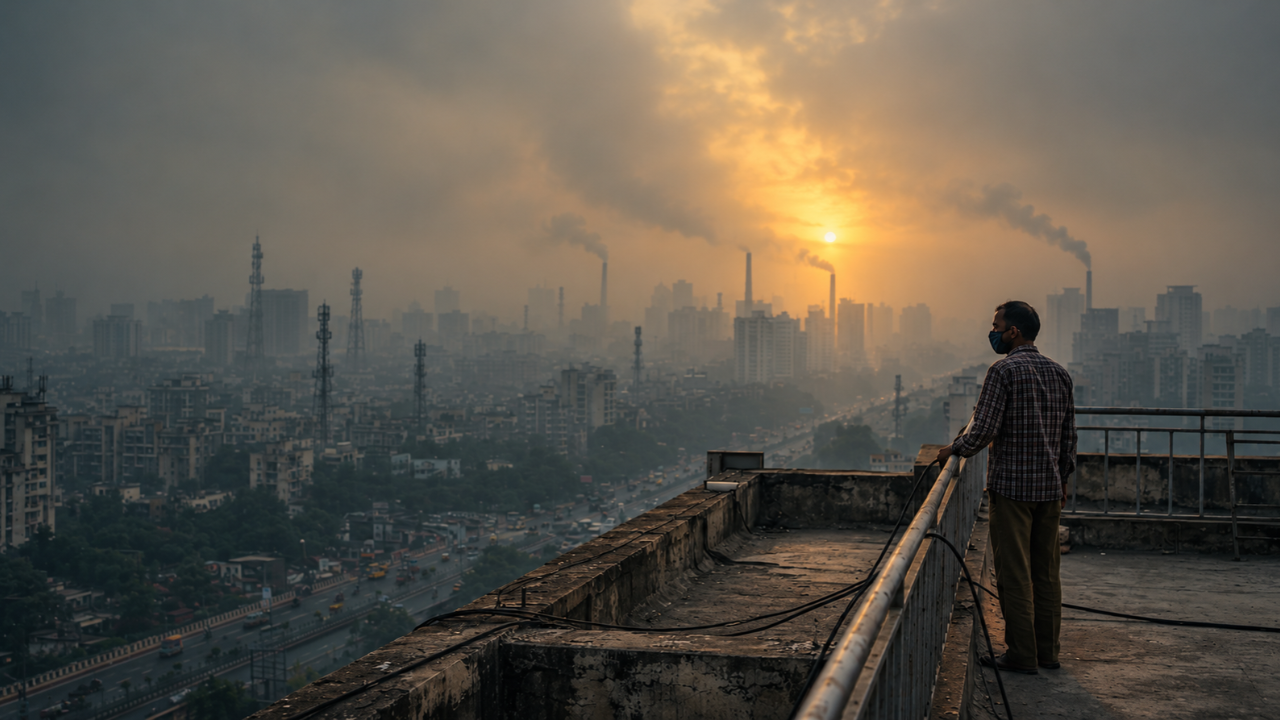
Air pollution remains a pressing issue for Indian cities, with Delhi’s AQI at 491 and Mumbai’s at 132, both in the poor or worse range. While governments use pollution‑control measures and emergency restrictions, the core challenge is protecting citizens from harmful air. The Constitution does not list a fundamental right to clean air, but the Supreme Court has interpreted Article 21’s right to life as including a pollution‑free environment. In Subhash Kumar v. State of Bihar (1991) the Court held that the right to life covers pollution‑free water and air. Earlier, in Municipal Council, Ratlam v. Vardhichand (1980) the Court ruled that authorities cannot shirk pollution control duties due to lack of funds. Adesh Nandal, a legal associate at Jotwani Associates, notes that while the right is not absolute, courts consider livelihoods and economic development when deciding such matters, yet governments must protect citizens from dangerous pollution levels.
If authorities fail, citizens can file petitions under Article 32 of the Constitution or Article 226 in high courts, including public interest litigations. Courts can direct governments to enforce pollution rules, shut down violators, monitor compliance and award compensation. The National Green Tribunal (NGT) can order polluters to pay compensation and direct remedial actions. The government’s duties also stem from Article 48A, which requires protection and improvement of the environment, and the Air (Prevention and Control of Pollution) Act, 1981, which empowers pollution control boards to inspect factories, sample emissions and act against violators. Nandal says implementation, not the law itself, is the weak link.
Prarthana Borah, a fellow at the Council on Energy, Environment and Water (CEEW), argues that the Government’s Air‑Quality Management Programme (GRAP) is reactive, only invoked after air quality crosses a threshold, and does not address year‑round sources. She notes that only 47 % of Delhi’s area is covered by monitoring stations, making it hard to track pollution citywide. Forecasts could help authorities act before levels rise sharply and decide when to lift restrictions.
Air pollution in Indian cities comes from local and regional sources: vehicles, road dust, industries and crop‑waste burning. An analysis by the Air Quality Decision Support System (AQDSS) of the Indian Institute of Tropical Meteorology found that pollution from districts outside Delhi accounted for 55 % of the capital’s load between 11 and 14 November, while Delhi’s own contribution was about 36 %, with vehicles a major source. A Commission for Air Quality Management (CAQM) study identified dust as the biggest contributor to PM₂.₅ and PM₁₀ in Delhi during summers.
Borah points out that under the National Clean Air Programme (NCAP) 68 % of funds target road dust control, 14 % transport, 12 % waste management and crop burning, while industries, household fuel use and public awareness receive less than 1 %. She calls for stronger enforcement against diffuse sources, better monitoring, and legally backed targets to reduce pollution across district and state boundaries.
Nandal explains that individuals can seek compensation through the NGT under Section 15 of the NGT Act, 2010, for death, disability, illness, medical expenses and property damage caused by pollution. Claimants must show a link between the pollution and the harm, which can be difficult for long‑term exposure. Evidence such as monitoring data, medical records, hospital admissions, scientific studies and government reports can support claims.
Borah stresses that recognising clean air as a fundamental right must be accompanied by clear targets and responsibilities. She notes that regular air‑quality monitoring is missing in more than 64 % of India’s 742 districts, and only 3 % of NCAP‑linked funds go to monitoring. NCAP targets are not legally binding, and only 23 of its 100 cities achieved the revised target of reducing PM₁₀ by 40 %. Legally binding targets for PM₂.₅ reductions within fixed deadlines could increase government accountability.
Until pollution sources are identified, measured in every district, and polluters are held to the rules, courts can only push governments to follow the law. Seasonal restrictions alone will not secure clean air; lasting change requires action between smog seasons, making the right to breathe a promise on paper rather than a lived reality.
Frequently asked questions
What did the Supreme Court decide about the right to a pollution‑free environment?
The Supreme Court interpreted Article 21’s right to life as including a pollution‑free environment, as held in Subhash Kumar v. State of Bihar (1991).
How can citizens seek compensation for pollution‑related harm?
Citizens can file petitions under Article 32 or Article 226, and seek compensation through the National Green Tribunal under Section 15 of the NGT Act, 2010, for death, disability, illness, medical expenses, or property damage caused by pollution.
What proportion of Delhi’s area is covered by air‑quality monitoring stations?
Only 47 % of Delhi’s area is covered by monitoring stations, making it difficult to track pollution citywide.