Law & Justice
West Virginia Supreme Court Upholds $15,507.92 Damages Award Against HP After Laptop Failures
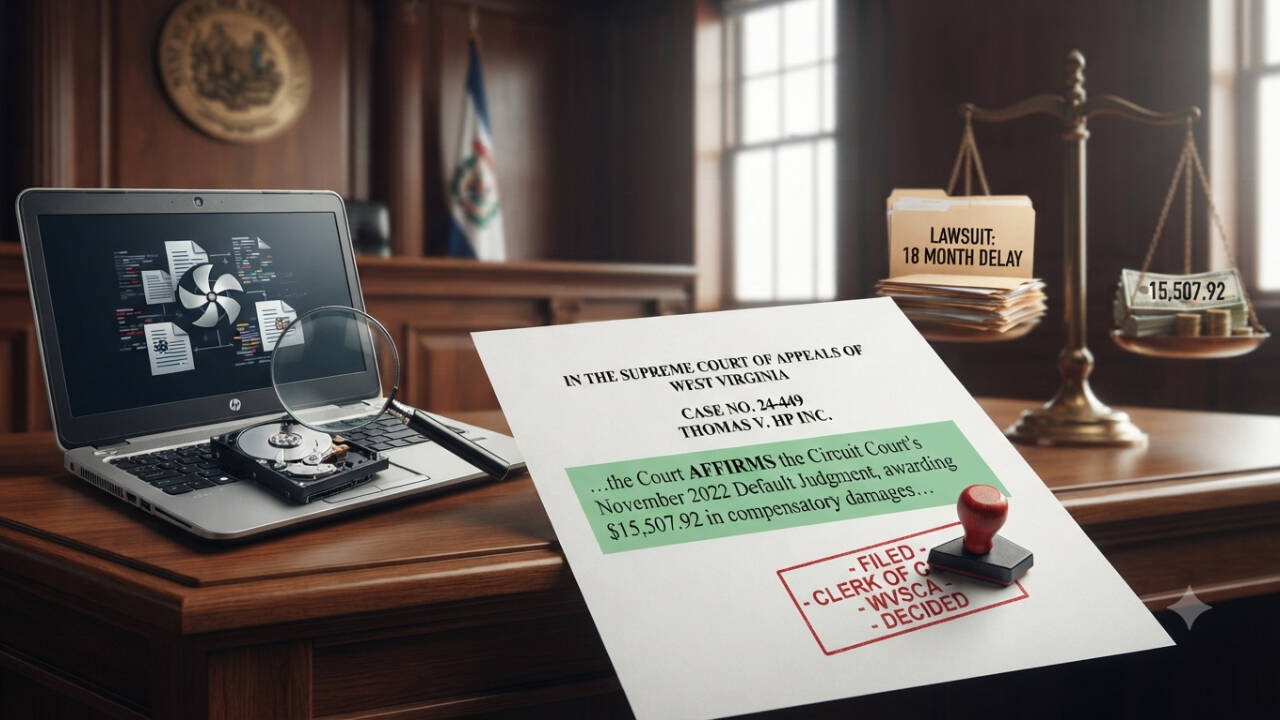
In a decision issued by the Supreme Court of Appeals of West Virginia, the court rejected HP Inc.’s attempt to overturn a $15,507.92 compensatory damages award that was granted to a customer after both her original laptop and a warranty replacement failed, erasing her stored data. The dispute began in July 2019 when West Virginia resident Ms. Thomas bought an HP laptop for $1,527.98 at a Best Buy store and added a three‑year extended warranty. When the original computer malfunctioned and could not be repaired, HP supplied a replacement unit under the warranty. That replacement also failed about six months later, wiping out Ms. Thomas’s data and leaving repair technicians unable to recover it. Frustrated by the repeated hardware failures, Ms. Thomas sued for a refund of the purchase price and compensation for unauthorized and excessive Instant Ink subscription charges. HP did not respond to the complaint for roughly eighteen months, a lapse the company later attributed to an internal misrouting of legal paperwork to an employee on medical leave. In November 2022, a circuit court entered an amended default judgment awarding Ms. Thomas $15,507.92 in compensatory damages, covering the defective laptop, the replacement device, ink charges, and inconvenience, along with $20,000 in punitive damages and $9,130.33 in legal costs and attorney fees. HP later sought to set aside the judgment under state procedural rules, arguing that the lower court lacked jurisdiction because the initial complaint did not meet the financial threshold and that internal administrative error constituted excusable neglect. Both the circuit court and the Intermediate Court of Appeals rejected HP’s effort to erase the default judgment, prompting the company to appeal to the state’s highest court. The Supreme Court of Appeals of West Virginia affirmed the decision to leave the default judgment and the $15,507.92 compensatory award intact. The justices found that Ms. Thomas had sufficiently alleged $10,000 in damages to establish the circuit court’s jurisdiction and that misrouting a lawsuit to an absent employee did not excuse an eighteen‑month failure to appear in court. While the compensatory award survived, the punitive damages component drew scrutiny during appellate review. Under West Virginia civil procedure rules governing default judgments, a court generally cannot grant relief that differs in kind or exceeds the specific amount requested in a plaintiff’s original complaint. The Supreme Court noted that HP had waived certain appellate arguments regarding the punitive award by failing to brief them properly, but a dissenting justice noted that Ms. Thomas never sought punitive damages or alleged facts warranting them in her initial filing, and that any punitive damages beyond $10,000 in the complaint would violate procedural safeguards.
Frequently asked questions
What was the amount of compensatory damages awarded to Ms. Thomas?
$15,507.92 in compensatory damages.
Why did HP Inc. attempt to overturn the default judgment?
HP argued the circuit court lacked jurisdiction because the complaint did not meet the financial threshold and cited an internal misrouting of legal paperwork as excusable neglect.
What was the purchase price of the HP laptop Ms. Thomas bought?
$1,527.98.